
Horse breeds / Shire horse
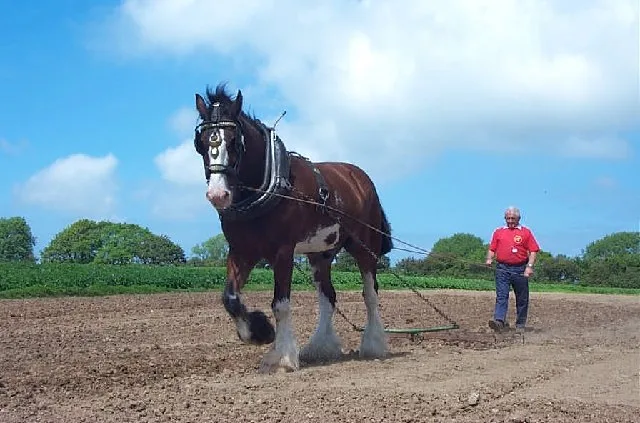
Photo: Garth Newton · CC BY-SA 2.0 · Wikimedia Commons
Horse breed
Shire horse
The Shire is a heavy draft breed developed in the English Midlands, where it was prized for hauling loads, plowing heavy soils, and pulling brewery drays and farm wagons. Its ancestry is tied to the powerful war and farm horses of medieval England, and it was refined over the 18th and 19th centuries into the largest horse breed in the world.
Owning a Shire is an experience of gentleness and presence. Most are calm, patient, and willing, with a steady way of going that suits careful handlers. They are generally forgiving with newcomers, though their sheer size means they need a knowledgeable handler on the ground. Under saddle they are seldom used, but they can be ridden by suitable adults, and they excel at driving and at heavy harness work.
Day to day, a Shire needs daily turnout, regular foot care, and a steady routine of feed and water. They are companionable animals that do best with a pasture mate, and they benefit from consistent handling and a balanced diet that keeps their large frames sound.
Good for: Experienced owners, driving, heavy harness work
| Size | giant |
| Weight | 1984 lb |
| Height | 67–75 in |
| Life span | 20–25 years |
| Exercise | about 60 min a day |
| Shedding | heavy |
| Origin | England |
Shires are very large and expensive to feed and shoe, so get hands-on experience with a breed expert before buying.
Living with a Shire horse
Exercise
A healthy Shire typically needs regular daily movement, whether turnout, in-hand work, or light ridden or driven work for around an hour. Too little activity can lead to weight gain and stiffness, and it may contribute to foot and leg problems.
Grooming
The Shire has a dense coat that sheds heavily in spring, so regular brushing helps. Feathering on the lower legs needs cleaning to prevent skin issues. Hooves need regular trimming or shoeing by a farrier, and many owners keep the mane and tail long, with clipping only where needed.
At home
Shires do best with substantial daily turnout and sheltered paddocks, though many can live out with a run-in shed. They are hardy in cold weather thanks to their heavy coats and thrive in a herd. Because of their size, they eat a great deal of forage, so feed costs add up quickly. Many are moderate keepers, but some are prone to weight gain.
Training
Shires learn through patience and consistent, gentle handling rather than pressure. They are best suited to driving, heavy harness work, and pulling carts or wagons, and many enjoy light trail riding in the hands of experienced owners. A green Shire often takes longer to mature and needs time to build strength and balance before taking on significant work.
Health
Shires are known for a tendency toward conditions linked to their size and weight, including leg and hoof problems and certain metabolic concerns. Feathering can also be prone to skin irritation. Ask your veterinarian about screening and a suitable care plan for your individual horse.
- Laminitis
- Leg and hoof problems
- Feathering skin irritation
Known tendencies, not a diagnosis: ask your vet about this breed.
The numbers for a Shire horse
Forage and water, adult
30–50 lb of hay a day
Forage at 1.5–2.5% of body weight at 1984–1984 lb, and 18–32 gallons of water, more in heat and on hay alone. Grain only for the work being done.
What a year costs
$4,700–$7,500
Hay about $3,504, plus farrier every 6–8 weeks, routine vet, dental and dewormer. Board, lessons and showing on top; US averages.
Weather
Watch above 75°F, stop at 85°F
Blanket or shelter below 0°F. A heavy coat and a big body hold heat: this type copes with real cold and struggles first in humid summer heat; clip and shade before you blanket.
Where a Shire horse is comfortable
Easy most of the year: Alaska, California, Connecticut, Delaware, Illinois, Indiana, Iowa, Kentucky, Maine, Massachusetts, Michigan, Minnesota, Montana, New Hampshire, New Jersey, New York, North Dakota, Ohio, Oregon, Pennsylvania, Rhode Island, South Dakota, Vermont, Washington, West Virginia, Wisconsin, Wyoming.
Summer needs care (early rides, shade, fans): Alabama, Arizona, Arkansas, Colorado, Florida, Georgia, Hawaii, Idaho, Kansas, Louisiana, Maryland, Mississippi, Missouri, Nebraska, Nevada, New Mexico, North Carolina, Oklahoma, South Carolina, Tennessee, Texas, Utah, Virginia, Washington, DC.
From typical July highs and January lows by state and this breed's heat and cold limits. Shade, shelter and water change everything; this is about turnout and work.
Right now
Latest feed recalls
Multiple Brand Names: Chicken Feed, Swine Feed, Cattle Feed, Horse Feed
ADM Animal Nutrition · Apr 1 · Specific lots may contain elevated levels of calcium, phosphorus, magnesium, sodium and/or chloride and may harm chickens, swine, beef cattle and equine.
Rescue a Shire horse
Shelters and breed rescues list Shire horses and Shire horse mixes every week. Search adoptable Shire horses on Petfinder → New to the breed? The first-horse kit →
Is a Shire horse right for you?
- Yes if you have space for a large, hardy horse.
- Yes if you enjoy driving or heavy harness work.
- Yes if you can budget for substantial feed and farrier costs.
- Think twice if you need a horse for quick, athletic riding.
- Think twice if your stable or trailer cannot fit a giant breed.
Questions owners ask
Are Shire horses good for beginners?
They are gentle and patient, but their great size means beginners should work with an experienced mentor and handler before taking one on alone.
How much does a Shire horse cost?
Prices vary widely by bloodline, training, and location. Expect substantial costs for purchase, feed, farrier care, and stabling, so get quotes locally.
How tall is a Shire horse?
Shires typically stand around 170 to 190 centimeters at the withers, making them among the tallest horse breeds.
How long do Shire horses live?
Shires commonly live around 20 to 25 years with good care, though individual lifespans vary with health and management.
What are Shire horses used for?
They are mainly used for driving, heavy harness work, pulling wagons, and exhibition, with some used for light riding by suitable adults.
Similar breeds
Written by Hoofdeck editors · updated Nov 13, 2026 · facts from Wikidata and Wikimedia Commons; health notes are general veterinary guidance, not a diagnosis.