
Horse breeds / American Cream Draft
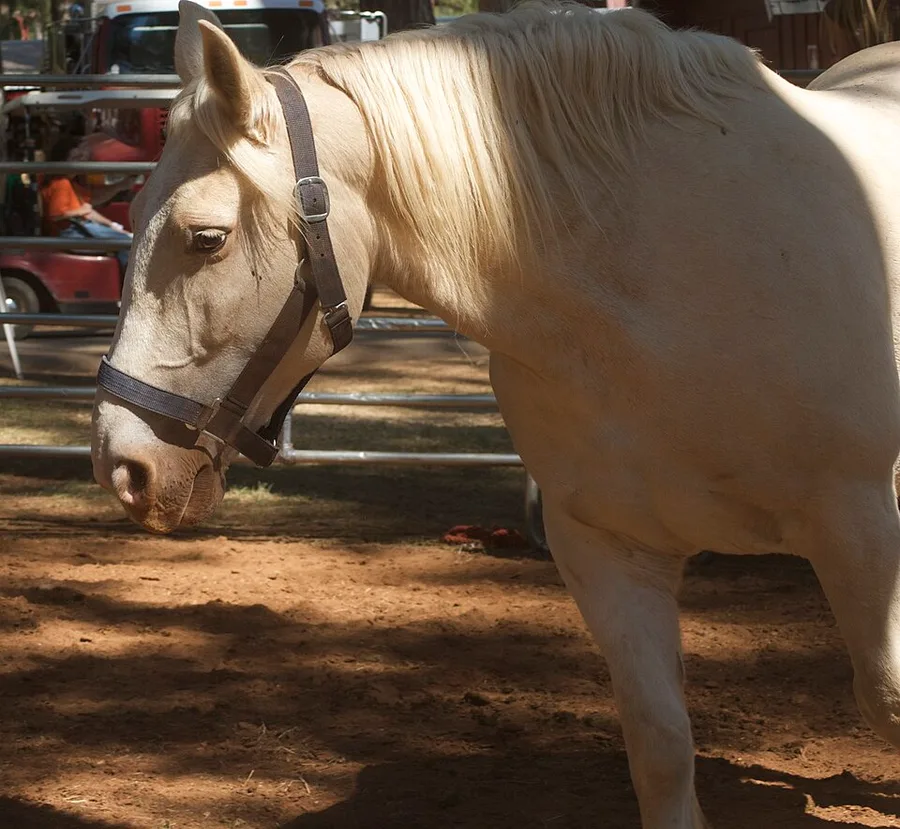
Photo: Jean · CC BY 2.0 · Wikimedia Commons
Horse breed
American Cream Draft
The American Cream Draft is a rare heavy horse developed in Iowa in the early 20th century from crosses between Belgian draft horses and a small population of cream-colored horses. It was bred to be a dependable farm and draft animal, pulling loads and working the land in an era before tractors were common. Its distinctive pale cream coat, amber eyes and pink skin set it apart from most draft breeds.
As a companion, the American Cream Draft is known for a calm, gentle and people-oriented temperament. Its size means it is not a typical riding horse for beginners, though many are driven or ridden by experienced handlers who appreciate its patience and steady way of going. Owners often describe it as a quiet, affectionate animal that enjoys human company and is rarely reactive.
Day to day, the breed needs regular handling, turnout with company, and a consistent routine. Its large frame requires substantial feed, careful hoof care and attention to weight. Because the breed is rare, owners also tend to value strong community ties and careful breeding.
Good for: Experienced owners, driving, farm work, gentle companionship
| Size | giant |
| Weight | 1874 lb |
| Height | 60–66 in |
| Life span | 20–25 years |
| Exercise | about 45 min a day |
| Shedding | heavy |
| Origin | United States |
Its size and feed needs are significant, so ask an experienced owner or vet to help you plan before buying.
Living with a American Cream Draft
Exercise
Most American Cream Drafts need regular daily work and turnout to stay sound and content. Ridden or driven work several days a week, combined with pasture time, suits them well. Too little exercise can lead to weight gain, stiffness and boredom.
Grooming
The cream coat needs regular brushing and bathing to keep it clean and bright, and the pale color shows dirt quickly. Mane and tail should be detangled gently and kept free of tangles. Hooves need regular trimming or shoeing, and feathers, if present, should be kept clean and dry.
At home
American Cream Draft horses are generally hardy and adapt well to a range of climates, provided they have shelter from extreme weather. They do best with daily turnout and social contact with other horses. Their large size means they need ample forage and good quality feed; they can be easy keepers, so monitoring body condition is important.
Training
American Cream Drafts are generally willing and eager to please, learning best with patient, consistent handling. They are well suited to driving, light trail riding and general farm work. A green horse of this breed will usually take time to mature physically, so expect slow, steady progress rather than rapid results.
Health
Like many heavy horses, American Cream Drafts may be prone to conditions associated with their size and weight, including laminitis and metabolic concerns. Their pale skin can also be sensitive to sun, and some owners watch for skin issues. Ask a veterinarian about breed-specific health screening and an appropriate car
- Laminitis
- Metabolic issues
- Sun-sensitive skin
Known tendencies, not a diagnosis: ask your vet about this breed.
The numbers for a American Cream Draft
Forage and water, adult
28–47 lb of hay a day
Forage at 1.5–2.5% of body weight at 1874–1874 lb, and 17–30 gallons of water, more in heat and on hay alone. Grain only for the work being done.
What a year costs
$4,500–$7,200
Hay about $3,285, plus farrier every 6–8 weeks, routine vet, dental and dewormer. Board, lessons and showing on top; US averages.
Weather
Watch above 75°F, stop at 85°F
Blanket or shelter below 0°F. A heavy coat and a big body hold heat: this type copes with real cold and struggles first in humid summer heat; clip and shade before you blanket.
Where a American Cream Draft is comfortable
Easy most of the year: Alaska, California, Connecticut, Delaware, Illinois, Indiana, Iowa, Kentucky, Maine, Massachusetts, Michigan, Minnesota, Montana, New Hampshire, New Jersey, New York, North Dakota, Ohio, Oregon, Pennsylvania, Rhode Island, South Dakota, Vermont, Washington, West Virginia, Wisconsin, Wyoming.
Summer needs care (early rides, shade, fans): Alabama, Arizona, Arkansas, Colorado, Florida, Georgia, Hawaii, Idaho, Kansas, Louisiana, Maryland, Mississippi, Missouri, Nebraska, Nevada, New Mexico, North Carolina, Oklahoma, South Carolina, Tennessee, Texas, Utah, Virginia, Washington, DC.
From typical July highs and January lows by state and this breed's heat and cold limits. Shade, shelter and water change everything; this is about turnout and work.
Right now
Latest feed recalls
Multiple Brand Names: Chicken Feed, Swine Feed, Cattle Feed, Horse Feed
ADM Animal Nutrition · Apr 1 · Specific lots may contain elevated levels of calcium, phosphorus, magnesium, sodium and/or chloride and may harm chickens, swine, beef cattle and equine.
Rescue a American Cream Draft
Shelters and breed rescues list American Cream Drafts and American Cream Draft mixes every week. Search adoptable American Cream Drafts on Petfinder → New to the breed? The first-horse kit →
Is a American Cream Draft right for you?
- Yes if you want a calm, gentle giant with a striking coat.
- Yes if you have room for a large horse and sturdy feed budget.
- Yes if you enjoy driving or light work more than fast riding.
- Think twice if you want a nimble horse for jumping or competition.
- Think twice if you are a first-time owner looking for a small, easy ride.
Questions owners ask
Is the American Cream Draft good for beginners?
It can suit calm, patient owners, but its size and weight make it better for those with some experience. Working with a knowledgeable trainer is wise.
How much does an American Cream Draft cost?
Prices vary widely by bloodline, training and location. Rarity can push prices up, so compare sellers carefully and ask for health records.
How tall is an American Cream Draft?
Most stand roughly 152 to 168 centimetres at the withers, which is about 15 to 16.5 hands. Height varies by individual horse.
How long does an American Cream Draft live?
Typical life span is often cited around 20 to 25 years with good care. Diet, weight and hoof health all influence longevity.
Is the American Cream Draft an easy keeper?
Many are easy keepers, so feed should be measured and forage-based. Regularly check body condition to avoid unnecessary weight gain.
Similar breeds
Written by Hoofdeck editors · updated Nov 13, 2026 · facts from Wikidata and Wikimedia Commons; health notes are general veterinary guidance, not a diagnosis.