
Horse breeds / Italian Heavy Draft
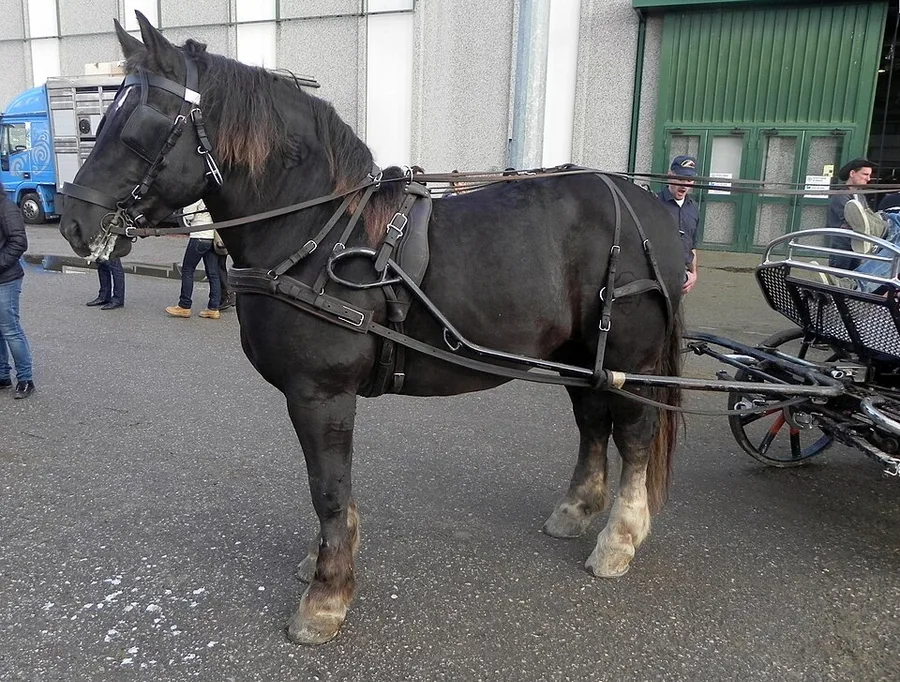
Photo: Justlettersandnumbers · CC BY-SA 3.0 · Wikimedia Commons
Horse breed
Italian Heavy Draft
The Italian Heavy Draft, often called the Italian Heavy Draft Horse, comes from Italy, where it was developed from heavy farm and cart horses to work the land and haul loads. Its muscular build and calm disposition made it well suited to field labor and transport in rural regions.
These horses are known for a patient, willing nature that makes them easy to handle, even for owners who are new to large horses. Their way of going is slow and deliberate, and they are better suited to walking and light driving than to fast or athletic riding. Beginners can enjoy them when they are kept under the guidance of an experienced handler, since their sheer size calls for respect and careful training.
Day to day, they need regular handling, sound feet, and a steady routine of feed and turnout. Their size means they consume a lot of forage and need space to move. Consistent companionship with other horses helps them stay settled and content.
Good for: Experienced handlers, driving, light draft work
| Size | giant |
| Weight | 1543–1764 lb |
| Exercise | about 45 min a day |
| Shedding | heavy |
| Origin | Italy |
Their great size means handling, feed, stalls, and farrier costs are all larger than with average horses, so plan your budget and facilities first.
Living with a Italian Heavy Draft
Exercise
Most healthy adults benefit from daily turnout and regular, moderate work several times a week. Too little movement can lead to weight gain, stiffness, and a lack of muscle tone, which is especially concerning for a large, heavy breed.
Grooming
The coat is typically short and easy to maintain, with regular brushing to remove dirt and loose hair. The mane and tail are usually kept tidy with gentle detangling. Feathering is not a typical feature of this breed. Hooves should be trimmed or shod on a regular schedule, and clipping is rarely nee
At home
Italian Heavy Drafts do best with daily turnout in a safe, fenced paddock or pasture, with shelter from wind and rain. They are generally hardy in temperate climates and cope well with cold when they have access to shelter and forage. They do well in a herd and can become stressed when kept alone. As large horses, they tend to need substantial amounts of hay, so they are generally easy keepers but require plenty of feed by volume.
Training
These horses learn at a steady, patient pace and respond well to calm, consistent handling. They are best suited to driving, light draft work, and slow trail riding rather than jumping or fast disciplines. A green horse of this breed will usually need time to build strength and balance, so expect gradual progress and plan training around its physical development.
Health
Like other large draft breeds, these horses can be prone to leg and joint concerns as they age, and their weight places added load on the feet and legs. Ask a veterinarian about screening and routine care suited to this breed.
- Leg and joint problems
- Laminitis
- Hoof conditions
Known tendencies, not a diagnosis: ask your vet about this breed.
The numbers for a Italian Heavy Draft
Forage and water, adult
25–41 lb of hay a day
Forage at 1.5–2.5% of body weight at 1543–1764 lb, and 15–26 gallons of water, more in heat and on hay alone. Grain only for the work being done.
What a year costs
$4,100–$6,650
Hay about $2,891, plus farrier every 6–8 weeks, routine vet, dental and dewormer. Board, lessons and showing on top; US averages.
Weather
Watch above 75°F, stop at 85°F
Blanket or shelter below 0°F. A heavy coat and a big body hold heat: this type copes with real cold and struggles first in humid summer heat; clip and shade before you blanket.
Where a Italian Heavy Draft is comfortable
Easy most of the year: Alaska, California, Connecticut, Delaware, Illinois, Indiana, Iowa, Kentucky, Maine, Massachusetts, Michigan, Minnesota, Montana, New Hampshire, New Jersey, New York, North Dakota, Ohio, Oregon, Pennsylvania, Rhode Island, South Dakota, Vermont, Washington, West Virginia, Wisconsin, Wyoming.
Summer needs care (early rides, shade, fans): Alabama, Arizona, Arkansas, Colorado, Florida, Georgia, Hawaii, Idaho, Kansas, Louisiana, Maryland, Mississippi, Missouri, Nebraska, Nevada, New Mexico, North Carolina, Oklahoma, South Carolina, Tennessee, Texas, Utah, Virginia, Washington, DC.
From typical July highs and January lows by state and this breed's heat and cold limits. Shade, shelter and water change everything; this is about turnout and work.
Right now
Latest feed recalls
Multiple Brand Names: Chicken Feed, Swine Feed, Cattle Feed, Horse Feed
ADM Animal Nutrition · Apr 1 · Specific lots may contain elevated levels of calcium, phosphorus, magnesium, sodium and/or chloride and may harm chickens, swine, beef cattle and equine.
Recent research
Proteomic analysis to understand the relationship between the sarcoplasmic protein patterns and meat organoleptic characteristics in different horse muscles during aging
Meat science · 2022
Serum protein concentrations and protein fractions in clinically healthy Italian Heavy Draft Horses using agarose gel electrophoresis
Veterinary clinical pathology · 2019
In vivo performance of Italian Heavy Draft Horse weanlings fed two protein levels and slaughtered at two ages
Journal of animal science · 2014
Veterinary papers that mention the breed, from PubMed.
Rescue a Italian Heavy Draft
Shelters and breed rescues list Italian Heavy Drafts and Italian Heavy Draft mixes every week. Search adoptable Italian Heavy Drafts on Petfinder → New to the breed? The first-horse kit →
Is a Italian Heavy Draft right for you?
- Yes if you want a calm, steady horse for slow trail or driving work.
- Yes if you have the space, feed budget, and handling skills for a giant horse.
- Yes if you enjoy a gentle, people-oriented companion for ground work.
- Think twice if you want a fast, athletic horse for competitive riding.
- Think twice if you have a small barn, limited paddock space, or a tight budget.
Questions owners ask
Is the Italian Heavy Draft good for beginners?
They can suit beginners with experienced support, since their calm temperament is helpful, but their size requires careful handling and a capable trainer nearby.
How much does an Italian Heavy Draft cost?
Prices vary widely by region, bloodline, and training. Expect higher costs for feed, housing, and farrier care than with average-sized horses.
How tall is an Italian Heavy Draft?
They are a giant breed, so they stand considerably taller than most riding horses. Ask a breeder or registry for exact height ranges for specific animals.
How long do Italian Heavy Drafts live?
Large draft breeds often have fairly long working lives, but exact life spans vary by individual, care, and health. A veterinarian can advise on expectations.
Are Italian Heavy Drafts easy keepers?
They are generally moderate to easy keepers, but because of their size they eat large amounts of forage, so feeding costs can add up.
Similar breeds
Written by Hoofdeck editors · updated Nov 13, 2026 · facts from Wikidata and Wikimedia Commons; health notes are general veterinary guidance, not a diagnosis.