
Horse breeds / Clydesdale horse
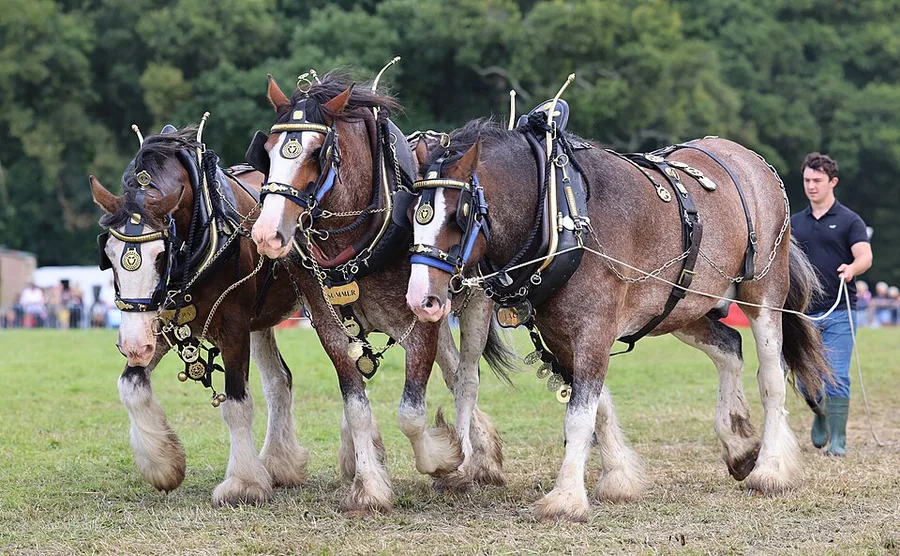
Photo: Geni · CC BY-SA 4.0 · Wikimedia Commons
Horse breed
Clydesdale horse
The Clydesdale comes from the Clyde Valley in Lanarkshire, Scotland, where it was developed in the 18th and 19th centuries as a heavy draft horse. Breeders crossed local mares with imported stallions to produce a powerful, active animal able to pull heavy loads on farms, roads and canals. It became one of the best-known heavy horse breeds in the world.
Clydesdales are known for their calm, willing temperament and their high, floating trot, which is striking for a horse of their size. They are generally gentle and steady, making them suitable for experienced handlers who want a large, friendly horse for driving, pulling or light riding. Their size means they need an owner who is comfortable handling a big animal and has the space and budget to keep one.
Day to day, a Clydesdale needs good turnout, regular work and plenty of forage. Their feathered legs require attention to keep them clean and dry. They do best with companionship, ideally a herd or at least another equine friend nearby.
Good for: Experienced owners, driving, heavy draft and parade work
| Size | giant |
| Weight | 1543–1984 lb |
| Height | 64–72 in |
| Life span | 20–25 years |
| Exercise | about 90 min a day |
| Shedding | heavy |
| Origin | Scotland |
Clydesdales are huge and costly to keep, so get hands-on experience with draft horses before committing.
Living with a Clydesdale horse
Exercise
A healthy adult Clydesdale typically needs one to two hours of work a day, plus daily turnout to move freely. Too little exercise can lead to weight gain, stiffness and boredom, while overwork on hard ground can strain their large frame and joints.
Grooming
The Clydesdale's coat is typically bay, brown, black or chestnut with white markings, and it sheds heavily in spring. Feathers on the lower legs need regular brushing and drying to prevent skin problems. Mane and tail are usually left long, and hooves need regular farrier care, often with heavy shoe
At home
Clydesdales do well with daily turnout on pasture and shelter from wind, rain and heat. They are hardy and cope well with cold climates, though they need a dry place to rest. They are generally happy in a herd but can manage with a companion. Most are easy keepers, though working horses need extra calories and quality hay.
Training
Clydesdales are intelligent and eager to please, and they learn patiently when handled with consistency. They excel at driving, pulling and farm work, and are often used in parades and heavy draft events. A green Clydesdale will take time to build strength and balance, so expect a slow, steady start rather than quick results.
Health
Clydesdales are prone to certain conditions, including hoof and leg problems and, in some lines, conditions linked to weight, such as laminitis. Ask your vet about regular hoof and joint checks and about any breed-specific screening recommended for your horse.
- Laminitis
- Hoof and leg problems
- Skin problems on feathered legs
Known tendencies, not a diagnosis: ask your vet about this breed.
The numbers for a Clydesdale horse
Forage and water, adult
26–44 lb of hay a day
Forage at 1.5–2.5% of body weight at 1543–1984 lb, and 16–28 gallons of water, more in heat and on hay alone. Grain only for the work being done.
What a year costs
$4,250–$6,900
Hay about $3,066, plus farrier every 6–8 weeks, routine vet, dental and dewormer. Board, lessons and showing on top; US averages.
Weather
Watch above 75°F, stop at 85°F
Blanket or shelter below 0°F. A heavy coat and a big body hold heat: this type copes with real cold and struggles first in humid summer heat; clip and shade before you blanket.
Where a Clydesdale horse is comfortable
Easy most of the year: Alaska, California, Connecticut, Delaware, Illinois, Indiana, Iowa, Kentucky, Maine, Massachusetts, Michigan, Minnesota, Montana, New Hampshire, New Jersey, New York, North Dakota, Ohio, Oregon, Pennsylvania, Rhode Island, South Dakota, Vermont, Washington, West Virginia, Wisconsin, Wyoming.
Summer needs care (early rides, shade, fans): Alabama, Arizona, Arkansas, Colorado, Florida, Georgia, Hawaii, Idaho, Kansas, Louisiana, Maryland, Mississippi, Missouri, Nebraska, Nevada, New Mexico, North Carolina, Oklahoma, South Carolina, Tennessee, Texas, Utah, Virginia, Washington, DC.
From typical July highs and January lows by state and this breed's heat and cold limits. Shade, shelter and water change everything; this is about turnout and work.
Right now
Latest feed recalls
Multiple Brand Names: Chicken Feed, Swine Feed, Cattle Feed, Horse Feed
ADM Animal Nutrition · Apr 1 · Specific lots may contain elevated levels of calcium, phosphorus, magnesium, sodium and/or chloride and may harm chickens, swine, beef cattle and equine.
Rescue a Clydesdale horse
Shelters and breed rescues list Clydesdale horses and Clydesdale horse mixes every week. Search adoptable Clydesdale horses on Petfinder → New to the breed? The first-horse kit →
Is a Clydesdale horse right for you?
- Yes if you have space for a large horse and its feed bill
- Yes if you want a calm, gentle giant for driving or pulling
- Yes if you enjoy feathered legs and regular grooming
- Think twice if you are a first-time rider wanting a light, nimble horse
- Think twice if your paddock or budget cannot handle a horse this big
Questions owners ask
Are Clydesdales good for beginners?
Not usually. Their size and strength make them better suited to experienced handlers, though a well-trained one can be gentle and calm.
How much does a Clydesdale cost?
Prices vary widely by bloodline, training and location. Expect higher costs for feed, farrier work and facilities than with smaller breeds.
How tall is a Clydesdale?
Clydesdales typically stand around 163 to 183 centimetres at the withers, roughly 16 to 18 hands.
How long do Clydesdales live?
Clydesdales commonly live around 20 to 25 years with good care, though individual lifespans vary.
Are Clydesdales easy keepers?
Some are, but working horses need more calories. Monitor body condition closely, since weight gain can contribute to laminitis.
Similar breeds
Written by Hoofdeck editors · updated Nov 13, 2026 · facts from Wikidata and Wikimedia Commons; health notes are general veterinary guidance, not a diagnosis.