
Horse breeds / Polish Arabian horse
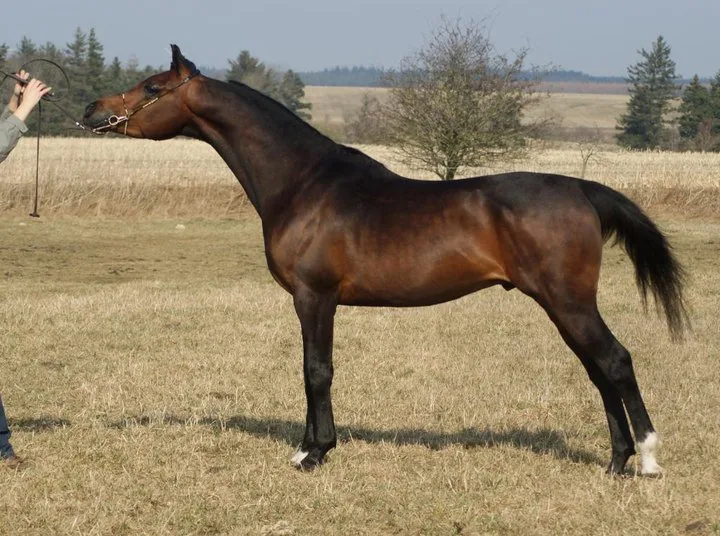
Photo: Alina-Arabians · CC BY-SA 3.0 · Wikimedia Commons
Horse breed
Polish Arabian horse
The Polish Arabian is a native of Poland, developed in the country's state studs over more than two centuries from Arabian bloodlines brought in from the Middle East. Breeders built the type for endurance, soundness and a refined, athletic build, qualities that suited both cavalry work and the stud farms that preserved the line. Poland's Janów Podlaski and Michałów studs are among the most respected Arabian breeding programs in the world.
Polish Arabians are known for an intelligent, willing temperament and a light, expressive way of moving. They tend to bond closely with their people and are generally forgiving, which makes many of them suitable for experienced amateurs and capable beginners who have good instruction. Their quick minds mean they respond best to consistent, patient handling rather than rough or repetitive work.
Day to day, a Polish Arabian needs regular turnout, steady ridden work, and the company of other horses. Their coat and skin need attention, and they do best with a predictable routine. Without enough movement and mental engagement, they can become restless or develop unwanted habits.
Good for: Endurance riders, dressage, experienced amateurs
| Size | medium |
| Weight | 959 lb |
| Height | 59–61 in |
| Life span | 25–30 years |
| Exercise | about 60 min a day |
| Shedding | moderate |
| Origin | Poland |
Choose a Polish Arabian only with solid instruction, since their sensitivity and energy can overwhelm inexperienced handlers.
Living with a Polish Arabian horse
Exercise
A healthy adult Polish Arabian usually needs about an hour of ridden or in-hand work most days, plus turnout time to move freely. With too little exercise they can become fizzy, bored, or difficult to handle, and may gain weight quickly.
Grooming
The coat is fine and short, and a regular brushing keeps it glossy, with a bath or sponge-down when needed. Mane and tail are typically fine-textured and benefit from gentle detangling. Hooves should be trimmed or shod on a regular schedule, and the skin should be checked for rubs under tack.
At home
Polish Arabians are generally hardy and do well in either turnout or stabling, as long as they have shelter and room to move. They are usually happiest in a herd and can become anxious when isolated. Most are easy keepers, though some need careful feeding to avoid excess weight. Ask a local equine nutritionist to tailor the diet to the individual horse.
Training
Polish Arabians learn quickly and enjoy having a job, and they often excel in endurance, dressage, showing in-hand, and trail riding. A green horse of this breed may be sensitive and forward-thinking, so expect a need for clear, calm cues and patient repetition. Given consistent handling, they usually settle into work with a bright, cooperative attitude.
Health
Polish Arabians are generally sound, though like many horses they can be prone to metabolic concerns such as insulin resistance, which may raise the risk of laminitis. Some lines have been studied for orthopedic and other inherited conditions. Ask a veterinarian about screening and management suited to your horse.
- Insulin resistance
- Laminitis
- Orthopedic conditions
Known tendencies, not a diagnosis: ask your vet about this breed.
The numbers for a Polish Arabian horse
Forage and water, adult
14–24 lb of hay a day
Forage at 1.5–2.5% of body weight at 959–959 lb, and 9–15 gallons of water, more in heat and on hay alone. Grain only for the work being done.
What a year costs
$2,850–$4,950
Hay about $1,664, plus farrier every 6–8 weeks, routine vet, dental and dewormer. Board, lessons and showing on top; US averages.
Weather
Watch above 85°F, stop at 95°F
Blanket or shelter below 20°F. Bred for heat: fine working in warm weather with water and salt, but a thin coat and skin want a blanket and shelter below about 20°F.
Where a Polish Arabian horse is comfortable
Easy most of the year: Alabama, Arkansas, California, Colorado, Connecticut, Delaware, Florida, Georgia, Hawaii, Idaho, Illinois, Indiana, Iowa, Kansas, Kentucky, Louisiana, Maine, Maryland, Massachusetts, Michigan, Mississippi, Missouri, Montana, Nebraska, New Hampshire, New Jersey, New Mexico, New York, North Carolina, Ohio, Oklahoma, Oregon, Pennsylvania, Rhode Island, South Carolina, Tennessee, Texas, Utah, Virginia, Washington, Washington, DC, West Virginia, Wyoming.
Summer needs care (early rides, shade, fans): Arizona, Nevada.
Winter needs care (blanket, shelter, water that is not frozen): Alaska, Minnesota, North Dakota, South Dakota, Vermont, Wisconsin.
From typical July highs and January lows by state and this breed's heat and cold limits. Shade, shelter and water change everything; this is about turnout and work.
Right now
Latest feed recalls
Multiple Brand Names: Chicken Feed, Swine Feed, Cattle Feed, Horse Feed
ADM Animal Nutrition · Apr 1 · Specific lots may contain elevated levels of calcium, phosphorus, magnesium, sodium and/or chloride and may harm chickens, swine, beef cattle and equine.
Rescue a Polish Arabian horse
Shelters and breed rescues list Polish Arabian horses and Polish Arabian horse mixes every week. Search adoptable Polish Arabian horses on Petfinder → New to the breed? The first-horse kit →
Is a Polish Arabian horse right for you?
- Yes if you enjoy an intelligent, engaged partner under saddle.
- Yes if you can ride or drive several times a week consistently.
- Yes if you want a horse for endurance or long trail rides.
- Think twice if you want a bombproof, low-energy beginner horse.
- Think twice if you cannot provide regular exercise and herd company.
Questions owners ask
Are Polish Arabians good for beginners?
They can suit beginners with strong guidance, but their sensitivity and energy mean they are better for riders who have some experience and steady instruction.
How much does a Polish Arabian cost?
Prices vary widely by bloodline, training, and region. Pedigree and proven performance usually drive the highest prices, so research carefully before buying.
How tall do Polish Arabians get?
Most stand roughly 150 to 155 centimetres at the withers, which is medium-sized and well suited to many adult riders.
How long do Polish Arabians live?
With good care, they often live into their mid to late twenties or beyond, though individual lifespans vary.
Are Polish Arabians easy keepers?
Many are easy keepers and can gain weight readily, so monitor body condition and adjust feed and turnout as needed.
Similar breeds
Written by Hoofdeck editors · updated Nov 13, 2026 · facts from Wikidata and Wikimedia Commons; health notes are general veterinary guidance, not a diagnosis.