
Horse breeds / Akhal-Teke
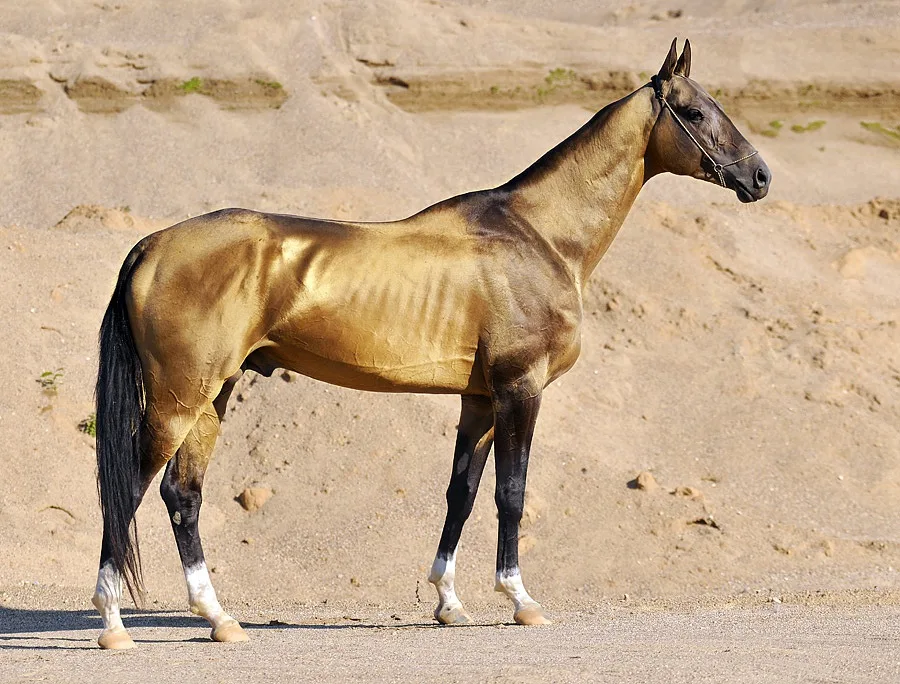
Photo: Artur Baboev - give free of charge right for promouting of… · CC BY-SA 3.0 · Wikimedia Commons
Horse breed
Akhal-Teke
The Akhal-Teke comes from the Turkmen oases of Central Asia, where it was developed over many centuries by nomadic and settled horsemen. It was bred for endurance across harsh desert terrain, for speed in raiding and racing, and for a refined, high-headed look that tribes valued highly. Its lean build, long legs and thin, fine coat reflect that heritage.
Owners often describe the Akhal-Teke as intelligent, people-focused and quick to learn, though it can be sensitive and forward-thinking rather than dull. Its gait is distinctive, with a smooth, floating stride and an elegant, cat-like movement that many riders find striking. Because it is energetic and reactive, it suits experienced handlers better than true beginners, who may find it a lot of horse to manage.
Day to day, the Akhal-Teke needs regular work to stay content and healthy, plus consistent handling and plenty of human contact. It bonds closely with its people and does not do well when left isolated or neglected. A companionable, thoughtful routine with a balance of riding and time out of the stall suits it best.
Good for: Experienced riders, dressage and endurance enthusiasts
| Size | medium |
| Weight | 1025 lb |
| Height | 60–64 in |
| Life span | 25–30 years |
| Exercise | about 60 min a day |
| Shedding | low |
| Origin | Turkmenistan |
Akhal-Tekes are sensitive and forward, so beginners should work with an experienced trainer or mentor before buying.
Living with a Akhal-Teke
Exercise
Most healthy adults benefit from regular ridden or in-hand work several times a week, along with daily turnout. Too little exercise can lead to excess energy, nervousness, and weight gain or boredom-related behavior.
Grooming
The coat is fine and short, with a metallic sheen in many horses that is easy to maintain with regular brushing. Mane and tail are typically fine and light, so gentle detangling is wise. Hooves need regular trimming or shoeing according to workload, and clipping is rarely needed unless the horse is
At home
The Akhal-Teke is hardy and copes well with varied climates, though its fine coat means it appreciates a rug or shelter in harsh cold and wet. Daily turnout is ideal, and it does best with a companion or regular herd contact. It is generally a moderate keeper, so feed should be measured against its work level and body condition. Hay with a balanced concentrate usually suffices.
Training
Akhal-Tekes learn quickly and respond well to patient, consistent training, but they can become bored or wary with repetitive drilling. They often excel at dressage, endurance, and racing, and show real aptitude for jumping and trail work. A green horse of this breed may be forward and sensitive, so expect a thinking partner who needs clear, calm cues and steady progression.
Health
Some sources note that the breed can be prone to certain conditions, though the picture varies by bloodline. Ask your veterinarian which health issues are relevant in your region and for your horse's lineage.
- Wobbler syndrome
- Laminitis
- Colic
Known tendencies, not a diagnosis: ask your vet about this breed.
The numbers for a Akhal-Teke
Forage and water, adult
15–26 lb of hay a day
Forage at 1.5–2.5% of body weight at 1025–1025 lb, and 9–16 gallons of water, more in heat and on hay alone. Grain only for the work being done.
What a year costs
$3,000–$5,100
Hay about $1,796, plus farrier every 6–8 weeks, routine vet, dental and dewormer. Board, lessons and showing on top; US averages.
Weather
Watch above 85°F, stop at 95°F
Blanket or shelter below 20°F. Bred for heat: fine working in warm weather with water and salt, but a thin coat and skin want a blanket and shelter below about 20°F.
Where a Akhal-Teke is comfortable
Easy most of the year: Alabama, Arkansas, California, Colorado, Connecticut, Delaware, Florida, Georgia, Hawaii, Idaho, Illinois, Indiana, Iowa, Kansas, Kentucky, Louisiana, Maine, Maryland, Massachusetts, Michigan, Mississippi, Missouri, Montana, Nebraska, New Hampshire, New Jersey, New Mexico, New York, North Carolina, Ohio, Oklahoma, Oregon, Pennsylvania, Rhode Island, South Carolina, Tennessee, Texas, Utah, Virginia, Washington, Washington, DC, West Virginia, Wyoming.
Summer needs care (early rides, shade, fans): Arizona, Nevada.
Winter needs care (blanket, shelter, water that is not frozen): Alaska, Minnesota, North Dakota, South Dakota, Vermont, Wisconsin.
From typical July highs and January lows by state and this breed's heat and cold limits. Shade, shelter and water change everything; this is about turnout and work.
Right now
Latest feed recalls
Multiple Brand Names: Chicken Feed, Swine Feed, Cattle Feed, Horse Feed
ADM Animal Nutrition · Apr 1 · Specific lots may contain elevated levels of calcium, phosphorus, magnesium, sodium and/or chloride and may harm chickens, swine, beef cattle and equine.
Recent research
Molecular characterization of Anaplasmataceae in Turkmen horses (Akhal-Teke breed) and ticks in racetracks, Iran
Journal of equine veterinary science · 2026
Population structure and signature of selection for body size in some Iranian and exotic horse breeds
Journal of equine veterinary science · 2025
Total mixed ration enhances nutrient digestibility, blood biochemical parameters and faecal microbial diversity in horses
BMC veterinary research · 2025
Veterinary papers that mention the breed, from PubMed.
Rescue a Akhal-Teke
Shelters and breed rescues list Akhal-Tekes and Akhal-Teke mixes every week. Search adoptable Akhal-Tekes on Petfinder → New to the breed? The first-horse kit →
Is a Akhal-Teke right for you?
- Yes if you enjoy a bold, athletic horse with a strong personality.
- Yes if you can provide consistent daily work and handling.
- Yes if you want a horse that bonds closely with you.
- Think twice if you are a first-time owner wanting an easygoing mount.
- Think twice if your schedule allows little time for regular riding.
Questions owners ask
Is the Akhal-Teke good for beginners?
Generally no. Their sensitivity and energy suit experienced riders better, though a calm, well-trained individual can be a fine partner with good instruction.
How tall is an Akhal-Teke?
Most stand around 152 to 163 centimeters at the withers, which is medium-sized, lean and athletic in build.
How long do Akhal-Tekes live?
Typically 25 to 30 years with good care, nutrition, dental work, and regular veterinary attention.
What are Akhal-Tekes used for?
They are used in dressage, endurance, racing, jumping, and trail riding, and are valued for their stamina and striking gait.
Is the Akhal-Teke an easy keeper?
Usually moderate. Many are not overly prone to weight gain, but feed should be adjusted to workload and body condition.
Similar breeds
Written by Hoofdeck editors · updated Nov 13, 2026 · facts from Wikidata and Wikimedia Commons; health notes are general veterinary guidance, not a diagnosis.