
Horse breeds / Misaki
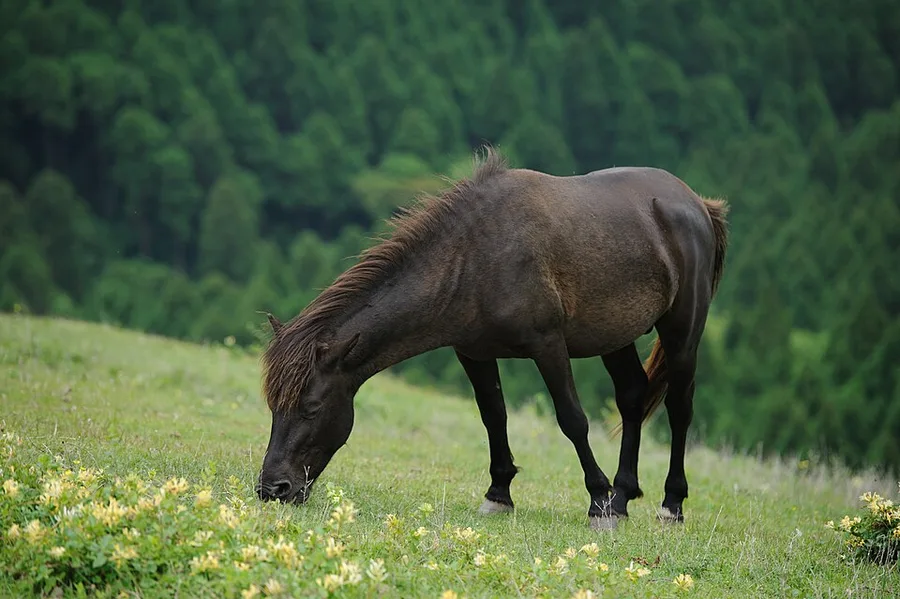
Photo: Koji Ishii · CC BY 2.0 · Wikimedia Commons
Horse breed
Misaki
The Misaki is a small, hardy horse from the Misaki region of Japan, the southern tip of the Miura Peninsula near Kyushu's neighboring islands. It descends from native Japanese pony stock and was historically used as a working animal for carrying loads and light farm and transport tasks in rugged, mountainous terrain. Its compact build and sure footing made it well suited to hard labor on difficult ground.
Owners describe the Misaki as sturdy, calm, and steady under saddle or in harness. It is generally considered a good candidate for riders who want a dependable, unflappable mount, though its small size makes it best for children and smaller adults. Its way of going is practical rather than flashy, with a willingness to work that many owners find rewarding.
Day to day, the Misaki does best with regular movement, turnout, and the company of other horses. It needs consistent handling, regular hoof care, and a steady routine of work to stay fit and content.
Good for: First-time owners, trail riders, and families
| Size | small |
| Weight | 441–661 lb |
| Height | 39–47 in |
| Life span | 25–30 years |
| Exercise | about 45 min a day |
| Shedding | moderate |
| Origin | Japan |
Misakis are usually easy keepers, so watch their weight and pasture intake closely from the start.
Living with a Misaki
Exercise
Misakis do best with daily movement, whether ridden, driven, or worked in hand, plus regular turnout to graze and move freely. Without enough work, they can become bored, overweight, or restless, and their feet and fitness can suffer.
Grooming
Misakis have a dense, weather-resistant coat that is typically easy to maintain with regular brushing. Their manes and tails are usually left natural, and clipping is rarely needed unless they are worked hard in winter. Regular hoof trimming or shoeing every four to eight weeks helps keep their feet
At home
Misakis generally do well with a mix of turnout and shelter, and they tolerate cold and wet weather better than many breeds because of their hardy frame. They are usually comfortable living in a herd and do best with companionship. They tend to be easy keepers, so most do well on good pasture and a modest amount of hay, with concentrate feed reserved for those needing extra condition.
Training
Misakis are typically willing and attentive learners who respond well to patient, consistent handling. They are often suited to trail riding, light work, and general pleasure riding, and are sometimes used in harness. A green Misaki should be expected to progress steadily rather than quickly, with a sensible, calm approach building confidence over time.
Health
Owners should ask a veterinarian about the health concerns that are most relevant to small, easy-keeping horses, particularly metabolic issues and laminitis, which can be triggered by rich pasture and excess weight. Regular dental care, parasite management, and body condition monitoring are good practices. A vet who kn
- Laminitis
- Obesity
- Dental problems
Known tendencies, not a diagnosis: ask your vet about this breed.
The numbers for a Misaki
Forage and water, adult
8–14 lb of hay a day
Forage at 1.5–2.5% of body weight at 441–661 lb, and 5–9 gallons of water, more in heat and on hay alone. Grain only for the work being done.
What a year costs
$2,150–$3,950
Hay about $964, plus farrier every 6–8 weeks, routine vet, dental and dewormer. Board, lessons and showing on top; US averages.
Weather
Watch above 80°F, stop at 90°F
Blanket or shelter below 10°F. Horses mind heat more than cold: with shelter and water most are fine to about 10°F unclipped, and above a heat index of 150 (air °F + humidity %) ride early or not at all.
Where a Misaki is comfortable
Easy most of the year: Alabama, Alaska, Arkansas, California, Colorado, Connecticut, Delaware, Florida, Georgia, Hawaii, Idaho, Illinois, Indiana, Iowa, Kansas, Kentucky, Louisiana, Maine, Maryland, Massachusetts, Michigan, Minnesota, Mississippi, Missouri, Montana, Nebraska, New Hampshire, New Jersey, New Mexico, New York, North Carolina, Ohio, Oregon, Pennsylvania, Rhode Island, South Carolina, South Dakota, Tennessee, Vermont, Virginia, Washington, Washington, DC, West Virginia, Wisconsin, Wyoming.
Summer needs care (early rides, shade, fans): Arizona, Nevada, Oklahoma, Texas, Utah.
Winter needs care (blanket, shelter, water that is not frozen): North Dakota.
From typical July highs and January lows by state and this breed's heat and cold limits. Shade, shelter and water change everything; this is about turnout and work.
Right now
Latest feed recalls
Multiple Brand Names: Chicken Feed, Swine Feed, Cattle Feed, Horse Feed
ADM Animal Nutrition · Apr 1 · Specific lots may contain elevated levels of calcium, phosphorus, magnesium, sodium and/or chloride and may harm chickens, swine, beef cattle and equine.
Rescue a Misaki
Shelters and breed rescues list Misakis and Misaki mixes every week. Search adoptable Misakis on Petfinder → New to the breed? The first-horse kit →
Is a Misaki right for you?
- Yes if you want a calm, reliable horse for trail riding.
- Yes if you have a small rider or a child learning to ride.
- Yes if you enjoy hardy horses that handle cold weather well.
- Think twice if you need a fast or highly athletic competition horse.
- Think twice if you have a large adult rider who needs more size.
Questions owners ask
Is the Misaki good for beginners?
Yes, the Misaki is often considered a good choice for beginners because of its calm temperament and steady nature. Its small size also makes it approachable for newer riders.
How much does a Misaki cost?
Prices vary by region, age, training, and bloodline. Because the breed is rare outside Japan, it can be harder to find and may cost more than common pony breeds.
How tall does a Misaki get?
Misakis are small horses, typically around 100 to 120 centimetres at the withers. They are compact, sturdy animals rather than tall ones.
How long do Misakis live?
Misakis often live into their mid-twenties or later with good care. Diet, dental care, and weight management all play a role in longevity.
Are Misakis easy keepers?
Many Misakis are easy keepers, meaning they gain weight readily on good pasture. Owners should monitor body condition and limit rich feed to avoid health problems.
Similar breeds
Written by Hoofdeck editors · updated Nov 13, 2026 · facts from Wikidata and Wikimedia Commons; health notes are general veterinary guidance, not a diagnosis.