
Horse breeds / Marwari horse
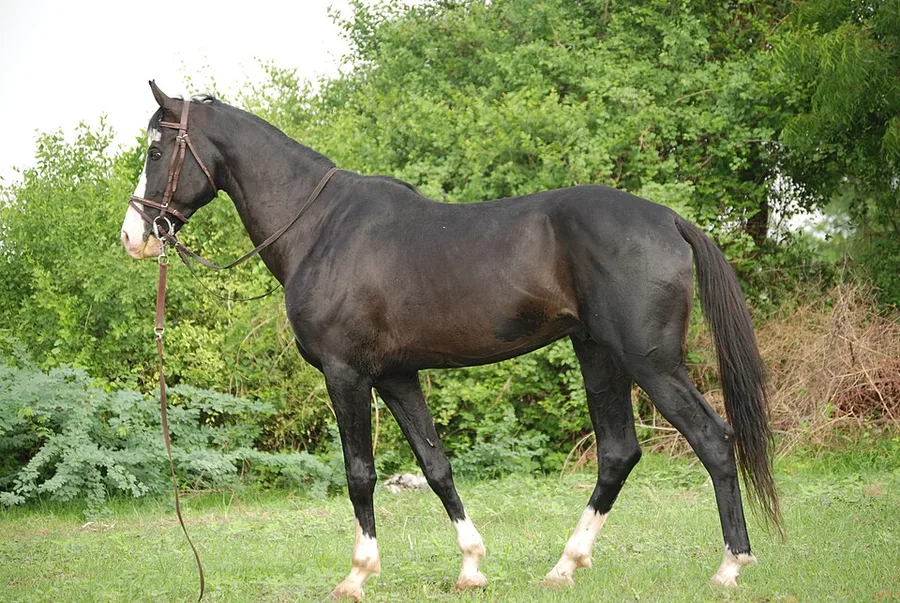
Photo: Virendra.kankariya · Public domain · Wikimedia Commons
Horse breed
Marwari horse
The Marwari comes from the Marwar region of Rajasthan in western India, where it was developed over centuries by local communities and cavalry needs. It was bred to be a hardy, loyal war and riding horse, able to cover long distances on little water and sparse forage in the desert climate.
Marwaris are known for their distinctive inward-curving ears that can touch at the tips, a feature that is part of the breed standard. They are usually calm, intelligent and very attached to their people, often described as affectionate and willing. Their gaited, comfortable way of going suits experienced riders on trails, though their independent streak means they are not always a simple choice for complete beginners.
Day to day, a Marwari needs regular movement, daily handling and steady companionship. They do best with a stable routine and someone who enjoys building a relationship rather than simply riding.
Good for: Experienced owners, trail riders, endurance enthusiasts
| Size | medium |
| Weight | 882–1102 lb |
| Height | 56–61 in |
| Life span | 25–30 years |
| Exercise | about 45 min a day |
| Shedding | moderate |
| Origin | India |
Marwaris are loyal but independent, so a first-time owner should expect a relationship that takes time and patience to develop.
Living with a Marwari horse
Exercise
Most healthy adult Marwaris benefit from daily ridden or in-hand work along with turnout to move freely. Too little exercise can lead to weight gain, boredom and behavior issues.
Grooming
The Marwari has a fine, short coat that is easy to maintain, with a moderately full mane and tail. Regular brushing and hoof care are the main needs, and clipping is rarely required except for competition.
At home
Marwaris are hardy and tolerate heat well, but they still need shelter from cold, wet weather and access to fresh water. Turnout is ideal, and they do well with a companion animal, since they can become lonely when kept alone. They are generally easy keepers on good pasture, though many owners add forage and monitor body condition closely.
Training
Marwaris are intelligent and learn quickly when training is patient and consistent, though they can resist harsh or repetitive methods. They are often suited to trail riding, endurance-style work, and pleasure riding, and some excel in western and dressage-style work. Expect a green Marwari to take time to settle and to form a bond before it fully cooperates.
Health
Marwaris are generally considered hardy, but owners should be aware of risks common to many horses, particularly those related to metabolism and weight. Ask a veterinarian about breed-specific screening and a suitable management plan for your horse.
- Metabolic issues
- Laminitis
- Colic
Known tendencies, not a diagnosis: ask your vet about this breed.
The numbers for a Marwari horse
Forage and water, adult
15–25 lb of hay a day
Forage at 1.5–2.5% of body weight at 882–1102 lb, and 9–16 gallons of water, more in heat and on hay alone. Grain only for the work being done.
What a year costs
$2,950–$5,050
Hay about $1,752, plus farrier every 6–8 weeks, routine vet, dental and dewormer. Board, lessons and showing on top; US averages.
Weather
Watch above 85°F, stop at 95°F
Blanket or shelter below 20°F. Bred for heat: fine working in warm weather with water and salt, but a thin coat and skin want a blanket and shelter below about 20°F.
Where a Marwari horse is comfortable
Easy most of the year: Alabama, Arkansas, California, Colorado, Connecticut, Delaware, Florida, Georgia, Hawaii, Idaho, Illinois, Indiana, Iowa, Kansas, Kentucky, Louisiana, Maine, Maryland, Massachusetts, Michigan, Mississippi, Missouri, Montana, Nebraska, New Hampshire, New Jersey, New Mexico, New York, North Carolina, Ohio, Oklahoma, Oregon, Pennsylvania, Rhode Island, South Carolina, Tennessee, Texas, Utah, Virginia, Washington, Washington, DC, West Virginia, Wyoming.
Summer needs care (early rides, shade, fans): Arizona, Nevada.
Winter needs care (blanket, shelter, water that is not frozen): Alaska, Minnesota, North Dakota, South Dakota, Vermont, Wisconsin.
From typical July highs and January lows by state and this breed's heat and cold limits. Shade, shelter and water change everything; this is about turnout and work.
Right now
Latest feed recalls
Multiple Brand Names: Chicken Feed, Swine Feed, Cattle Feed, Horse Feed
ADM Animal Nutrition · Apr 1 · Specific lots may contain elevated levels of calcium, phosphorus, magnesium, sodium and/or chloride and may harm chickens, swine, beef cattle and equine.
Rescue a Marwari horse
Shelters and breed rescues list Marwari horses and Marwari horse mixes every week. Search adoptable Marwari horses on Petfinder → New to the breed? The first-horse kit →
Is a Marwari horse right for you?
- Yes if you enjoy building a close bond with your horse
- Yes if you want a hardy horse for trail riding
- Yes if you can provide daily movement and companionship
- Think twice if you want a horse that is simple for total beginners
- Think twice if you need a horse that is easy to keep at a high weight
Questions owners ask
Are Marwari horses good for beginners?
They can suit beginners with patience and experienced guidance, but their independent nature means they are often better for handlers with some experience.
How much does a Marwari horse cost?
Prices vary widely by region, bloodline, and training. Rare or well-bred individuals may cost considerably more than average horses.
How tall do Marwari horses get?
Adults typically stand around 142 to 155 centimeters at the withers, which is roughly 14 to 15 hands.
How long do Marwari horses live?
With good care, Marwaris commonly live into their mid to late twenties and sometimes beyond.
Are Marwaris easy keepers?
Many are relatively easy keepers on good pasture, but individual metabolism varies, so monitor weight closely.
Similar breeds
Written by Hoofdeck editors · updated Nov 13, 2026 · facts from Wikidata and Wikimedia Commons; health notes are general veterinary guidance, not a diagnosis.