
Horse breeds / Kiger Mustang
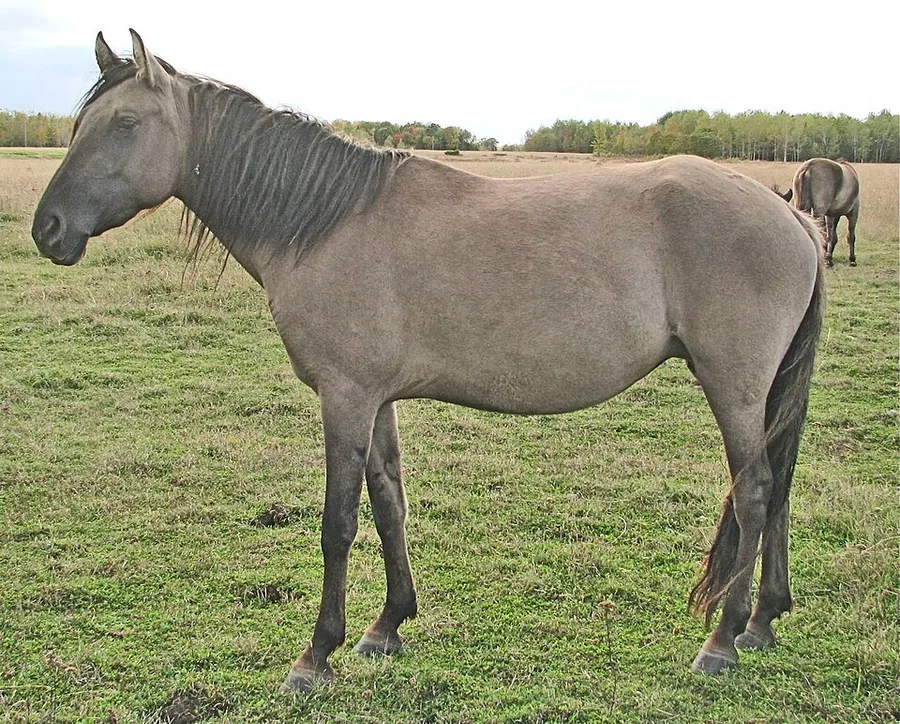
Photo: Selona · Public domain · Wikimedia Commons
Horse breed
Kiger Mustang
The Kiger Mustang is a free-roaming horse descended from Spanish horses that came to North America with explorers and settlers in the 1500s and 1600s. Its name comes from the Kiger Gorge area of southeastern Oregon, where a distinct line of wild horses has long lived in the Steens Mountain region. Many were bred to be practical working animals, used for ranch work, travel and carrying loads across rough country.
Kigers are known for their hardy build, sure footing and calm, curious nature. Many are willing and intelligent, and a well-handled individual can make a dependable trail or pleasure mount, though they can be independent and take time to trust a new person. Their gaits are typically smooth and sure, and their moderate size suits many adult riders. Patience and consistency matter more than force, so they often suit owners who enjoy building a relationship from the ground up.
Day to day, a Kiger needs regular turnout, daily movement and access to forage. They do best with a herd or at least a stable companion. Without enough work and mental stimulation, they can become bored or pushy. Regular hoof care, a clean and consistent routine, and steady handling help them stay healthy and content.
Good for: Trail riders, ranch work, patient owners
| Size | small |
| Weight | 882–1102 lb |
| Height | 56–60 in |
| Life span | 25–30 years |
| Exercise | about 60 min a day |
| Shedding | moderate |
| Origin | United States |
Kigers can be independent and take time to trust, so a patient, experienced trainer or mentor is a valuable help.
Living with a Kiger Mustang
Exercise
A healthy adult Kiger generally benefits from daily movement, whether through riding, in-hand work or free turnout. Regular work keeps them fit and mentally settled. With too little exercise, they can become restless, bored or prone to unwanted behavior.
Grooming
Kigers have a dense, weather-resistant coat that is easy to maintain with regular brushing. Their mane and tail are typically full and can be left natural or lightly trimmed. Hooves need regular trimming or shoeing every four to eight weeks. Clipping is rarely needed unless the horse is worked hard
At home
Kigers do well on pasture with good shelter and room to move, and many handle the weather with ease. Their hardy constitution helps them cope with varied climates. They are generally happy in a herd, and turning one out alone can lead to stress. Many are easy keepers, so good forage with careful monitoring of body condition is usually enough, with supplements added only as needed.
Training
Kigers tend to learn through patience, clear cues and calm repetition. They often excel at trail riding, ranch work and pleasure riding, and many show a natural sure-footedness on uneven terrain. A green Kiger may take longer to build trust than a more domesticated breed, so expect a steady, unhurried pace and consistent groundwork before asking for much under saddle.
Health
Kigers are generally considered hardy, but like many horses they can be affected by conditions related to diet and metabolism, such as laminitis, which is worth managing carefully. Ask your veterinarian about breed-specific screening and a feeding plan suited to your horse's condition.
- Laminitis
- Metabolic issues
- Colic
Known tendencies, not a diagnosis: ask your vet about this breed.
The numbers for a Kiger Mustang
Forage and water, adult
15–25 lb of hay a day
Forage at 1.5–2.5% of body weight at 882–1102 lb, and 9–16 gallons of water, more in heat and on hay alone. Grain only for the work being done.
What a year costs
$2,950–$5,050
Hay about $1,752, plus farrier every 6–8 weeks, routine vet, dental and dewormer. Board, lessons and showing on top; US averages.
Weather
Watch above 85°F, stop at 95°F
Blanket or shelter below 20°F. Bred for heat: fine working in warm weather with water and salt, but a thin coat and skin want a blanket and shelter below about 20°F.
Where a Kiger Mustang is comfortable
Easy most of the year: Alabama, Arkansas, California, Colorado, Connecticut, Delaware, Florida, Georgia, Hawaii, Idaho, Illinois, Indiana, Iowa, Kansas, Kentucky, Louisiana, Maine, Maryland, Massachusetts, Michigan, Mississippi, Missouri, Montana, Nebraska, New Hampshire, New Jersey, New Mexico, New York, North Carolina, Ohio, Oklahoma, Oregon, Pennsylvania, Rhode Island, South Carolina, Tennessee, Texas, Utah, Virginia, Washington, Washington, DC, West Virginia, Wyoming.
Summer needs care (early rides, shade, fans): Arizona, Nevada.
Winter needs care (blanket, shelter, water that is not frozen): Alaska, Minnesota, North Dakota, South Dakota, Vermont, Wisconsin.
From typical July highs and January lows by state and this breed's heat and cold limits. Shade, shelter and water change everything; this is about turnout and work.
Right now
Latest feed recalls
Multiple Brand Names: Chicken Feed, Swine Feed, Cattle Feed, Horse Feed
ADM Animal Nutrition · Apr 1 · Specific lots may contain elevated levels of calcium, phosphorus, magnesium, sodium and/or chloride and may harm chickens, swine, beef cattle and equine.
Rescue a Kiger Mustang
Shelters and breed rescues list Kiger Mustangs and Kiger Mustang mixes every week. Search adoptable Kiger Mustangs on Petfinder → New to the breed? The first-horse kit →
Is a Kiger Mustang right for you?
- Yes if you enjoy trail riding and rough terrain
- Yes if you want a hardy horse for varied climates
- Yes if you have patience to build trust slowly
- Think twice if you want a quick, highly trained show horse
- Think twice if you cannot provide daily movement and companionship
Questions owners ask
Are Kiger Mustangs good for beginners?
They can suit a patient beginner with experienced guidance, since they are calm and steady but can be independent and slow to trust.
How much does a Kiger Mustang cost?
Prices vary widely by source, training and bloodline. Adoption through government programs is often lower cost than buying from a breeder.
How tall is a Kiger Mustang?
Most stand roughly 14 to 15 hands at the withers, which is a moderate, comfortable size for many adult riders.
How long do Kiger Mustangs live?
With good care, Kigers commonly live into their mid-twenties to around thirty years, depending on health and management.
Are Kiger Mustangs easy keepers?
Many are easy keepers, so good forage and careful monitoring of weight usually suffice. Watch closely for weight gain to avoid metabolic problems.
Similar breeds
Written by Hoofdeck editors · updated Nov 13, 2026 · facts from Wikidata and Wikimedia Commons; health notes are general veterinary guidance, not a diagnosis.