
Horse breeds / Fjord horse
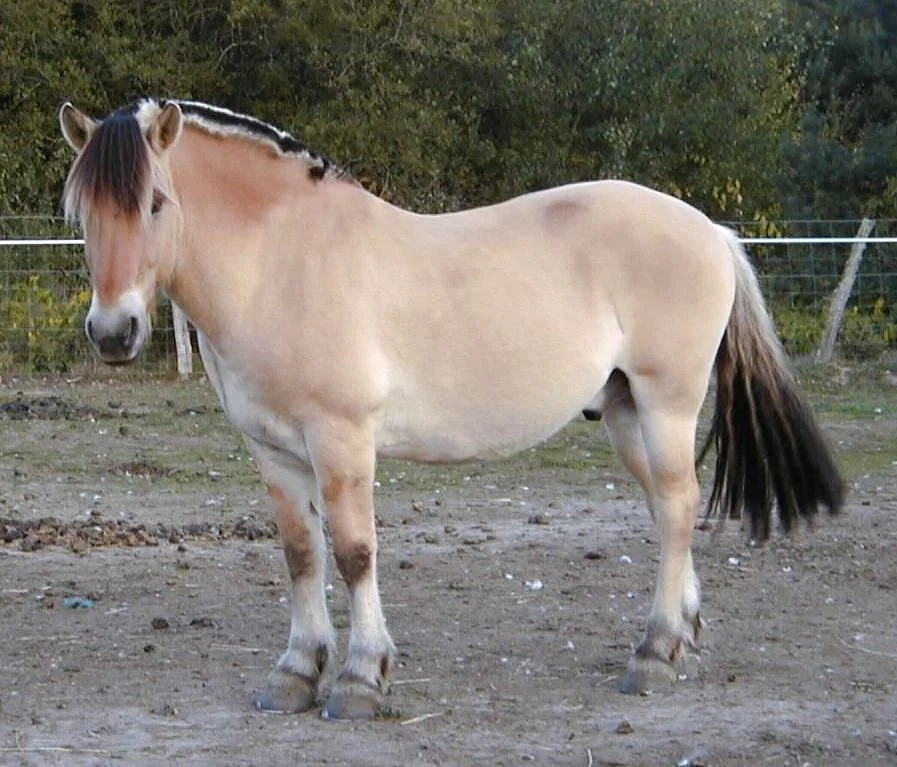
Photo: Plasma at French Wikipedia · Public domain · Wikimedia Commons
Horse breed
Fjord horse
The Fjord horse comes from the fjord region of western Norway, where it has lived for thousands of years. It is one of the oldest and most distinct native breeds in Europe, shaped by a harsh mountain environment and used for farm work, pulling loads, and carrying people across rugged terrain. Its dun coloring with a dark dorsal stripe and light mane is considered a hallmark of the breed.
Fjord horses are known for a calm, willing, and friendly disposition, which makes them well suited to riders who are new to horses. They are sturdy, sure-footed, and have a smooth, comfortable gait, so many owners enjoy them on trail rides and as driving horses. They tend to be sensible and steady rather than flashy, and they often form strong bonds with their people.
Day to day, a Fjord needs regular handling, turnout with room to move, and consistent work to stay fit and content. They are social animals and do best with companionship, whether from another horse or a steady herd. A Fjord that is bored or left alone for long stretches can become less cooperative.
Good for: First-time owners, trail riders, families
| Size | small |
| Weight | 882–1102 lb |
| Height | 52–58 in |
| Life span | 25–30 years |
| Exercise | about 60 min a day |
| Shedding | heavy |
| Origin | Norway |
Fjords are easy keepers, so watching their weight and diet closely is as important as riding them.
Living with a Fjord horse
Exercise
Most Fjords need about an hour of regular riding or in-hand work most days, plus daily turnout to move freely. Without enough exercise they can become overweight and dull in their work. Consistent routine helps keep them fit and balanced.
Grooming
The Fjord's dun coat needs regular brushing, and the dorsal stripe and mane are usually kept neat with a comb or by hand-pulling. Their thick winter coat sheds heavily in spring. Hooves should be trimmed or shod on a regular schedule, and clipping is rarely needed.
At home
Fjords are hardy and handle cold weather well thanks to their thick winter coat, so many do comfortably outdoors with a shelter available for wind and rain. They generally do well in a herd and become unsettled when isolated. Most are easy keepers that gain weight on good pasture, so feed and grazing should be monitored closely.
Training
Fjords are intelligent, eager to please, and usually quick to learn, which makes them a pleasure to start under saddle or in harness. They excel at trail riding, driving, and light dressage, and they are often seen in therapeutic riding programs. A green Fjord is typically calm and steady, though young horses may need patience while building strength and focus.
Health
Fjords are generally considered a robust breed, but like other easy keepers they can be prone to weight-related conditions such as laminitis and metabolic issues. Ask a veterinarian about diet, body condition, and hoof care suited to your individual horse.
- Laminitis
- Metabolic issues
- Obesity-related conditions
Known tendencies, not a diagnosis: ask your vet about this breed.
The numbers for a Fjord horse
Forage and water, adult
15–25 lb of hay a day
Forage at 1.5–2.5% of body weight at 882–1102 lb, and 9–16 gallons of water, more in heat and on hay alone. Grain only for the work being done.
What a year costs
$2,950–$5,050
Hay about $1,752, plus farrier every 6–8 weeks, routine vet, dental and dewormer. Board, lessons and showing on top; US averages.
Weather
Watch above 75°F, stop at 85°F
Blanket or shelter below 0°F. A heavy coat and a big body hold heat: this type copes with real cold and struggles first in humid summer heat; clip and shade before you blanket.
Where a Fjord horse is comfortable
Easy most of the year: Alaska, California, Connecticut, Delaware, Illinois, Indiana, Iowa, Kentucky, Maine, Massachusetts, Michigan, Minnesota, Montana, New Hampshire, New Jersey, New York, North Dakota, Ohio, Oregon, Pennsylvania, Rhode Island, South Dakota, Vermont, Washington, West Virginia, Wisconsin, Wyoming.
Summer needs care (early rides, shade, fans): Alabama, Arizona, Arkansas, Colorado, Florida, Georgia, Hawaii, Idaho, Kansas, Louisiana, Maryland, Mississippi, Missouri, Nebraska, Nevada, New Mexico, North Carolina, Oklahoma, South Carolina, Tennessee, Texas, Utah, Virginia, Washington, DC.
From typical July highs and January lows by state and this breed's heat and cold limits. Shade, shelter and water change everything; this is about turnout and work.
Right now
Latest feed recalls
Multiple Brand Names: Chicken Feed, Swine Feed, Cattle Feed, Horse Feed
ADM Animal Nutrition · Apr 1 · Specific lots may contain elevated levels of calcium, phosphorus, magnesium, sodium and/or chloride and may harm chickens, swine, beef cattle and equine.
Rescue a Fjord horse
Shelters and breed rescues list Fjord horses and Fjord horse mixes every week. Search adoptable Fjord horses on Petfinder → New to the breed? The first-horse kit →
Is a Fjord horse right for you?
- Yes if you want a calm, friendly horse for trail riding
- Yes if you want a sturdy horse that handles cold weather well
- Yes if you can provide regular work and herd companionship
- Think twice if you need a fast or highly competitive jumper
- Think twice if you have a hard time managing an easy keeper's weight
Questions owners ask
Are Fjord horses good for beginners?
Yes, Fjords are widely considered an excellent choice for beginners thanks to their calm, willing temperament and steady, sure-footed nature.
How much does a Fjord horse cost?
Prices vary widely by age, training, and region. Purchase costs and ongoing care should be discussed with breeders and local horse professionals.
How tall do Fjord horses get?
Fjords typically stand about 13 to 14.5 hands, or roughly 133 to 148 centimetres at the withers, making them compact and sturdy.
How long do Fjord horses live?
Fjord horses commonly live into their mid-to-late twenties, and many remain active and useful well into later years with good care.
What are Fjord horses used for?
Fjords are used for trail riding, driving, light riding, therapeutic programs, and farm work, valued for their versatility and steady temperament.
Similar breeds
Written by Hoofdeck editors · updated Nov 13, 2026 · facts from Wikidata and Wikimedia Commons; health notes are general veterinary guidance, not a diagnosis.