
Horse breeds / Carolina Marsh Tacky
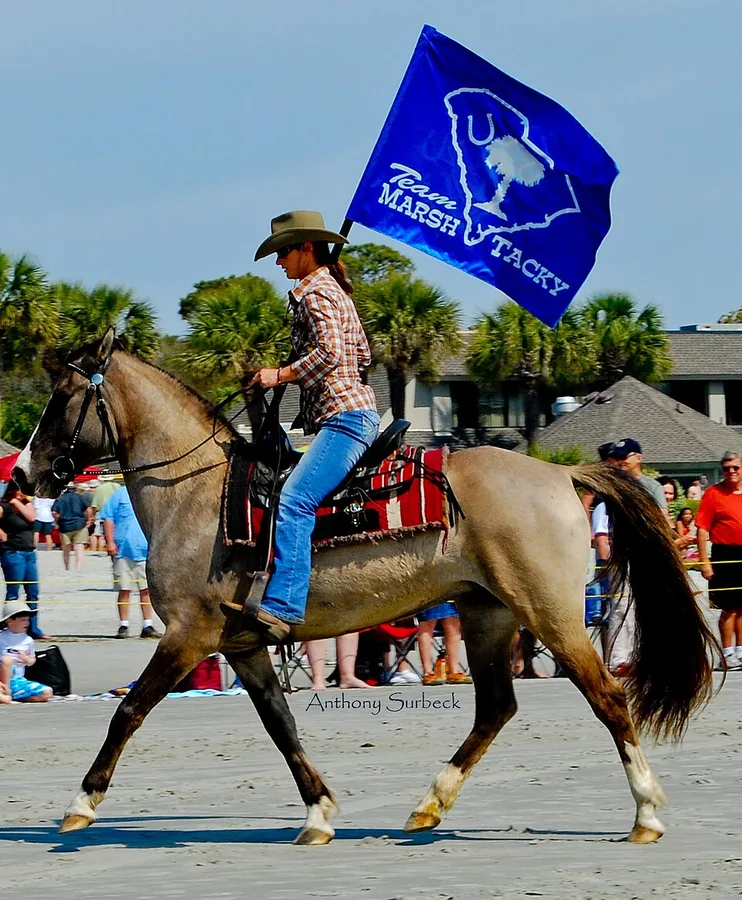
Photo: Anthony Surbeck · CC BY 2.0 · Wikimedia Commons
Horse breed
Carolina Marsh Tacky
The Carolina Marsh Tacky is a colonial-era American horse, descended from Spanish stock brought to the Southeast in the 1500s and 1600s and later shaped by generations of frontier and plantation use. Bred to work cattle, travel rough country, and carry riders over long distances on modest feed, it was once common across the coastal Carolinas and Georgia. Its numbers fell sharply through the twentieth century, and dedicated breeders have worked to preserve the lines.
Owners who meet a Marsh Tacky usually notice its calm, friendly nature and its sure-footed, ground-covering walk. It is a practical, hardy horse with a willing attitude, and it tends to suit confident adults and experienced beginners well, provided the rider is patient. Its size and gentle disposition make it a comfortable trail companion, though it is not a show-ring specialist.
Day to day, the Marsh Tacky does best with regular turnout, daily movement, and steady work on trails or in the field. It is a social animal that needs equine companionship and does not thrive when left isolated in a stall. Consistent handling and routine care keep it content and easy to manage.
Good for: First-time owners, trail riders, and families
| Size | small |
| Weight | 772–992 lb |
| Height | 54–59 in |
| Life span | 25–30 years |
| Exercise | about 45 min a day |
| Shedding | moderate |
| Origin | United States |
Marsh Tackies are easy keepers, so watch body condition closely to prevent weight gain and laminitis.
Living with a Carolina Marsh Tacky
Exercise
Most Marsh Tackies need about 30 to 60 minutes of ridden or in-hand work most days, plus turnout to move freely. With too little exercise they can become overweight and restless, and they may lose the fitness that suits their trail-ready nature.
Grooming
The coat is typically short and easy to maintain, with a thick winter coat in colder months. Mane and tail are usually full but low in maintenance, needing only occasional detangling. Feathers are not a feature of this breed. Regular hoof care every six to eight weeks and routine clipping only if th
At home
The Marsh Tacky is famously hardy and does well with turnout on pasture for most of the year, adapting to humid southern summers and cold snaps alike. It handles a herd comfortably and is happiest with at least one companion. Most are easy keepers, so good forage and a modest ration of supplements are usually enough, though body condition should be monitored.
Training
Marsh Tackies are intelligent and eager to please, learning quickly with calm, consistent handling. They excel on trail rides, in pleasure driving, and in the western and endurance disciplines. Expect a green horse to be steady and sensible under saddle, though it may take time to build the finish and collection needed for advanced dressage or jumping.
Health
Marsh Tackies are generally sound, but as easy keepers they can be prone to weight gain and related metabolic concerns, including laminitis. Because breed-specific health data is limited, ask your veterinarian about a suitable screening and care plan for your horse.
- Laminitis
- Obesity
- Colic
Known tendencies, not a diagnosis: ask your vet about this breed.
The numbers for a Carolina Marsh Tacky
Forage and water, adult
13–22 lb of hay a day
Forage at 1.5–2.5% of body weight at 772–992 lb, and 8–14 gallons of water, more in heat and on hay alone. Grain only for the work being done.
What a year costs
$2,750–$4,750
Hay about $1,533, plus farrier every 6–8 weeks, routine vet, dental and dewormer. Board, lessons and showing on top; US averages.
Weather
Watch above 80°F, stop at 90°F
Blanket or shelter below 10°F. Horses mind heat more than cold: with shelter and water most are fine to about 10°F unclipped, and above a heat index of 150 (air °F + humidity %) ride early or not at all.
Where a Carolina Marsh Tacky is comfortable
Easy most of the year: Alabama, Alaska, Arkansas, California, Colorado, Connecticut, Delaware, Florida, Georgia, Hawaii, Idaho, Illinois, Indiana, Iowa, Kansas, Kentucky, Louisiana, Maine, Maryland, Massachusetts, Michigan, Minnesota, Mississippi, Missouri, Montana, Nebraska, New Hampshire, New Jersey, New Mexico, New York, North Carolina, Ohio, Oregon, Pennsylvania, Rhode Island, South Carolina, South Dakota, Tennessee, Vermont, Virginia, Washington, Washington, DC, West Virginia, Wisconsin, Wyoming.
Summer needs care (early rides, shade, fans): Arizona, Nevada, Oklahoma, Texas, Utah.
Winter needs care (blanket, shelter, water that is not frozen): North Dakota.
From typical July highs and January lows by state and this breed's heat and cold limits. Shade, shelter and water change everything; this is about turnout and work.
Right now
Latest feed recalls
Multiple Brand Names: Chicken Feed, Swine Feed, Cattle Feed, Horse Feed
ADM Animal Nutrition · Apr 1 · Specific lots may contain elevated levels of calcium, phosphorus, magnesium, sodium and/or chloride and may harm chickens, swine, beef cattle and equine.
Rescue a Carolina Marsh Tacky
Shelters and breed rescues list Carolina Marsh Tackys and Carolina Marsh Tacky mixes every week. Search adoptable Carolina Marsh Tackys on Petfinder → New to the breed? The first-horse kit →
Is a Carolina Marsh Tacky right for you?
- Yes if you want a hardy, low-maintenance trail horse
- Yes if you have a calm, patient riding style
- Yes if you can offer daily turnout and herd companionship
- Think twice if you need a specialized show-ring horse
- Think twice if you struggle to manage weight on easy keepers
Questions owners ask
Is the Carolina Marsh Tacky good for beginners?
Yes, its calm temperament and steady nature make it a good match for confident beginners, especially on trails. Patience and consistent handling help a green rider or horse progress well.
How much does a Carolina Marsh Tacky cost?
Prices vary widely by bloodline, age, training, and region. Because the breed is rare, ask breeders and rescue groups about current availability and expected costs.
How tall does a Carolina Marsh Tacky get?
Adults typically stand around 137 to 150 centimeters at the withers, roughly 13.5 to 14.5 hands. Individual horses can vary somewhat.
How long does a Carolina Marsh Tacky live?
With good care, they commonly live about 25 to 30 years. Regular veterinary care, proper weight management, and dental checks support a long, healthy life.
Is the Carolina Marsh Tacky an easy keeper?
Yes, it is generally an easy keeper that thrives on pasture with modest feed. Owners should monitor weight carefully, since overeating can lead to health problems.
Similar breeds

Written by Hoofdeck editors · updated Nov 13, 2026 · facts from Wikidata and Wikimedia Commons; health notes are general veterinary guidance, not a diagnosis.