
Horse breeds / Camargue horse
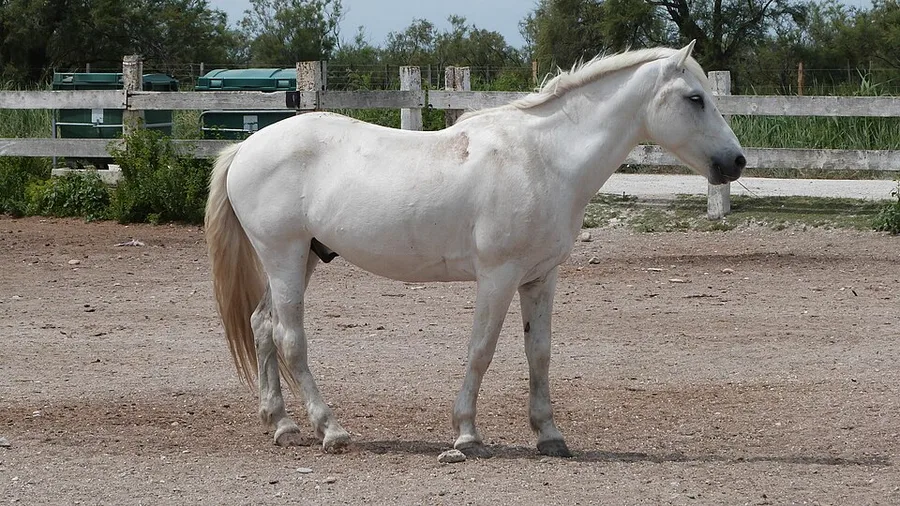
Photo: Peter Broster · CC BY 3.0 · Wikimedia Commons
Horse breed
Camargue horse
The Camargue horse comes from the marshlands of the Rhône delta in southern France, where it has lived semi-wild for centuries among the lagoons, reed beds and salt flats of the Camargue. Its ancestors were bred to work cattle, the famous manades of black bulls, and to move through deep wetland terrain where other horses would struggle. That history gave it a sure footing, stamina and a practical, unfussy nature.
To own and ride a Camargue is to ride a horse with a quiet, steady mind and a comfortable, ground-covering gait. They are typically willing and sensible, and many are happy to take on trail work and long days out. Their calm manner suits many beginners, though a horse raised semi-feral can be more independent than a domestic breed, so patient handling from the start matters.
Day to day, a Camargue thrives with generous turnout, regular work and the company of other horses. These are social animals that do best with herd life. Keeping them in isolation or confined to a small stall tends to frustrate them, so plan for space, movement and a stable companion.
Good for: Trail riders, experienced owners, working ranch use
| Size | medium |
| Weight | 937 lb |
| Height | 56–59 in |
| Life span | 25–30 years |
| Exercise | about 45 min a day |
| Shedding | heavy |
| Origin | France |
Camargues are sensible and hardy, but their semi-independent nature means consistent, patient handling from day one matters.
Living with a Camargue horse
Exercise
Most healthy adults need regular daily movement, ideally a ridden or in-hand session plus ample turnout to roam. Without enough work and space, they can become bored, restless and prone to unwanted behavior. Consistent exercise keeps them balanced and content.
Grooming
The Camargue has a thick, dense coat that is typically grey or sometimes bay or black, and it grows heavier for winter. Mane and tail are full and usually left natural. Hooves are generally tough, but they still need regular trimming or shoeing based on workload and terrain.
At home
Camargues do best with long daily turnout and can cope well with exposure to the weather, thanks to a dense coat and tough constitution. They generally manage well in a herd and are happier when they have company. They tend to be easy keepers, so good pasture and modest feed often suffice, though supplementing with hay in winter is wise.
Training
Camargues learn steadily and reward consistent, patient handling rather than harsh pressure. They are well suited to trail riding, ranch-style western work and in-hand or working-cattle activities. A green Camargue may need time to settle and gain confidence, so expect a thoughtful, deliberate learner rather than a quick showy one.
Health
Camargues are generally considered a hardy breed, but owners should be aware that horses on rich pasture can be prone to metabolic issues such as laminitis if weight is not managed. Ask your veterinarian about the risks specific to your horse, including feed, pasture access and weight monitoring.
- Laminitis
- Metabolic issues
- Colic
Known tendencies, not a diagnosis: ask your vet about this breed.
The numbers for a Camargue horse
Forage and water, adult
14–23 lb of hay a day
Forage at 1.5–2.5% of body weight at 937–937 lb, and 8–15 gallons of water, more in heat and on hay alone. Grain only for the work being done.
What a year costs
$2,800–$4,850
Hay about $1,621, plus farrier every 6–8 weeks, routine vet, dental and dewormer. Board, lessons and showing on top; US averages.
Weather
Watch above 80°F, stop at 90°F
Blanket or shelter below 10°F. Horses mind heat more than cold: with shelter and water most are fine to about 10°F unclipped, and above a heat index of 150 (air °F + humidity %) ride early or not at all.
Where a Camargue horse is comfortable
Easy most of the year: Alabama, Alaska, Arkansas, California, Colorado, Connecticut, Delaware, Florida, Georgia, Hawaii, Idaho, Illinois, Indiana, Iowa, Kansas, Kentucky, Louisiana, Maine, Maryland, Massachusetts, Michigan, Minnesota, Mississippi, Missouri, Montana, Nebraska, New Hampshire, New Jersey, New Mexico, New York, North Carolina, Ohio, Oregon, Pennsylvania, Rhode Island, South Carolina, South Dakota, Tennessee, Vermont, Virginia, Washington, Washington, DC, West Virginia, Wisconsin, Wyoming.
Summer needs care (early rides, shade, fans): Arizona, Nevada, Oklahoma, Texas, Utah.
Winter needs care (blanket, shelter, water that is not frozen): North Dakota.
From typical July highs and January lows by state and this breed's heat and cold limits. Shade, shelter and water change everything; this is about turnout and work.
Right now
Latest feed recalls
Multiple Brand Names: Chicken Feed, Swine Feed, Cattle Feed, Horse Feed
ADM Animal Nutrition · Apr 1 · Specific lots may contain elevated levels of calcium, phosphorus, magnesium, sodium and/or chloride and may harm chickens, swine, beef cattle and equine.
Rescue a Camargue horse
Shelters and breed rescues list Camargue horses and Camargue horse mixes every week. Search adoptable Camargue horses on Petfinder → New to the breed? The first-horse kit →
Is a Camargue horse right for you?
- Yes if you want a hardy, low-fuss horse for trail riding
- Yes if your horse can live in turnout with a herd
- Yes if you enjoy patient, thoughtful training
- Think twice if you want a highly refined show horse
- Think twice if you can only offer limited turnout and space
Questions owners ask
Are Camargue horses good for beginners?
They can suit confident beginners with calm temperaments and access to an experienced trainer. Their independent streak means they are better for someone willing to learn patient handling.
How much do Camargue horses cost?
Prices vary widely by age, training and bloodline, and depend on your region. Speak with reputable breeders and compare offers before deciding.
How tall are Camargue horses?
They typically stand about 142 to 150 cm at the withers, which is roughly 14 to 14.2 hands. They are compact but sturdy.
How long do Camargue horses live?
A well-kept Camargue often lives into its mid-twenties to around thirty years. Good care, weight control and regular veterinary attention help them reach that age.
Are Camargue horses easy keepers?
Yes, they are generally easy keepers that can thrive on good pasture. Monitor body condition closely, since they can gain weight easily.
Similar breeds

Written by Hoofdeck editors · updated Nov 13, 2026 · facts from Wikidata and Wikimedia Commons; health notes are general veterinary guidance, not a diagnosis.