
Horse breeds / Brumby
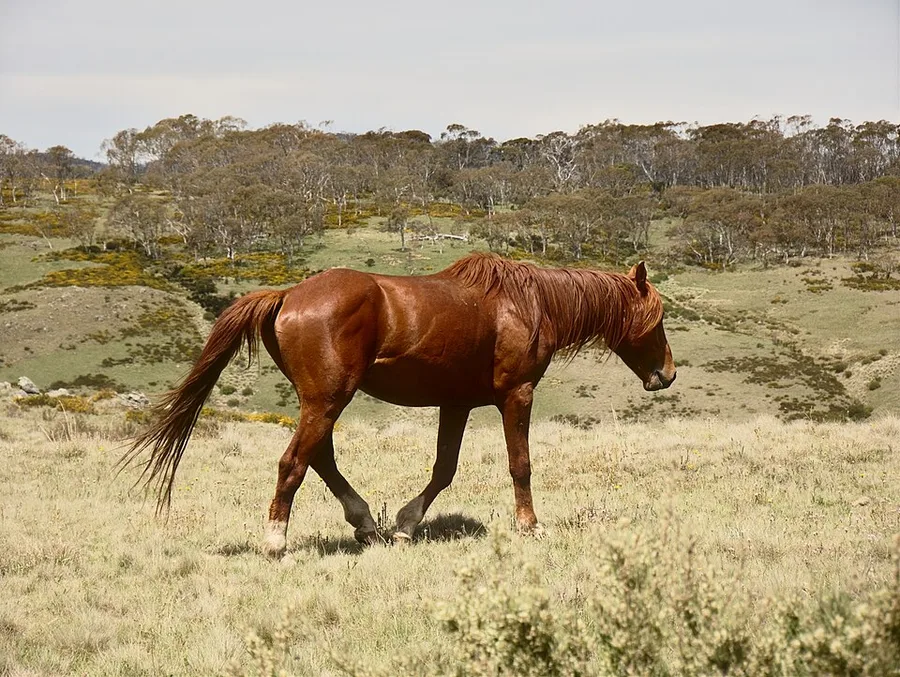
Photo: Thennicke · CC BY-SA 4.0 · Wikimedia Commons
Horse breed
Brumby
The Brumby is a feral horse descended from domestic horses brought to Australia by European settlers, along with horses used by explorers, stockmen and the military. Over generations in the Australian bush, these horses ran wild in mountain and outback country, and they were shaped by harsh terrain and scarce feed rather than by deliberate breeding. The name is widely associated with the free-roaming herds of the high country and the outback.
Brumbies vary a great deal in size, colour and build, since there is no closed studbook defining the type. Most are sturdy, sure-footed horses with good bone and hard feet, and many have an independent, watchful nature developed from life in the wild. Handled patiently, a well-started Brumby can be a capable, dependable partner for trail riding and station work, though a less experienced owner may find the first months demanding.
Day to day, a Brumby needs good forage, regular hoof care and a stable routine. Its herd-bred nature means it does best with company, whether another horse or a goat or donkey. Its needs are simple, but they must be met consistently for it to settle and stay calm.
Good for: Experienced owners, trail riders, ranch work
| Size | small |
| Weight | 772–992 lb |
| Height | 53–61 in |
| Life span | 25–30 years |
| Exercise | about 60 min a day |
| Shedding | moderate |
| Origin | Australia |
Brumbies vary widely in background, so get a vet check and work with an experienced trainer before riding.
Living with a Brumby
Exercise
A healthy Brumby in regular use usually needs daily work of about an hour, plus generous turnout to keep it moving. Too little exercise can lead to boredom, weight gain and a more reactive attitude under saddle.
Grooming
Brumbies have a thick winter coat that sheds in spring, so regular brushing helps during that season. Manes and tails are often left natural and can be thinned or tidied as needed. Hooves are usually tough, but they still need regular trimming or shoeing based on the horse's workload.
At home
Brumbies are very hardy and generally do well on pasture with shelter from wind, rain and heat. Many adapt to outdoor living and handle extended turnout well. Alone, a Brumby can become anxious, so keeping it with a companion is wise. They are typically easy keepers and often thrive on good grass and hay, though the amount should be watched to avoid weight gain.
Training
Brumbies learn best through patient, consistent handling, and rushing them often backfires. Their bush-bred caution means they can be suspicious at first but very loyal once they trust you. They often excel at trail riding, ranch and station work, and general all-round riding. Expect a green Brumby to take longer to start than a domestic breed, but to become steady and sensible with time.
Health
Brumbies are generally hardy, but because their backgrounds vary, health history can be unknown. Some horses may be prone to conditions linked to overfeeding, such as laminitis. Ask a veterinarian to examine any Brumby before purchase and to advise on appropriate care.
- Laminitis
- Colic
- Dental problems
Known tendencies, not a diagnosis: ask your vet about this breed.
The numbers for a Brumby
Forage and water, adult
13–22 lb of hay a day
Forage at 1.5–2.5% of body weight at 772–992 lb, and 8–14 gallons of water, more in heat and on hay alone. Grain only for the work being done.
What a year costs
$2,750–$4,750
Hay about $1,533, plus farrier every 6–8 weeks, routine vet, dental and dewormer. Board, lessons and showing on top; US averages.
Weather
Watch above 80°F, stop at 90°F
Blanket or shelter below 10°F. Horses mind heat more than cold: with shelter and water most are fine to about 10°F unclipped, and above a heat index of 150 (air °F + humidity %) ride early or not at all.
Where a Brumby is comfortable
Easy most of the year: Alabama, Alaska, Arkansas, California, Colorado, Connecticut, Delaware, Florida, Georgia, Hawaii, Idaho, Illinois, Indiana, Iowa, Kansas, Kentucky, Louisiana, Maine, Maryland, Massachusetts, Michigan, Minnesota, Mississippi, Missouri, Montana, Nebraska, New Hampshire, New Jersey, New Mexico, New York, North Carolina, Ohio, Oregon, Pennsylvania, Rhode Island, South Carolina, South Dakota, Tennessee, Vermont, Virginia, Washington, Washington, DC, West Virginia, Wisconsin, Wyoming.
Summer needs care (early rides, shade, fans): Arizona, Nevada, Oklahoma, Texas, Utah.
Winter needs care (blanket, shelter, water that is not frozen): North Dakota.
From typical July highs and January lows by state and this breed's heat and cold limits. Shade, shelter and water change everything; this is about turnout and work.
Right now
Latest feed recalls
Multiple Brand Names: Chicken Feed, Swine Feed, Cattle Feed, Horse Feed
ADM Animal Nutrition · Apr 1 · Specific lots may contain elevated levels of calcium, phosphorus, magnesium, sodium and/or chloride and may harm chickens, swine, beef cattle and equine.
Rescue a Brumby
Shelters and breed rescues list Brumbys and Brumby mixes every week. Search adoptable Brumbys on Petfinder → New to the breed? The first-horse kit →
Is a Brumby right for you?
- Yes if you enjoy a hardy, self-reliant horse with character
- Yes if you have patience to build trust over time
- Yes if you can provide turnout and companionship
- Think twice if you want a quick, push-button beginner horse
- Think twice if you need a precisely bred, uniform type
Questions owners ask
Are Brumbies good for beginners?
Most are better suited to experienced owners or those working with a trainer. Their wild-bred caution and independence can be challenging for someone new to horses.
How much does a Brumby cost?
Prices vary by region, training and sale source. Brumbies can be adopted or purchased through programs, and costs often depend on whether the horse is started.
How tall is a Brumby?
Brumbies typically stand about 135 to 155 cm at the withers, though height varies because there is no uniform breed standard.
How long do Brumbies live?
With good care, Brumbies often live into their mid to late twenties, similar to many other domestic horse breeds.
Are Brumbies easy keepers?
Many are easy keepers that do well on forage, but they can gain weight quickly, so monitor feed and pasture closely.
Similar breeds
Written by Hoofdeck editors · updated Nov 13, 2026 · facts from Wikidata and Wikimedia Commons; health notes are general veterinary guidance, not a diagnosis.