
Horse breeds / Arabian horse
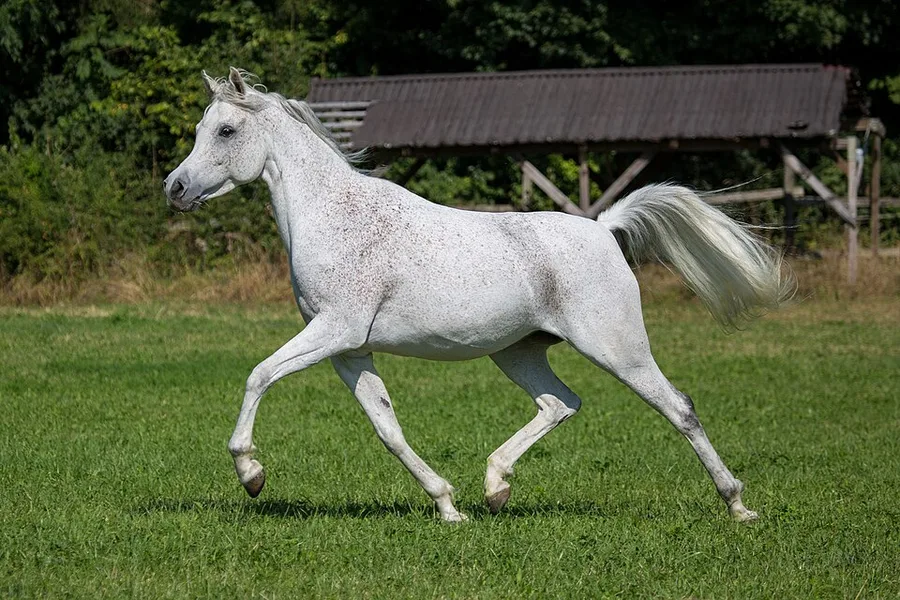
Photo: OliverSeitz · Public domain · Wikimedia Commons
Horse breed
Arabian horse
The Arabian is one of the oldest horse breeds, developed over many centuries by Bedouin tribes on the Arabian Peninsula. Bred for endurance, speed over desert distances, and close partnership with their riders, these horses were valued as family members and were often kept in or near the tent.
Arabians are known for their refined head, arched neck, high-set tail, and spirited, people-oriented personality. They are alert and quick to learn, and many are willing and affectionate once they trust their handler. Their energy is real, so they suit owners who enjoy an engaged horse, though a calm, experienced rider brings out the best in a sensitive individual. They are generally good for experienced riders, with many suitable for thoughtful beginners.
Day to day, Arabians need regular work, daily turnout, and company. They do best with consistent handling and a routine, and they tend to become bored or mischievous without enough to do.
Good for: Endurance riders, trail riders, and experienced owners
| Size | medium |
| Weight | 882–1102 lb |
| Height | 56–61 in |
| Life span | 25–30 years |
| Exercise | about 60 min a day |
| Shedding | moderate |
| Origin | United Arab Emirates, Saudi Arabia |
Arabians are spirited and sensitive, so a first-time owner should plan on consistent handling and ideally professional guidance.
Living with a Arabian horse
Exercise
Most Arabians do best with several sessions of work each week, plus daily turnout to move freely. Too little exercise often shows up as excess energy, nervousness, or behavior problems under saddle.
Grooming
The Arabian has a fine, silky coat that is easy to keep clean with regular brushing. Mane and tail are typically fine and can be brushed gently to avoid breakage. Hooves need regular trimming or shoeing, and most Arabians do not need clipping unless they are worked hard in winter.
At home
Arabians are hardy and adapt well to a range of climates, though they need shelter from extreme cold, wind, and heat. Many do well with generous daily turnout rather than long periods in a stall. They usually get along well in a herd and handle being kept with others comfortably. Most are easy keepers, though some individuals need careful feed management, so a forage-based diet with a balanced supplement is a common starting point.
Training
Arabians learn quickly and respond well to clear, patient, consistent handling. They are especially known for endurance riding, but they also excel in trail, dressage, western pleasure, and driving. A green Arabian may be forward and sensitive, so expect to take things step by step and build confidence before asking for more.
Health
Arabians are generally considered a hardy breed, but some lines are associated with conditions such as ulcer-related issues, skin sensitivities, and certain inherited disorders. Ask a veterinarian about breed-specific screening and what to watch for in your horse.
- Ulcers
- Skin sensitivities
- Osteochondritis dissecans
Known tendencies, not a diagnosis: ask your vet about this breed.
The numbers for a Arabian horse
Forage and water, adult
15–25 lb of hay a day
Forage at 1.5–2.5% of body weight at 882–1102 lb, and 9–16 gallons of water, more in heat and on hay alone. Grain only for the work being done.
What a year costs
$2,950–$5,050
Hay about $1,752, plus farrier every 6–8 weeks, routine vet, dental and dewormer. Board, lessons and showing on top; US averages.
Weather
Watch above 85°F, stop at 95°F
Blanket or shelter below 20°F. Bred for heat: fine working in warm weather with water and salt, but a thin coat and skin want a blanket and shelter below about 20°F.
Where a Arabian horse is comfortable
Easy most of the year: Alabama, Arkansas, California, Colorado, Connecticut, Delaware, Florida, Georgia, Hawaii, Idaho, Illinois, Indiana, Iowa, Kansas, Kentucky, Louisiana, Maine, Maryland, Massachusetts, Michigan, Mississippi, Missouri, Montana, Nebraska, New Hampshire, New Jersey, New Mexico, New York, North Carolina, Ohio, Oklahoma, Oregon, Pennsylvania, Rhode Island, South Carolina, Tennessee, Texas, Utah, Virginia, Washington, Washington, DC, West Virginia, Wyoming.
Summer needs care (early rides, shade, fans): Arizona, Nevada.
Winter needs care (blanket, shelter, water that is not frozen): Alaska, Minnesota, North Dakota, South Dakota, Vermont, Wisconsin.
From typical July highs and January lows by state and this breed's heat and cold limits. Shade, shelter and water change everything; this is about turnout and work.
Right now
Latest feed recalls
Multiple Brand Names: Chicken Feed, Swine Feed, Cattle Feed, Horse Feed
ADM Animal Nutrition · Apr 1 · Specific lots may contain elevated levels of calcium, phosphorus, magnesium, sodium and/or chloride and may harm chickens, swine, beef cattle and equine.
Recent research
First-time description of MHC diversity in Straight Egyptian Arabian horses using immune-linked microsatellite markers
Frontiers in immunology · 2026
Molecular prevalence of equine herpesvirus type 1 and equine herpesvirus type 4 in thoroughbred and Arabian horse facilities in Türkiye
Acta veterinaria Hungarica · 2026
Genomic diversity and structure in arabian horses revealed by whole-genome sequencing: establishment of an allele frequency database of common genetic variation
BMC genomics · 2026
Veterinary papers that mention the breed, from PubMed.
Rescue a Arabian horse
Shelters and breed rescues list Arabian horses and Arabian horse mixes every week. Search adoptable Arabian horses on Petfinder → New to the breed? The first-horse kit →
Is a Arabian horse right for you?
- Yes if you enjoy an engaged, responsive partner.
- Yes if you want a horse for endurance or trail riding.
- Yes if you can provide daily turnout and regular work.
- Think twice if you want a very quiet, low-energy horse.
- Think twice if you are a nervous beginner without support.
Questions owners ask
Are Arabians good for beginners?
Some are, especially calm, well-trained individuals. Their sensitivity and energy suit owners with support from an experienced trainer or instructor.
How much does an Arabian cost?
Prices vary widely with pedigree, training, and age. Purchase prices can range from modest to very high for show or breeding lines.
How tall do Arabians get?
Adult Arabians typically stand about 14.2 to 15.2 hands at the withers, though individuals can vary somewhat.
How long do Arabians live?
With good care, Arabians commonly live into their mid-twenties or beyond, and some reach thirty years.
Are Arabians easy keepers?
Many are, so feed carefully to avoid weight gain. Monitor body condition and adjust forage and grain to the individual horse.
Similar breeds
Written by Hoofdeck editors · updated Nov 13, 2026 · facts from Wikidata and Wikimedia Commons; health notes are general veterinary guidance, not a diagnosis.