
Horse breeds / AraAppaloosa
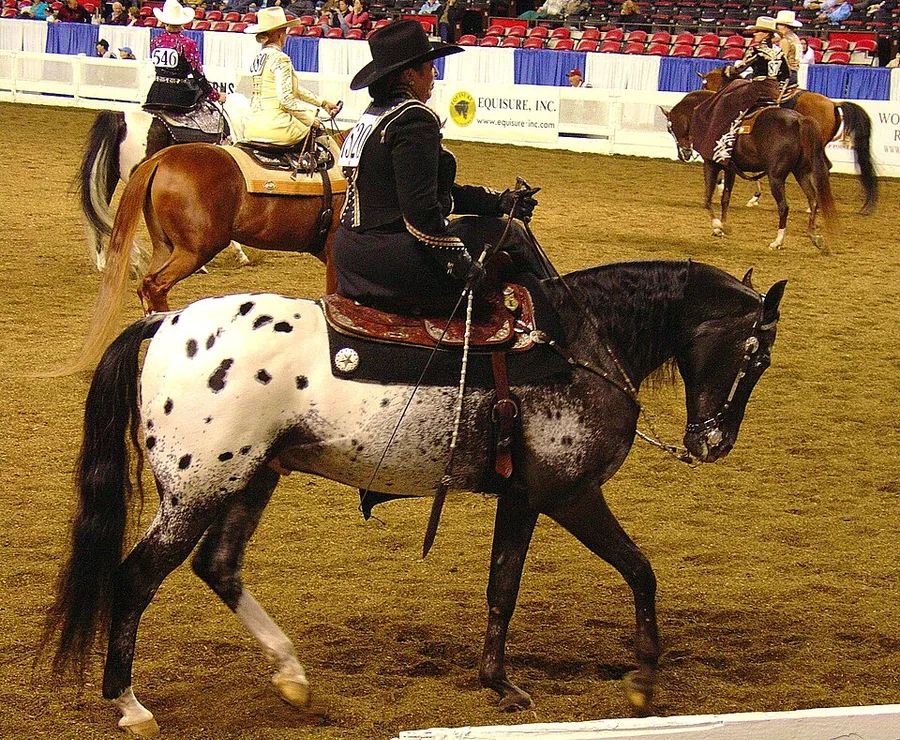
Photo: Heather Moreton from Louisville, KY, USA · CC BY 2.0 · Wikimedia Commons
Horse breed
AraAppaloosa
The AraAppaloosa is a relatively modern American breed, developed by crossing Arabian horses with Appaloosas to combine the Arabian's stamina and refinement with the Appaloosa's color and sure-footedness. Breeders aimed for an animal that could handle long distances and rough ground while still looking elegant under saddle.
AraAppaloosas are generally known for a calm, willing temperament and an athletic, free-moving way of going. Many have the Arabian's alertness without being as hot as a purebred, which makes them a reasonable choice for owners who want a spirited but manageable partner. They often suit experienced amateurs well, and they can be a good fit for confident beginners who have solid guidance.
Day to day, they need regular exercise to stay balanced and content, along with access to turnout and the company of other horses. Their intelligence means they benefit from varied work rather than repetitive routines. Like most horses, they do best when their social and physical needs are met consistently.
Good for: Trail riders, versatile recreational owners, and experienced amateurs
| Size | medium |
| Weight | 882–1102 lb |
| Height | 57–62 in |
| Life span | 25–30 years |
| Exercise | about 45 min a day |
| Shedding | moderate |
| Origin | United States |
Plan on consistent exercise and a good veterinary and farrier relationship, since this athletic breed does best with steady routines.
Living with a AraAppaloosa
Exercise
Most AraAppaloosas do best with regular riding or in-hand work several times a week, plus daily turnout. Too little work can lead to excess energy, restlessness, or behavior issues. Consistent movement supports both their body condition and mental well-being.
Grooming
Their coats are typically short and easy to maintain, with regular brushing enough for most horses. Mane and tail generally need only light attention. Hooves should be trimmed or shod on a regular schedule, and clipping is usually only needed for horses in heavy winter work.
At home
AraAppaloosas usually do well with daily turnout and can handle a range of climates with appropriate shelter and winter care. They tend to be hardy and adaptable, and most do well living with a herd. Feed needs vary with body condition and workload, so many are moderate keepers, though individual horses may be easier or harder to maintain.
Training
AraAppaloosas tend to learn quickly and respond well to clear, consistent handling. They are often versatile, with many excelling in trail, endurance, and western or English pleasure work, and some moving into dressage or jumping. A green AraAppaloosa usually shows good willingness but may need patience and steady schooling as they mature.
Health
Like many horses, AraAppaloosas can be prone to certain conditions, and the specifics vary by bloodline and management. Owners should ask their veterinarian about breed-relevant risks, including any inherited concerns in their horse's lines. Regular veterinary and farrier care is the best foundation.
- Laminitis
- Colic
- Recurrent airway obstruction
Known tendencies, not a diagnosis: ask your vet about this breed.
The numbers for a AraAppaloosa
Forage and water, adult
15–25 lb of hay a day
Forage at 1.5–2.5% of body weight at 882–1102 lb, and 9–16 gallons of water, more in heat and on hay alone. Grain only for the work being done.
What a year costs
$2,950–$5,050
Hay about $1,752, plus farrier every 6–8 weeks, routine vet, dental and dewormer. Board, lessons and showing on top; US averages.
Weather
Watch above 80°F, stop at 90°F
Blanket or shelter below 10°F. Horses mind heat more than cold: with shelter and water most are fine to about 10°F unclipped, and above a heat index of 150 (air °F + humidity %) ride early or not at all.
Where a AraAppaloosa is comfortable
Easy most of the year: Alabama, Alaska, Arkansas, California, Colorado, Connecticut, Delaware, Florida, Georgia, Hawaii, Idaho, Illinois, Indiana, Iowa, Kansas, Kentucky, Louisiana, Maine, Maryland, Massachusetts, Michigan, Minnesota, Mississippi, Missouri, Montana, Nebraska, New Hampshire, New Jersey, New Mexico, New York, North Carolina, Ohio, Oregon, Pennsylvania, Rhode Island, South Carolina, South Dakota, Tennessee, Vermont, Virginia, Washington, Washington, DC, West Virginia, Wisconsin, Wyoming.
Summer needs care (early rides, shade, fans): Arizona, Nevada, Oklahoma, Texas, Utah.
Winter needs care (blanket, shelter, water that is not frozen): North Dakota.
From typical July highs and January lows by state and this breed's heat and cold limits. Shade, shelter and water change everything; this is about turnout and work.
Right now
Latest feed recalls
Multiple Brand Names: Chicken Feed, Swine Feed, Cattle Feed, Horse Feed
ADM Animal Nutrition · Apr 1 · Specific lots may contain elevated levels of calcium, phosphorus, magnesium, sodium and/or chloride and may harm chickens, swine, beef cattle and equine.
Rescue a AraAppaloosa
Shelters and breed rescues list AraAppaloosas and AraAppaloosa mixes every week. Search adoptable AraAppaloosas on Petfinder → New to the breed? The first-horse kit →
Is a AraAppaloosa right for you?
- Yes if you want an athletic horse that handles trails and varied work well.
- Yes if you prefer a calm, willing partner with some Arabian spirit.
- Yes if you can commit to regular exercise and daily turnout.
- Think twice if you want a very quiet, low-energy horse for minimal riding.
- Think twice if you lack the time or budget for consistent training and care.
Questions owners ask
Are AraAppaloosas good for beginners?
They can be, especially with an experienced instructor or mentor. Their willing nature helps, but their athleticism and Arabian sensitivity mean beginners should expect guidance during early training.
How much do AraAppaloosas cost?
Prices vary widely by age, training, bloodline, and location. Young or unstarted horses are usually less expensive than trained, proven riding horses, so research carefully before buying.
How tall are AraAppaloosas?
Most stand roughly 14.2 to 15.3 hands at the withers. Individual horses vary, and height depends on breeding and the particular lines involved.
How long do AraAppaloosas live?
With good care, many live into their mid-20s or 30s. Diet, dental care, hoof health, and veterinary attention all influence how long a horse stays sound and healthy.
What are AraAppaloosas used for?
They are used for trail riding, endurance, western and English pleasure, and some dressage or jumping. Their combination of stamina and versatility makes them adaptable to many disciplines.
Similar breeds
Written by Hoofdeck editors · updated Nov 13, 2026 · facts from Wikidata and Wikimedia Commons; health notes are general veterinary guidance, not a diagnosis.