
Horse breeds / Appaloosa
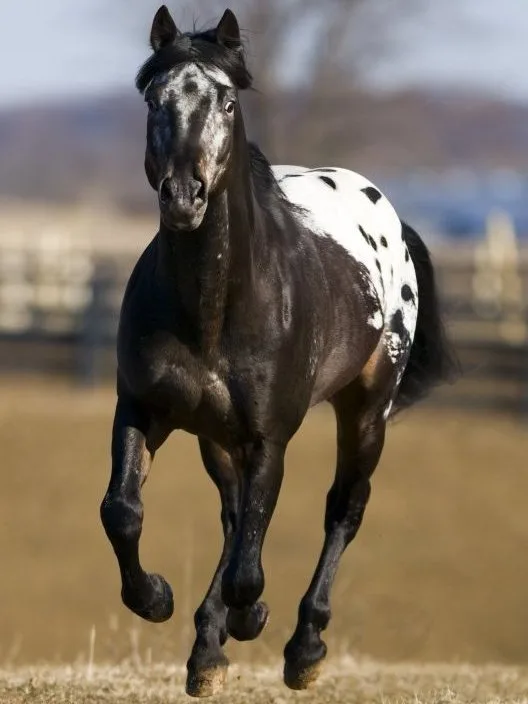
Photo: Darrell Dodds (license held by Appaloosas) · CC BY-SA 3.0 · Wikimedia Commons
Horse breed
Appaloosa
The Appaloosa was developed in the Nez Perce region of the Pacific Northwest, where the Nez Perce bred spotted horses for generations. Its name is linked to the Palouse River, and the breed was formally organized in the United States in the twentieth century. Early horses were valued as sturdy, sure-footed mounts for travel, herding, and hunting across rough country.
Today the Appaloosa is best known for its distinctive coat patterns, including the leopard, blanket, and snowflake markings, along with mottled skin and striped hooves. Most are calm, people-oriented, and willing, which makes them a comfortable choice for many riders. They are generally suited to confident beginners and experienced riders alike, and they tend to be agile and athletic under saddle.
Appaloosas need regular daily handling, a sensible balance of turnout and riding, and steady companionship. They do best when they have a routine and a consistent place in the herd. Owners should expect to spend time on grooming, since the spotted coat and skin benefit from regular attention.
Good for: First-time owners, trail riders, western enthusiasts
| Size | medium |
| Weight | 992–1213 lb |
| Height | 56–62 in |
| Life span | 25–30 years |
| Exercise | about 45 min a day |
| Shedding | moderate |
| Origin | United States |
Ask a vet about eye health and skin care, and plan for regular grooming and weight management.
Living with a Appaloosa
Exercise
Most healthy adult Appaloosas do well with about 30 to 60 minutes of ridden or in-hand work most days, plus turnout time. Too little movement can lead to weight gain, restlessness, and stiffness.
Grooming
The coat is usually short and easy to maintain, but spotted skin can be sensitive to sun, so light-colored areas benefit from attention. Mane and tail are typically fine and manageable. Hooves need regular trimming or shoeing, and striped hooves are a breed trait rather than a problem.
At home
Appaloosas are generally hardy and adapt well to outdoor living with a shelter or run-in. They usually cope with variable weather when they have access to shade and windbreaks. They are sociable and do best in a herd or with a companion animal. Most are moderate keepers, though some can gain weight easily on rich pasture.
Training
Appaloosas are quick to learn and tend to respond well to clear, patient cues. They are versatile in trail riding, western events, dressage, and jumping. A green Appaloosa usually shows an eager, adaptable attitude, but young horses may need time to mature physically before taking on heavy work.
Health
Appaloosas are associated with a few breed-specific conditions, including Appaloosa-related eye issues such as Congenital Stationary Night Blindness and a tendency toward certain skin sensitivities. Ask your veterinarian about screening and what is most relevant for the horses in your region.
- Congenital Stationary Night Blindness
- Skin sensitivity
- Laminitis
Known tendencies, not a diagnosis: ask your vet about this breed.
The numbers for a Appaloosa
Forage and water, adult
17–28 lb of hay a day
Forage at 1.5–2.5% of body weight at 992–1213 lb, and 10–18 gallons of water, more in heat and on hay alone. Grain only for the work being done.
What a year costs
$3,150–$5,350
Hay about $1,971, plus farrier every 6–8 weeks, routine vet, dental and dewormer. Board, lessons and showing on top; US averages.
Weather
Watch above 80°F, stop at 90°F
Blanket or shelter below 10°F. Horses mind heat more than cold: with shelter and water most are fine to about 10°F unclipped, and above a heat index of 150 (air °F + humidity %) ride early or not at all.
Where a Appaloosa is comfortable
Easy most of the year: Alabama, Alaska, Arkansas, California, Colorado, Connecticut, Delaware, Florida, Georgia, Hawaii, Idaho, Illinois, Indiana, Iowa, Kansas, Kentucky, Louisiana, Maine, Maryland, Massachusetts, Michigan, Minnesota, Mississippi, Missouri, Montana, Nebraska, New Hampshire, New Jersey, New Mexico, New York, North Carolina, Ohio, Oregon, Pennsylvania, Rhode Island, South Carolina, South Dakota, Tennessee, Vermont, Virginia, Washington, Washington, DC, West Virginia, Wisconsin, Wyoming.
Summer needs care (early rides, shade, fans): Arizona, Nevada, Oklahoma, Texas, Utah.
Winter needs care (blanket, shelter, water that is not frozen): North Dakota.
From typical July highs and January lows by state and this breed's heat and cold limits. Shade, shelter and water change everything; this is about turnout and work.
Right now
Latest feed recalls
Multiple Brand Names: Chicken Feed, Swine Feed, Cattle Feed, Horse Feed
ADM Animal Nutrition · Apr 1 · Specific lots may contain elevated levels of calcium, phosphorus, magnesium, sodium and/or chloride and may harm chickens, swine, beef cattle and equine.
Recent research
Modified Medial Canthoplasty for Correction of Euryblepharon in Two Horses
Veterinary ophthalmology · 2026
A genome-wide investigation of insidious uveitis in Appaloosa horses
BMC genomics · 2025
Risk factors for equine strangulating lipoma colic: An international, case-control study
Equine veterinary journal · 2026
Veterinary papers that mention the breed, from PubMed.
Rescue a Appaloosa
Shelters and breed rescues list Appaloosas and Appaloosa mixes every week. Search adoptable Appaloosas on Petfinder → New to the breed? The first-horse kit →
Is a Appaloosa right for you?
- Yes if you want a calm, friendly horse for trail riding
- Yes if you enjoy a striking spotted coat and eye-catching looks
- Yes if you have time for regular grooming and skin care
- Think twice if you need a horse that stays very lean on lush grass
- Think twice if you want a horse with no vision-related health checks
Questions owners ask
Are Appaloosas good for beginners?
Many are calm and willing, making them a good choice for confident beginners. Temperament varies by individual, so an experienced advisor should help you assess a specific horse before buying.
How much do Appaloosas cost?
Prices vary widely by age, training, bloodlines, and region. Pet-quality horses are usually less expensive than trained or show-bred animals. Get a pre-purchase exam before committing.
How tall do Appaloosas get?
Adults typically stand about 142 to 157 centimeters at the withers, roughly 14 to 15.5 hands. Individual horses can vary somewhat from this range.
How long do Appaloosas live?
Appaloosas commonly live into their mid-to-late twenties with good care. Diet, dental care, vaccinations, and regular veterinary checkups all help support a long life.
Are Appaloosas easy keepers?
Many are moderate keepers, but some gain weight easily on rich pasture. Monitor body condition and adjust feed and turnout to keep your horse at a healthy weight.
Similar breeds
Written by Hoofdeck editors · updated Nov 13, 2026 · facts from Wikidata and Wikimedia Commons; health notes are general veterinary guidance, not a diagnosis.