
Horse breeds / Anglo-Kabarda
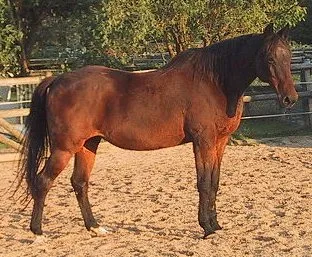
Photo: No machine-readable author provided. Hü assumed (based on… · CC BY-SA 3.0 · Wikimedia Commons
Horse breed
Anglo-Kabarda
The Anglo-Kabarda comes from the Kabardino-Balkaria region of the North Caucasus in Russia. It was developed in the twentieth century by crossing local Kabarda horses with Thoroughbred and other English breeds, aiming for a stout, athletic riding horse suited to mountain terrain and Soviet-era military and agricultural work.
These horses are typically sturdy, well-balanced, and move with a willing, energetic stride. Their temperament is generally calm but spirited, and many are forward-going, so they suit confident riders who enjoy an active horse. Beginners can do well with a steady, experienced individual, but a green rider needs guidance to manage their energy.
Day to day, the Anglo-Kabarda needs regular work, ideally several rides a week, along with plenty of turnout. These horses are happiest with companionship and a predictable routine, and they thrive when their minds and bodies are kept busy.
Good for: Experienced riders, all-round sport and trail
| Size | medium |
| Weight | 992–1213 lb |
| Height | 59–63 in |
| Life span | 25–30 years |
| Exercise | about 60 min a day |
| Shedding | moderate |
| Origin | Russia |
Choose a calm, experienced individual, since this breed's energy and forwardness can overwhelm a new owner.
Living with a Anglo-Kabarda
Exercise
Most Anglo-Kabardas need several ridden sessions a week plus daily turnout for movement. Too little work can lead to excess energy, pent-up behavior, and weight gain.
Grooming
Their coat is fine to medium and easy to maintain with regular brushing. Mane and tail need occasional detangling. Hooves should be trimmed or shod every four to eight weeks, and clipping is only needed for horses in heavy work during winter.
At home
Anglo-Kabardas are generally hardy and handle variable climates well, thanks to their Caucasian ancestry. Daily turnout is best, though they can live in a field with a shelter and sufficient hay in winter. They do best in a herd, so keeping one alone is not ideal. They are typically easy to moderate keepers, though feed should be adjusted to their workload.
Training
Anglo-Kabardas are intelligent and learn quickly when training is consistent and rewarding. They are well suited to trail riding, eventing, dressage, and general all-round work. A green horse of this breed may be forward and eager, so expect a patient approach with steady progress and plenty of groundwork.
Health
Specific breed-related conditions are not well documented, so general equine health concerns apply, including laminitis and colic. Ask a veterinarian for a breed-appropriate health plan and routine screening.
- Laminitis
- Colic
- Metabolic issues
Known tendencies, not a diagnosis: ask your vet about this breed.
The numbers for a Anglo-Kabarda
Forage and water, adult
17–28 lb of hay a day
Forage at 1.5–2.5% of body weight at 992–1213 lb, and 10–18 gallons of water, more in heat and on hay alone. Grain only for the work being done.
What a year costs
$3,150–$5,350
Hay about $1,971, plus farrier every 6–8 weeks, routine vet, dental and dewormer. Board, lessons and showing on top; US averages.
Weather
Watch above 80°F, stop at 90°F
Blanket or shelter below 10°F. Horses mind heat more than cold: with shelter and water most are fine to about 10°F unclipped, and above a heat index of 150 (air °F + humidity %) ride early or not at all.
Where a Anglo-Kabarda is comfortable
Easy most of the year: Alabama, Alaska, Arkansas, California, Colorado, Connecticut, Delaware, Florida, Georgia, Hawaii, Idaho, Illinois, Indiana, Iowa, Kansas, Kentucky, Louisiana, Maine, Maryland, Massachusetts, Michigan, Minnesota, Mississippi, Missouri, Montana, Nebraska, New Hampshire, New Jersey, New Mexico, New York, North Carolina, Ohio, Oregon, Pennsylvania, Rhode Island, South Carolina, South Dakota, Tennessee, Vermont, Virginia, Washington, Washington, DC, West Virginia, Wisconsin, Wyoming.
Summer needs care (early rides, shade, fans): Arizona, Nevada, Oklahoma, Texas, Utah.
Winter needs care (blanket, shelter, water that is not frozen): North Dakota.
From typical July highs and January lows by state and this breed's heat and cold limits. Shade, shelter and water change everything; this is about turnout and work.
Right now
Latest feed recalls
Multiple Brand Names: Chicken Feed, Swine Feed, Cattle Feed, Horse Feed
ADM Animal Nutrition · Apr 1 · Specific lots may contain elevated levels of calcium, phosphorus, magnesium, sodium and/or chloride and may harm chickens, swine, beef cattle and equine.
Rescue a Anglo-Kabarda
Shelters and breed rescues list Anglo-Kabardas and Anglo-Kabarda mixes every week. Search adoptable Anglo-Kabardas on Petfinder → New to the breed? The first-horse kit →
Is a Anglo-Kabarda right for you?
- Yes if you ride several times a week
- Yes if you want an athletic all-rounder
- Yes if you enjoy a forward, willing horse
- Think twice if you are a nervous or first-time rider
- Think twice if you cannot provide daily turnout and work
Questions owners ask
Is the Anglo-Kabarda good for beginners?
Not usually. They are best for riders with some experience, though a calm, seasoned individual can suit a confident beginner with guidance.
How much does an Anglo-Kabarda cost?
Prices vary widely by region, age, training, and bloodlines. Rare breeds can be harder to find, so contact breeders or registries for current options.
How tall do Anglo-Kabardas get?
Most stand roughly 150 to 160 centimeters at the withers, which is about 15 to 15.3 hands.
How long do Anglo-Kabardas live?
With good care, they typically live about 25 to 30 years, similar to many other riding breeds.
Are Anglo-Kabardas easy keepers?
They are generally moderate keepers, but their feed should match their workload to avoid weight gain and metabolic issues.
Similar breeds
Written by Hoofdeck editors · updated Nov 13, 2026 · facts from Wikidata and Wikimedia Commons; health notes are general veterinary guidance, not a diagnosis.