
Horse breeds / Waler horse
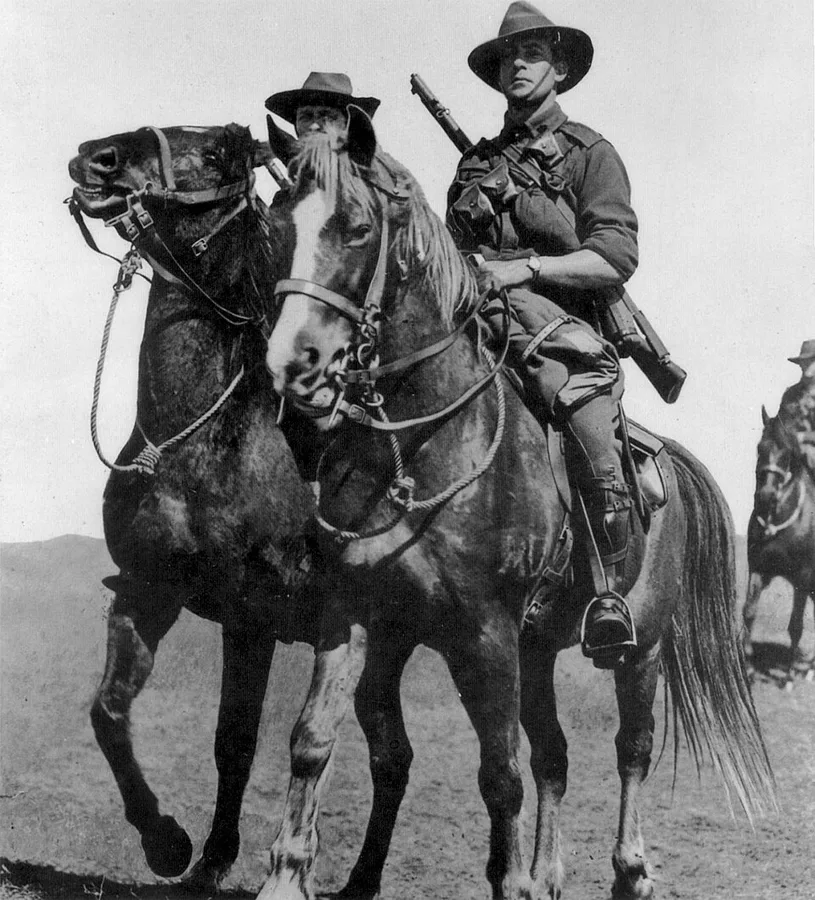
Photo: Sydney Mail · Public domain · Wikimedia Commons
Horse breed
Waler horse
The Waler is an Australian horse type, named for New South Wales, where it was developed in the 19th century from imported stock including Thoroughbred, Arab, and Hunter-type blood. It was bred as a tough, versatile mount for colonial stockmen, and later became famous as the cavalry horse of the Indian Army and British forces, with many Walers carried to the Boer War and both World Wars.
Walers are known for stamina, sound feet, and a practical, willing nature. They are generally sensible and reliable, with enough spirit to be lively but not usually difficult. Many are suitable for experienced riders and steady enough for capable beginners with guidance. Their way of going is athletic and forward, well suited to trail riding, eventing, and general hacking.
Day to day, a Waler needs regular work to stay fit and balanced, plus turnout time to move freely. They do best with a consistent routine and regular handling. Companionship matters too, as they are sociable animals that do well with other horses nearby.
Good for: Trail riders, eventers, and capable first-time owners
| Size | large |
| Weight | 992–1213 lb |
| Height | 60–65 in |
| Life span | 25–30 years |
| Exercise | about 45 min a day |
| Shedding | moderate |
| Origin | Australia |
Choose a Waler only with a plan for steady daily work, since they are athletic and need consistent routine.
Living with a Waler horse
Exercise
Most Walers need regular daily work, typically 30 to 60 minutes of ridden or in-hand activity, along with turnout time. Without enough exercise and movement, they can become restless, overweight, or harder to handle.
Grooming
The Waler has a short, practical coat that needs regular brushing to stay clean, especially during shedding. Mane and tail need routine detangling. Hooves should be trimmed or shod on a regular schedule. Clipping is usually only needed for horses in heavy work during cooler months.
At home
Walers are hardy and adapt well to varied climates, and most do well on pasture with shelter available. Many keep weight easily on forage, so they are often considered easy keepers, though individual needs vary. They generally live well in a herd, and should not be kept isolated. Daily turnout is best, with stabling used as needed for management.
Training
Walers tend to be quick to learn and responsive to clear, consistent training. They are often good at trail, eventing, dressage, and general riding disciplines. A green Waler usually shows willingness and good balance, but it may need patience and a steady hand early on, as some are forward and eager. Expect a sensible, capable partner once basics are established.
Health
Walers are generally considered a hardy type, but as with many horses, they can be prone to hoof problems and metabolic concerns if overfed or under-exercised. Ask a veterinarian about any breed-specific risks and an appropriate health plan for your horse.
- Laminitis
- Colic
- Hoof problems
Known tendencies, not a diagnosis: ask your vet about this breed.
The numbers for a Waler horse
Forage and water, adult
17–28 lb of hay a day
Forage at 1.5–2.5% of body weight at 992–1213 lb, and 10–18 gallons of water, more in heat and on hay alone. Grain only for the work being done.
What a year costs
$3,150–$5,350
Hay about $1,971, plus farrier every 6–8 weeks, routine vet, dental and dewormer. Board, lessons and showing on top; US averages.
Weather
Watch above 80°F, stop at 90°F
Blanket or shelter below 10°F. Horses mind heat more than cold: with shelter and water most are fine to about 10°F unclipped, and above a heat index of 150 (air °F + humidity %) ride early or not at all.
Where a Waler horse is comfortable
Easy most of the year: Alabama, Alaska, Arkansas, California, Colorado, Connecticut, Delaware, Florida, Georgia, Hawaii, Idaho, Illinois, Indiana, Iowa, Kansas, Kentucky, Louisiana, Maine, Maryland, Massachusetts, Michigan, Minnesota, Mississippi, Missouri, Montana, Nebraska, New Hampshire, New Jersey, New Mexico, New York, North Carolina, Ohio, Oregon, Pennsylvania, Rhode Island, South Carolina, South Dakota, Tennessee, Vermont, Virginia, Washington, Washington, DC, West Virginia, Wisconsin, Wyoming.
Summer needs care (early rides, shade, fans): Arizona, Nevada, Oklahoma, Texas, Utah.
Winter needs care (blanket, shelter, water that is not frozen): North Dakota.
From typical July highs and January lows by state and this breed's heat and cold limits. Shade, shelter and water change everything; this is about turnout and work.
Right now
Latest feed recalls
Multiple Brand Names: Chicken Feed, Swine Feed, Cattle Feed, Horse Feed
ADM Animal Nutrition · Apr 1 · Specific lots may contain elevated levels of calcium, phosphorus, magnesium, sodium and/or chloride and may harm chickens, swine, beef cattle and equine.
Rescue a Waler horse
Shelters and breed rescues list Waler horses and Waler horse mixes every week. Search adoptable Waler horses on Petfinder → New to the breed? The first-horse kit →
Is a Waler horse right for you?
- Yes if you want a hardy, versatile all-round horse
- Yes if you ride regularly and enjoy trail or eventing
- Yes if you have experience or good instruction available
- Think twice if you want a very quiet, low-energy horse
- Think twice if you cannot provide daily work and turnout
Questions owners ask
Are Walers good for beginners?
Many are suitable for capable beginners, especially with a sensible temperament. Lessons and experienced guidance help a newcomer build confidence and handle an active horse safely.
How much does a Waler cost?
Prices vary widely by age, training, bloodlines, and location. Get a pre-purchase exam and factor in ongoing costs for feed, farrier, veterinary care, and facilities.
How tall are Walers?
Walers typically stand around 152 to 165 centimetres at the withers, roughly 15 to 16.2 hands, though size varies with breeding.
How long do Walers live?
With good care, Walers commonly live into their mid to late twenties, and some live longer. Regular veterinary and dental care supports a long, healthy life.
What are Walers used for?
Walers are used for trail riding, eventing, dressage, general riding, and as all-round working horses. They were historically valued as military and stock horses.
Similar breeds
Written by Hoofdeck editors · updated Nov 13, 2026 · facts from Wikidata and Wikimedia Commons; health notes are general veterinary guidance, not a diagnosis.