
Horse breeds / Tokara horse
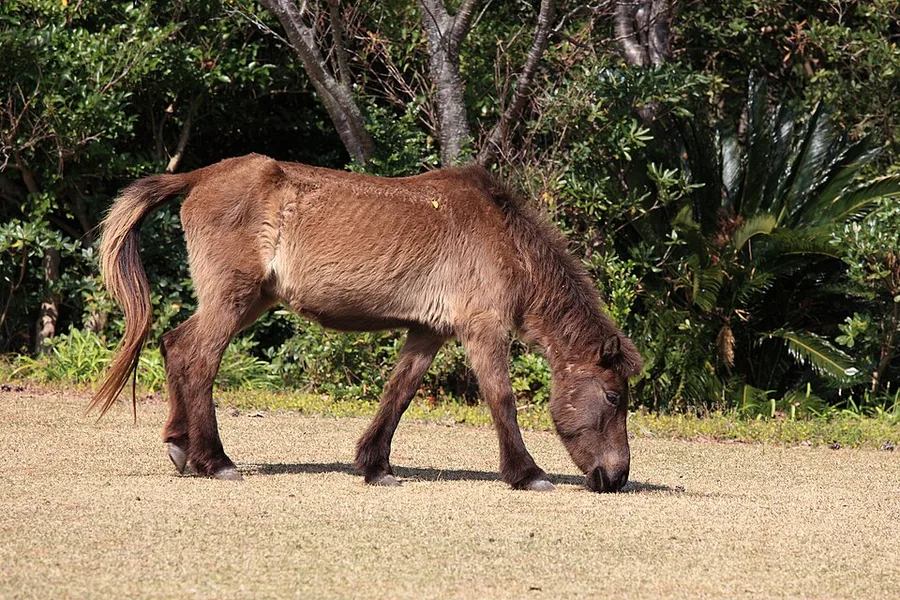
Photo: TANAKA Juuyoh (田中十洋) · CC BY 2.0 · Wikimedia Commons
Horse breed
Tokara horse
The Tokara horse is a small, feral-type pony from the Tokara Islands, a remote chain in Kagoshima Prefecture, Japan. The herd has lived on these islands for generations with little human management, and its ancestry is generally thought to trace to horses brought to the region long ago, though the exact history is not fully documented. Working horses on the islands were historically used for light farm and transport tasks, and the breed is now valued mainly for its rarity and its unusually free-living way of life.
Tokara horses are hardy, independent, and wary of people, so they are not typically a choice for a first-time rider or a casual companion. They are sure-footed and steady on rough ground, and they tend to be cautious rather than flighty. Most of them are handled very little, so anyone who owns or works with one should expect a slow, patient approach and a horse that takes time to trust.
Day to day, a Tokara needs plenty of room to move, a diet suited to a small hardy animal, and shelter from harsh weather. Because they are social herd animals, they do best with at least one companion, ideally another horse. Regular hoof and health checks are still important even for an animal kept in a fairly natural setting.
Good for: Experienced owners, hobby breeders, conservation-minded keepers
| Exercise | about 45 min a day |
| Shedding | moderate |
| Origin | Japan |
Tokara horses are wary and slow to trust, so a first-time owner should expect a long, patient process.
Living with a Tokara horse
Exercise
Tokara horses need regular movement, ideally daily turnout across varied ground, along with light ridden or in-hand work if they are being handled. Without enough space and activity, they can become overweight and less sure-footed.
Grooming
Tokara horses have a thick winter coat that sheds out in spring, and they generally need only brushing and occasional mud or dirt removal. Mane and tail are typically kept natural and trimmed only as needed. Hooves should be checked regularly and trimmed on a schedule suited to the horse's terrain a
At home
Tokara horses are hardy and do well with generous turnout, which suits their natural way of life. They can tolerate cold and wet conditions when they have shelter available. They do best in a herd or with at least one companion animal. Most are easy keepers, so good pasture and a modest supplement are usually enough, though body condition should be monitored closely.
Training
Tokara horses learn slowly and at their own pace, and they respond best to calm, consistent handling. They are not commonly trained for specialized disciplines, but their sure-footedness makes them suited to light trail work and basic in-hand tasks. A green Tokara should be expected to take considerable time to accept saddling and riding, and progress is best measured in months rather than weeks.
Health
Like many small, easy-keeping horses, Tokaras may be prone to weight-related issues such as laminitis if diet and exercise are not well managed. Owners should ask a veterinarian about breed-specific conditions and appropriate routine care. Regular hoof, dental, and general health checks are advisable.
- Laminitis
- Obesity-related metabolic issues
- Dental wear
Known tendencies, not a diagnosis: ask your vet about this breed.
The numbers for a Tokara horse
Forage and water, adult
16–26 lb of hay a day
Forage at 1.5–2.5% of body weight at 882–1213 lb (typical for the type), and 9–17 gallons of water, more in heat and on hay alone. Grain only for the work being done.
What a year costs
$3,050–$5,200
Hay about $1,840, plus farrier every 6–8 weeks, routine vet, dental and dewormer. Board, lessons and showing on top; US averages.
Weather
Watch above 80°F, stop at 90°F
Blanket or shelter below 10°F. Horses mind heat more than cold: with shelter and water most are fine to about 10°F unclipped, and above a heat index of 150 (air °F + humidity %) ride early or not at all.
Where a Tokara horse is comfortable
Easy most of the year: Alabama, Alaska, Arkansas, California, Colorado, Connecticut, Delaware, Florida, Georgia, Hawaii, Idaho, Illinois, Indiana, Iowa, Kansas, Kentucky, Louisiana, Maine, Maryland, Massachusetts, Michigan, Minnesota, Mississippi, Missouri, Montana, Nebraska, New Hampshire, New Jersey, New Mexico, New York, North Carolina, Ohio, Oregon, Pennsylvania, Rhode Island, South Carolina, South Dakota, Tennessee, Vermont, Virginia, Washington, Washington, DC, West Virginia, Wisconsin, Wyoming.
Summer needs care (early rides, shade, fans): Arizona, Nevada, Oklahoma, Texas, Utah.
Winter needs care (blanket, shelter, water that is not frozen): North Dakota.
From typical July highs and January lows by state and this breed's heat and cold limits. Shade, shelter and water change everything; this is about turnout and work.
Right now
Latest feed recalls
Multiple Brand Names: Chicken Feed, Swine Feed, Cattle Feed, Horse Feed
ADM Animal Nutrition · Apr 1 · Specific lots may contain elevated levels of calcium, phosphorus, magnesium, sodium and/or chloride and may harm chickens, swine, beef cattle and equine.
Rescue a Tokara horse
Shelters and breed rescues list Tokara horses and Tokara horse mixes every week. Search adoptable Tokara horses on Petfinder → New to the breed? The first-horse kit →
Is a Tokara horse right for you?
- Yes if you have patient, low-pressure handling experience
- Yes if you can offer ample pasture and herd companionship
- Think twice if you want a quick, easy riding partner
- Think twice if you need a horse for frequent show work
- Yes if preserving a rare island breed matters to you
Questions owners ask
Are Tokara horses good for beginners?
Generally no. They are cautious and slow to accept handling, so experienced horse people with patient methods are a better fit.
How much does a Tokara horse cost?
Prices vary widely and availability is limited because the breed is rare and tightly managed. Check with breed registries or reputable breeders.
How tall do Tokara horses get?
They are a small horse or pony type. Exact adult height is not well documented, so ask a breed specialist for specifics.
How long do Tokara horses live?
Lifespan data is limited. With good care, horses generally live into their twenties, but ask a vet or breeder for breed-specific expectations.
Are Tokara horses easy keepers?
Many are, so diet should be carefully managed to avoid weight gain and metabolic problems. Monitor body condition regularly.
Written by Hoofdeck editors · updated Nov 13, 2026 · facts from Wikidata and Wikimedia Commons; health notes are general veterinary guidance, not a diagnosis.