
Horse breeds / Thoroughbred
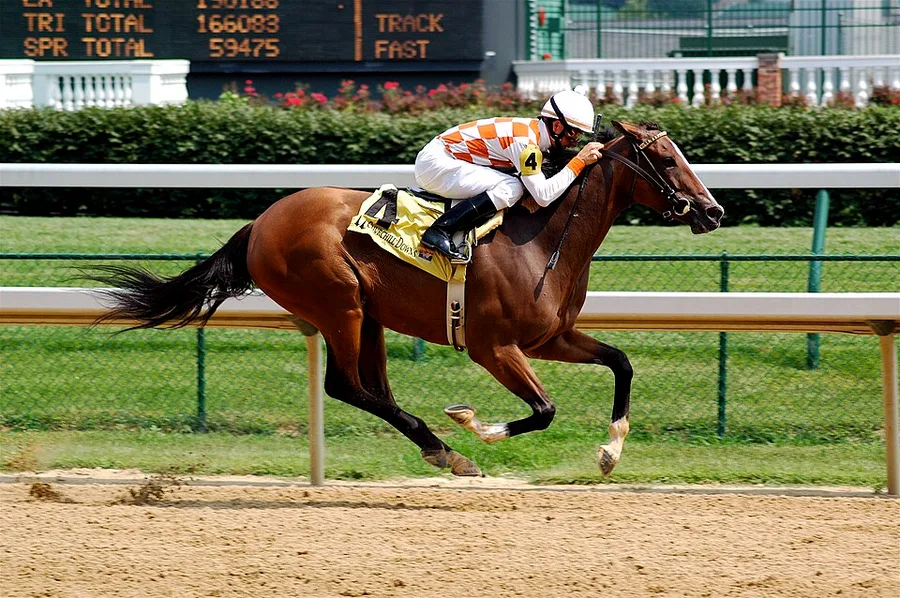
Photo: Flickr user Jeff Kubina · CC BY-SA 2.0 · Wikimedia Commons
Horse breed
Thoroughbred
The Thoroughbred developed in England in the late 1600s and early 1700s, when native mares were crossed with imported Arabian, Barb and Turkish stallions. The result was bred for speed over a short distance and for racing on the flat, and the English Stud Book has tracked the breed since 1791. Its lineage traces back to three foundation sires, and nearly every racehorse in the world today descends from them.
A Thoroughbred is typically lean, athletic and quick to react, with an alert, forward-looking character. Many are sensitive and responsive to the leg and hand, which rewards a confident, consistent rider. They are not always ideal for complete beginners, but ex-racehorses can be wonderful eventers, hunters and trail partners when retrained with patience. Their way of going is energetic and ground-covering.
Day to day, a Thoroughbred needs regular work to stay settled and turnout to let off steam. Many are used to strict routines from the track, so a steady schedule helps them adjust. They do best with companionship, since they are herd animals and can become anxious when kept alone.
Good for: Experienced riders, eventing, hunters, sport
| Size | large |
| Weight | 992–1213 lb |
| Height | 60–68 in |
| Life span | 25–30 years |
| Exercise | about 60 min a day |
| Shedding | low |
| Origin | United Kingdom |
Thoroughbreds are sensitive and forward, so a first-time owner should expect a learning curve and plan for expert help.
Living with a Thoroughbred
Exercise
Most healthy Thoroughbreds need daily ridden or in-hand work along with several hours of turnout. Too little exercise often leads to excess energy, nervousness and mischief under saddle.
Grooming
Thoroughbreds have a fine, short coat that is easy to maintain with regular brushing. Their manes and tails are typically thin and silky, so gentle detangling helps prevent breakage. Hooves need regular farrier care, and many owners clip in winter if the horse works hard.
At home
Thoroughbreds do best with generous turnout and a shelter they can use in bad weather, though many move to stabling when in heavy work. They are generally hardy once acclimated, but their thin coats can make them less tolerant of cold and wet than stockier breeds. They do well in a herd with a calm companion. Most are hard keepers, so they often need extra calories, fiber and a balanced ration.
Training
Thoroughbreds learn quickly and remember what they are taught, which makes them keen students. They excel at eventing, show jumping, dressage, hunter classes and flat work, and many enjoy a second career after racing. A green Thoroughbred may be forward, quick to spook and hot in the early stages, so expect patient groundwork and gradual exposure to new situations.
Health
Thoroughbreds are known for a range of conditions, including sensitivity to hoof problems, bone and joint issues, and ulcers related to high-grain diets and stress. Some lines are also prone to conditions linked to their racing history. Ask your veterinarian which screenings and preventive care suit your individual hor
- Ulcers
- Bone and joint problems
- Hoof problems
Known tendencies, not a diagnosis: ask your vet about this breed.
The numbers for a Thoroughbred
Forage and water, adult
17–28 lb of hay a day
Forage at 1.5–2.5% of body weight at 992–1213 lb, and 10–18 gallons of water, more in heat and on hay alone. Grain only for the work being done.
What a year costs
$3,150–$5,350
Hay about $1,971, plus farrier every 6–8 weeks, routine vet, dental and dewormer. Board, lessons and showing on top; US averages.
Weather
Watch above 80°F, stop at 90°F
Blanket or shelter below 10°F. Horses mind heat more than cold: with shelter and water most are fine to about 10°F unclipped, and above a heat index of 150 (air °F + humidity %) ride early or not at all.
Where a Thoroughbred is comfortable
Easy most of the year: Alabama, Alaska, Arkansas, California, Colorado, Connecticut, Delaware, Florida, Georgia, Hawaii, Idaho, Illinois, Indiana, Iowa, Kansas, Kentucky, Louisiana, Maine, Maryland, Massachusetts, Michigan, Minnesota, Mississippi, Missouri, Montana, Nebraska, New Hampshire, New Jersey, New Mexico, New York, North Carolina, Ohio, Oregon, Pennsylvania, Rhode Island, South Carolina, South Dakota, Tennessee, Vermont, Virginia, Washington, Washington, DC, West Virginia, Wisconsin, Wyoming.
Summer needs care (early rides, shade, fans): Arizona, Nevada, Oklahoma, Texas, Utah.
Winter needs care (blanket, shelter, water that is not frozen): North Dakota.
From typical July highs and January lows by state and this breed's heat and cold limits. Shade, shelter and water change everything; this is about turnout and work.
Right now
Latest feed recalls
Multiple Brand Names: Chicken Feed, Swine Feed, Cattle Feed, Horse Feed
ADM Animal Nutrition · Apr 1 · Specific lots may contain elevated levels of calcium, phosphorus, magnesium, sodium and/or chloride and may harm chickens, swine, beef cattle and equine.
Rescue a Thoroughbred
Shelters and breed rescues list Thoroughbreds and Thoroughbred mixes every week. Search adoptable Thoroughbreds on Petfinder → New to the breed? The first-horse kit →
Is a Thoroughbred right for you?
- Yes if you enjoy an energetic, athletic ride
- Yes if you have consistent time for daily work
- Yes if you want a horse for eventing or hunter classes
- Think twice if you want a calm first horse
- Think twice if you have limited time for turnout and exercise
Questions owners ask
Are Thoroughbreds good for beginners?
Generally not for complete beginners. They are sensitive and quick to react, so a calm, experienced rider or a trainer-guided start works better.
How much does a Thoroughbred cost?
Prices vary widely by lineage, training and age, from modest ex-racehorses to very expensive bloodlines. Budget for ongoing feed, farrier and vet care too.
How tall are Thoroughbreds?
Most stand about 15.2 to 17.3 hands, or roughly 152 to 173 centimetres, at the withers, with weight around 450 to 550 kilograms.
How long do Thoroughbreds live?
With good care, many live into their mid-to-late twenties or thirties. Life span depends on health, workload and management.
What are Thoroughbreds used for?
They are famous for flat racing and are also used for eventing, show jumping, dressage, hunter classes and trail riding after retraining.
Similar breeds
Written by Hoofdeck editors · updated Nov 13, 2026 · facts from Wikidata and Wikimedia Commons; health notes are general veterinary guidance, not a diagnosis.