
Horse breeds / Pindos Pony
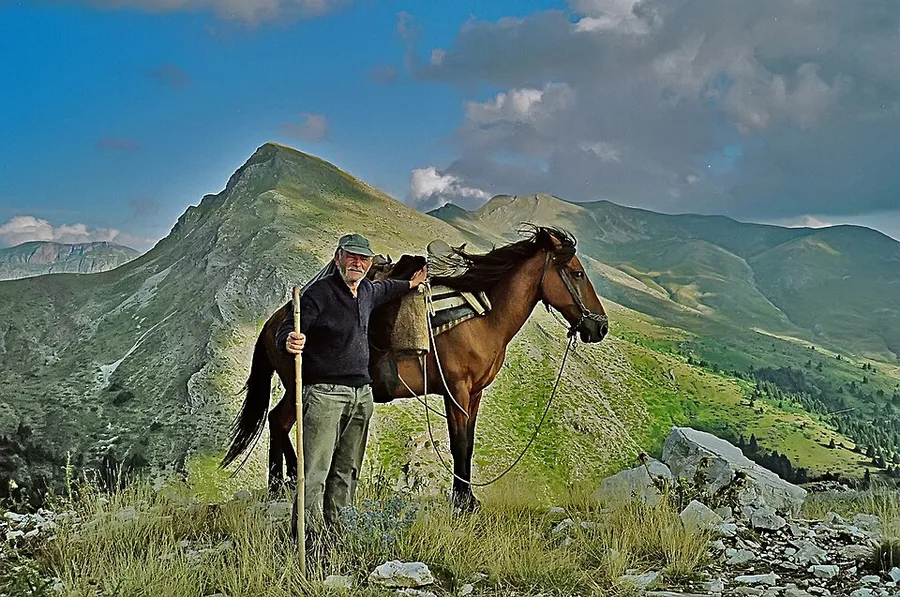
Photo: Natalia · CC BY 2.0 · Wikimedia Commons
Horse breed
Pindos Pony
The Pindos Pony is a small, hardy horse native to the Pindus mountains of northwestern Greece, where it has lived for centuries in rugged, high-altitude terrain. Local herders and farmers used these ponies as pack and draft animals, valuing them for their sure footing and endurance on steep, rocky tracks. Their compact build and dense build made them practical workers in a demanding environment rather than show or sport horses.
Pindos Ponies are generally calm, steady, and sensible, with a surefooted, economical way of going that suits trail riding in rough country. Their temperament is typically willing and patient, which can make them a reasonable choice for a newer rider who wants a dependable, low-drama mount. They are less common outside Greece, so finding one may take some searching.
Day to day, a Pindos Pony needs regular movement, room to graze, and the company of other horses. They do best with consistent handling and a routine that includes both turnout and purposeful work, as bored horses of any breed can develop unwanted habits.
Good for: Trail riders, first-time owners, pack and mountain work
| Exercise | about 45 min a day |
| Shedding | moderate |
| Origin | Greece |
Expect an easy keeper that needs weight monitoring, and plan for a breed that is harder to source outside Greece.
Living with a Pindos Pony
Exercise
Most Pindos Ponies do well with regular daily movement, whether ridden, led, or free in a large paddock, and roughly 30 to 60 minutes of purposeful work is a sensible target. With too little exercise and too much rich grazing, they can gain weight and become less fit or more prone to restlessness.
Grooming
The coat is typically dense and weather-resistant, with a thicker winter coat that sheds in spring. Mane and tail are usually left natural, and hooves need regular trimming or shoeing every 6 to 8 weeks depending on terrain. Clipping is rarely needed unless the horse is working hard through winter.
At home
Pindos Ponies are hardy and generally cope well with cold weather and variable conditions, so long-term turnout with shelter is a good fit. They tolerate herd life well and should not be kept alone for long periods. They are often easy keepers, so monitor body condition on rich pasture and adjust forage and hay to avoid excess weight.
Training
Pindos Ponies tend to learn steadily and respond well to patient, consistent handling. They are best suited to trail work, pack work, and general riding, where their sure footing and stamina shine. A green Pindos Pony should be expected to progress at a measured pace, with a sensible, forgiving temperament that rewards clear, calm cues.
Health
Because the breed is less documented than many others, specific breed-linked conditions are not well established in widely available sources. As with any pony that can be an easy keeper, metabolic and weight-related issues such as laminitis are worth watching for. Ask a veterinarian about screening and care tailored to
- Laminitis
- Obesity-related metabolic issues
- Hoof problems
Known tendencies, not a diagnosis: ask your vet about this breed.
The numbers for a Pindos Pony
Forage and water, adult
16–26 lb of hay a day
Forage at 1.5–2.5% of body weight at 882–1213 lb (typical for the type), and 9–17 gallons of water, more in heat and on hay alone. Grain only for the work being done.
What a year costs
$3,050–$5,200
Hay about $1,840, plus farrier every 6–8 weeks, routine vet, dental and dewormer. Board, lessons and showing on top; US averages.
Weather
Watch above 80°F, stop at 90°F
Blanket or shelter below 10°F. Horses mind heat more than cold: with shelter and water most are fine to about 10°F unclipped, and above a heat index of 150 (air °F + humidity %) ride early or not at all.
Where a Pindos Pony is comfortable
Easy most of the year: Alabama, Alaska, Arkansas, California, Colorado, Connecticut, Delaware, Florida, Georgia, Hawaii, Idaho, Illinois, Indiana, Iowa, Kansas, Kentucky, Louisiana, Maine, Maryland, Massachusetts, Michigan, Minnesota, Mississippi, Missouri, Montana, Nebraska, New Hampshire, New Jersey, New Mexico, New York, North Carolina, Ohio, Oregon, Pennsylvania, Rhode Island, South Carolina, South Dakota, Tennessee, Vermont, Virginia, Washington, Washington, DC, West Virginia, Wisconsin, Wyoming.
Summer needs care (early rides, shade, fans): Arizona, Nevada, Oklahoma, Texas, Utah.
Winter needs care (blanket, shelter, water that is not frozen): North Dakota.
From typical July highs and January lows by state and this breed's heat and cold limits. Shade, shelter and water change everything; this is about turnout and work.
Right now
Latest feed recalls
Multiple Brand Names: Chicken Feed, Swine Feed, Cattle Feed, Horse Feed
ADM Animal Nutrition · Apr 1 · Specific lots may contain elevated levels of calcium, phosphorus, magnesium, sodium and/or chloride and may harm chickens, swine, beef cattle and equine.
Rescue a Pindos Pony
Shelters and breed rescues list Pindos Ponys and Pindos Pony mixes every week. Search adoptable Pindos Ponys on Petfinder → New to the breed? The first-horse kit →
Is a Pindos Pony right for you?
- Yes if you ride steep or rocky trails regularly
- Yes if you want a calm, sensible, low-drama mount
- Yes if you can provide turnout and herd company
- Think twice if you need a specific show discipline pedigree
- Think twice if you cannot monitor weight on rich pasture
Questions owners ask
Is the Pindos Pony good for beginners?
Often yes. Their steady, calm temperament suits many newer riders, though any horse needs proper handling and instruction from an experienced trainer.
How much does a Pindos Pony cost?
Prices vary widely by location, age, and training. Because the breed is uncommon outside Greece, check local breeders and rescue groups for current listings.
How tall is a Pindos Pony?
Pindos Ponies are small horses. Exact height ranges are not well documented, so ask the breeder or a breed registry for details on a specific animal.
How long do Pindos Ponies live?
Lifespan depends on care, diet, and health. Good management and regular veterinary care help a pony live a long, active life.
Are Pindos Ponies easy keepers?
They are often considered efficient feeders, so monitor body condition closely on rich pasture to avoid weight gain and metabolic problems.
Written by Hoofdeck editors · updated Nov 13, 2026 · facts from Wikidata and Wikimedia Commons; health notes are general veterinary guidance, not a diagnosis.