
Horse breeds / Percheron
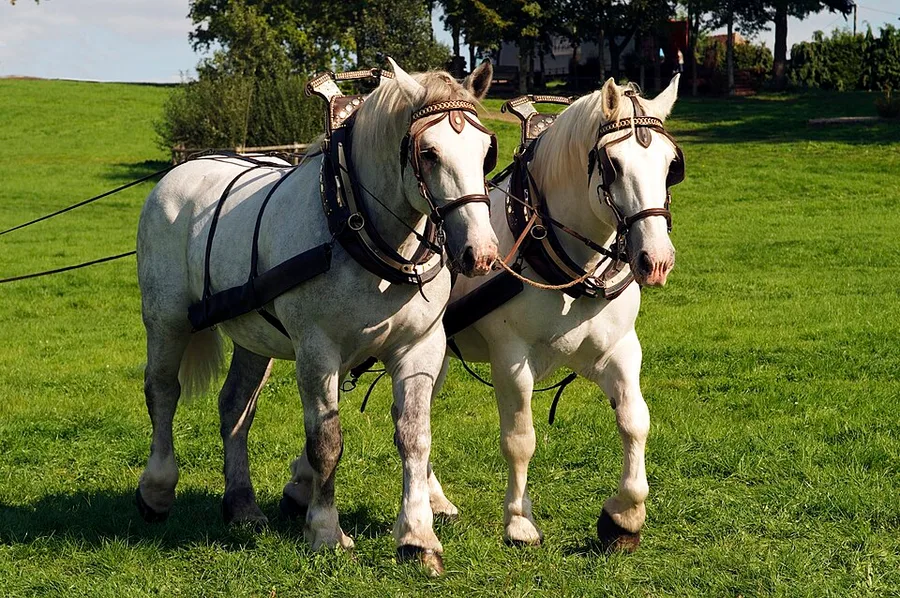
Photo: INRA DIST from France · CC BY 2.0 · Wikimedia Commons
Horse breed
Percheron
The Percheron comes from the Perche region of northwestern France, where it was developed over several centuries as a powerful draft horse. Breeders valued it for farm work, hauling heavy loads, and later for pulling city carts and drays. Its strength and dependable work ethic made it one of the most widely used draft breeds in the world.
Percherons are known for a calm, willing nature and a smooth, ground-covering way of going. Many are gentle enough to suit experienced handlers who want a steady, patient partner, and some are ridden or driven recreationally. Their size means they are not ideal for novice riders, and a first-time owner will want to work with an experienced trainer or instructor.
Day to day, a Percheron needs regular turnout, consistent handling, and enough work to stay fit and content. They do well with routine and companionship, and they respond best to patient, predictable care. Owners should plan for the feed and space that a horse of this size requires.
Good for: Experienced owners, draft work, driving, trail
| Size | large |
| Weight | 1874 lb |
| Height | 67 in |
| Life span | 25–30 years |
| Exercise | about 45 min a day |
| Shedding | heavy |
| Origin | France |
Their size and strength mean a first-time owner should have experienced help for handling, feeding, and training.
Living with a Percheron
Exercise
Most Percherons need daily movement, either through turnout or regular ridden or driven work. Typical sessions of 30 to 60 minutes suit a healthy adult in regular use. With too little exercise, they can become overweight, stiff, and less responsive.
Grooming
Percherons usually have a dense coat in black, gray, or roan, and they shed heavily in spring. Regular brushing keeps the coat healthy and manageable. Feathering on the lower legs needs cleaning and checking for moisture or irritation. Hooves need regular trimming or shoeing, and clipping may be nee
At home
Percherons do best with daily turnout in a safe paddock or pasture, with stabling as needed for weather and management. They are generally hardy in cold climates and tolerate winter well with a good coat and shelter. They are social and should live with at least one companion. Many are easy keepers, but workload and body condition will determine how much feed they need.
Training
Percherons tend to learn through patient, consistent handling and respond well to calm, clear cues. They excel at driving, pulling, and draft work, and many also take to trail riding and easy recreational riding. A green Percheron may be slow to mature and needs time, steady repetition, and a gentle approach before it is ready for heavier work.
Health
Percherons are generally sturdy, but they can be prone to certain conditions tied to body weight, metabolism, and hoof health. Laminitis and some metabolic issues are worth watching for in easy keepers. Ask your veterinarian which breed-specific or age-related conditions to monitor and how to manage diet and exercise f
- Laminitis
- Metabolic syndrome
- Hoof problems
Known tendencies, not a diagnosis: ask your vet about this breed.
The numbers for a Percheron
Forage and water, adult
28–47 lb of hay a day
Forage at 1.5–2.5% of body weight at 1874–1874 lb, and 17–30 gallons of water, more in heat and on hay alone. Grain only for the work being done.
What a year costs
$4,500–$7,200
Hay about $3,285, plus farrier every 6–8 weeks, routine vet, dental and dewormer. Board, lessons and showing on top; US averages.
Weather
Watch above 75°F, stop at 85°F
Blanket or shelter below 0°F. A heavy coat and a big body hold heat: this type copes with real cold and struggles first in humid summer heat; clip and shade before you blanket.
Where a Percheron is comfortable
Easy most of the year: Alaska, California, Connecticut, Delaware, Illinois, Indiana, Iowa, Kentucky, Maine, Massachusetts, Michigan, Minnesota, Montana, New Hampshire, New Jersey, New York, North Dakota, Ohio, Oregon, Pennsylvania, Rhode Island, South Dakota, Vermont, Washington, West Virginia, Wisconsin, Wyoming.
Summer needs care (early rides, shade, fans): Alabama, Arizona, Arkansas, Colorado, Florida, Georgia, Hawaii, Idaho, Kansas, Louisiana, Maryland, Mississippi, Missouri, Nebraska, Nevada, New Mexico, North Carolina, Oklahoma, South Carolina, Tennessee, Texas, Utah, Virginia, Washington, DC.
From typical July highs and January lows by state and this breed's heat and cold limits. Shade, shelter and water change everything; this is about turnout and work.
Right now
Latest feed recalls
Multiple Brand Names: Chicken Feed, Swine Feed, Cattle Feed, Horse Feed
ADM Animal Nutrition · Apr 1 · Specific lots may contain elevated levels of calcium, phosphorus, magnesium, sodium and/or chloride and may harm chickens, swine, beef cattle and equine.
Recent research
Effect of the intrinsic and extrinsic factors on the growth and development of young foals under subtropical conditions of Pakistan
PloS one · 2025
Comparative analysis of breeding patterns and reproductive efficiency of mares in subtropical conditions of Pakistan
Veterinary medicine and science · 2024
Progressive dyspnea with chronic nasal discharge in a Percheron yearling colt
Journal of the American Veterinary Medical Association · 2024
Veterinary papers that mention the breed, from PubMed.
Rescue a Percheron
Shelters and breed rescues list Percherons and Percheron mixes every week. Search adoptable Percherons on Petfinder → New to the breed? The first-horse kit →
Is a Percheron right for you?
- Yes if you want a calm, steady horse for driving or pulling
- Yes if you have the space, feed budget, and facilities for a large horse
- Yes if you enjoy patient, consistent training over time
- Think twice if you are a nervous or inexperienced rider
- Think twice if you have limited stable or paddock space
Questions owners ask
Are Percherons good for beginners?
Gentle Percherons can suit beginners with an experienced trainer, but their size and strength make them better for handlers with solid experience.
How much does a Percheron cost?
Prices vary widely by age, training, and bloodline. Budget for purchase, feed, farrier, veterinary care, and facilities, which together can be substantial.
How tall is a Percheron?
Adult Percherons typically stand around 16 to 17 hands at the withers, roughly 160 to 173 centimetres.
How long do Percherons live?
Percherons often live into their mid to late twenties or beyond with good care, diet, and regular veterinary attention.
Are Percherons easy keepers?
Many are easy keepers and can gain weight readily, so feed should be matched to workload and body condition, ideally with veterinary or nutritional advice.
Similar breeds
Written by Hoofdeck editors · updated Nov 13, 2026 · facts from Wikidata and Wikimedia Commons; health notes are general veterinary guidance, not a diagnosis.