
Horse breeds / National Show Horse
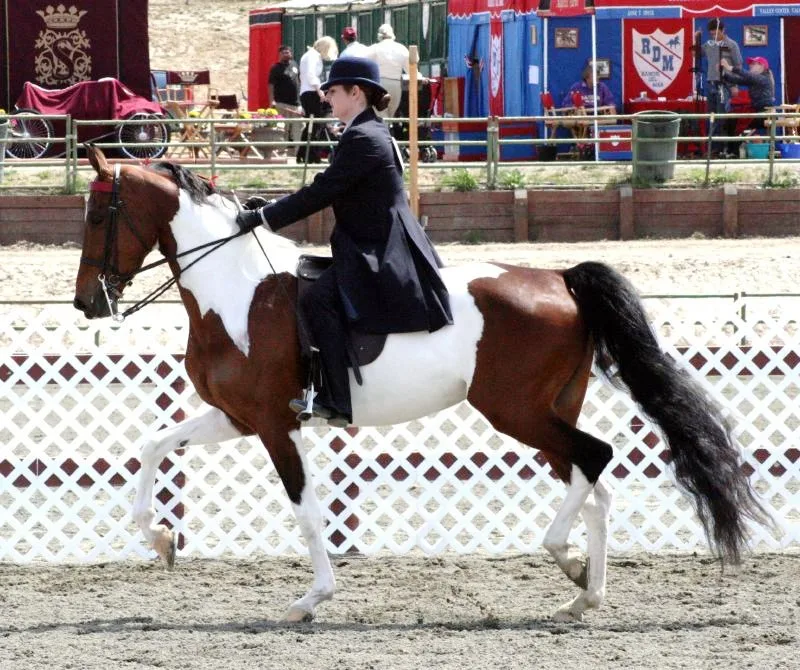
Photo: Just chaos · CC BY 2.0 · Wikimedia Commons
Horse breed
National Show Horse
The National Show Horse was developed in the United States as a flashy, refined show animal that combines the elegance of a saddle horse with the high-stepping action prized in the show ring. Breeders drew on established American show lines and other performance breeds to produce a horse with strong presence, arched neck, and animated gaits. Its ancestry is a blend of American show and saddle bloodlines rather than a single ancient landrace, so individual horses vary somewhat in type.
Owners tend to describe the National Show Horse as spirited but generally willing, with a bold, eye-catching way of going. It is often quite forward and energetic, so it suits experienced riders more readily than complete beginners, though calm individuals do exist. Its gaits are the breed's signature, and a well-schooled horse can be a rewarding partner for showing and pleasure riding alike.
Day to day, this horse needs regular work to keep its energy channeled and its manners polished. It also thrives on consistent handling and enough turnout to stay sound and mentally settled. Good hoof care and a steady routine help bring out the best in its show presence.
Good for: Experienced riders, show ring competitors
| Size | large |
| Weight | 992–1213 lb |
| Height | 60–65 in |
| Life span | 20–30 years |
| Exercise | about 60 min a day |
| Shedding | moderate |
| Origin | United States |
Choose a calmer individual with a proven show or pleasure record, since their forward energy can overwhelm inexperienced handlers.
Living with a National Show Horse
Exercise
Most National Show Horses need roughly an hour of ridden or in-hand work most days, along with regular turnout to stretch their legs. Without enough exercise they can become bored, tense, or hard to manage under saddle. Consistent work also helps maintain their topline and their gaits.
Grooming
Their coat is typically short and sleek, requiring brushing to keep it shining, especially before shows. Manes and tails are often kept neat and well-pulled or trimmed for a polished look. Regular hoof care with a farrier every six to eight weeks supports soundness, and clipping may be needed for ho
At home
National Show Horses are generally hardy and adapt well to a range of climates when given shelter from extreme weather. Many do well with daily turnout and a safe paddock, though they can be kept stabled for periods around shows. They usually do best in a herd or with a compatible companion to avoid boredom and stress. Feed needs vary by individual, so many owners consider them moderate keepers and adjust forage and concentrates to body condition.
Training
These horses tend to learn quickly and respond well to clear, consistent cues, often picking up show ring routines with relative ease. They are most at home in the show ring, pleasure classes, and hunter-type events, and they can also be trained for trail riding. A green National Show Horse may be energetic and forward at first, so patient, progressive schooling is important before asking for polished performance.
Health
Like many show-bred horses, National Show Horses can be prone to general performance and soundness concerns tied to their athletic demands. Specific breed-related conditions are not well documented, so careful monitoring is advisable. Ask your veterinarian which health screenings and preventive care suit your individua
- Soundness issues from athletic demands
- Hoof problems
- Colic
Known tendencies, not a diagnosis: ask your vet about this breed.
The numbers for a National Show Horse
Forage and water, adult
17–28 lb of hay a day
Forage at 1.5–2.5% of body weight at 992–1213 lb, and 10–18 gallons of water, more in heat and on hay alone. Grain only for the work being done.
What a year costs
$3,150–$5,350
Hay about $1,971, plus farrier every 6–8 weeks, routine vet, dental and dewormer. Board, lessons and showing on top; US averages.
Weather
Watch above 80°F, stop at 90°F
Blanket or shelter below 10°F. Horses mind heat more than cold: with shelter and water most are fine to about 10°F unclipped, and above a heat index of 150 (air °F + humidity %) ride early or not at all.
Where a National Show Horse is comfortable
Easy most of the year: Alabama, Alaska, Arkansas, California, Colorado, Connecticut, Delaware, Florida, Georgia, Hawaii, Idaho, Illinois, Indiana, Iowa, Kansas, Kentucky, Louisiana, Maine, Maryland, Massachusetts, Michigan, Minnesota, Mississippi, Missouri, Montana, Nebraska, New Hampshire, New Jersey, New Mexico, New York, North Carolina, Ohio, Oregon, Pennsylvania, Rhode Island, South Carolina, South Dakota, Tennessee, Vermont, Virginia, Washington, Washington, DC, West Virginia, Wisconsin, Wyoming.
Summer needs care (early rides, shade, fans): Arizona, Nevada, Oklahoma, Texas, Utah.
Winter needs care (blanket, shelter, water that is not frozen): North Dakota.
From typical July highs and January lows by state and this breed's heat and cold limits. Shade, shelter and water change everything; this is about turnout and work.
Right now
Latest feed recalls
Multiple Brand Names: Chicken Feed, Swine Feed, Cattle Feed, Horse Feed
ADM Animal Nutrition · Apr 1 · Specific lots may contain elevated levels of calcium, phosphorus, magnesium, sodium and/or chloride and may harm chickens, swine, beef cattle and equine.
Rescue a National Show Horse
Shelters and breed rescues list National Show Horses and National Show Horse mixes every week. Search adoptable National Show Horses on Petfinder → New to the breed? The first-horse kit →
Is a National Show Horse right for you?
- Yes if you want a flashy, eye-catching show horse.
- Yes if you enjoy schooling for polished gaits and presence.
- Yes if you can ride consistently and channel its energy well.
- Think twice if you are a nervous or first-time rider.
- Think twice if you cannot commit to daily work and training.
Questions owners ask
Is the National Show Horse good for beginners?
Generally it is better suited to experienced riders. A calm, well-schooled individual with a proven record can work for a confident beginner with qualified instruction.
How much does a National Show Horse cost?
Prices vary widely with bloodlines, training, and show record. Budget for purchase, board, feed, farrier, vet care, and tack, and get a pre-purchase exam.
How tall is a National Show Horse?
Most stand roughly 15.2 to 16.5 hands at the withers, though individual height depends on bloodlines and type.
How long does a National Show Horse live?
With good care, many live into their twenties and sometimes beyond. Regular veterinary and dental care supports a long, active life.
Are National Show Horses easy keepers?
Many are moderate keepers, so feed should be adjusted to body condition, workload, and forage quality. Your vet or nutritionist can help you tailor a plan.
Similar breeds
Written by Hoofdeck editors · updated Nov 13, 2026 · facts from Wikidata and Wikimedia Commons; health notes are general veterinary guidance, not a diagnosis.