
Horse breeds / Irish Draught
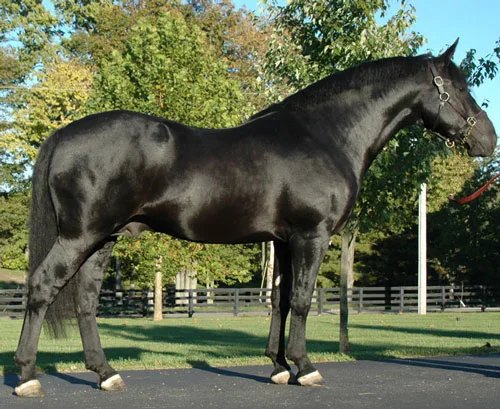
Photo: Losmurfs at English Wikipedia · CC BY 2.5 · Wikimedia Commons
Horse breed
Irish Draught
The Irish Draught developed in Ireland as a versatile all-round horse, bred to pull farm carts, carry farmers to market, and cross with lighter stock to produce hunters and riding horses. Its roots lie in the native Irish horse crossed with heavier breeds brought to the country over the centuries, and it became the foundation of many of Ireland's sport horses.
Irish Draughts are known for a bold, willing, and generous nature. They have a strong, athletic build and a powerful, economical way of moving, and they are often a good choice for riders who want a capable mount for hunting, eventing, or showing. Many are steady enough to suit experienced amateurs, though a green horse will still need consistent, patient handling.
Day to day, an Irish Draught needs regular turnout, work that matches its fitness, and company, since it is a social animal. Plenty of movement and a balanced diet keep it sound and content, and its sturdy frame copes well with a busy schedule when given proper care.
Good for: Experienced riders, eventing, hunting, all-round sport
| Size | large |
| Weight | 1102–1323 lb |
| Height | 61–67 in |
| Life span | 25–30 years |
| Exercise | about 60 min a day |
| Shedding | heavy |
| Origin | Ireland |
Irish Draughts are forward and spirited, so first-time owners should ideally ride with an experienced instructor or choose a seasoned, well-schooled individual.
Living with a Irish Draught
Exercise
Irish Draughts need regular daily work and turnout to stay fit and content. Without enough exercise they can become overly energetic, weight gain can set in, and they may develop behavioral problems when confined.
Grooming
Their dense winter coat sheds heavily in spring, so regular currying and brushing help. Manes and tails are typically thick and can be kept neat with routine care. Feathering on the legs needs cleaning to prevent skin problems. Hooves should be trimmed or shod regularly, and many owners clip for wor
At home
Irish Draughts are hardy and adapt well to turnout in most climates, with a good winter coat and a robust constitution. Many do well outdoors with shelter available, though some are stabled during hunting season. They are happiest in a herd with a companion. Their feed needs vary with workload; many are moderate keepers, but hard-working horses need extra calories and quality forage.
Training
Irish Draughts are intelligent and eager to please, and they learn best with fair, consistent handling. They excel in eventing, hunting, show jumping, and general riding. A green Irish Draught is usually forward-going and brave, sometimes with a bit of spirit, so expect a horse that tries hard and benefits from steady, positive schooling.
Health
Like many larger horses, Irish Draughts can be prone to conditions associated with weight and metabolism, and some lines have been noted for orthopedic issues. Ask your veterinarian which screening and preventive care make sense for the individual horse.
- Laminitis
- Metabolic issues
- Orthopedic conditions
Known tendencies, not a diagnosis: ask your vet about this breed.
The numbers for a Irish Draught
Forage and water, adult
18–30 lb of hay a day
Forage at 1.5–2.5% of body weight at 1102–1323 lb, and 11–19 gallons of water, more in heat and on hay alone. Grain only for the work being done.
What a year costs
$3,300–$5,550
Hay about $2,102, plus farrier every 6–8 weeks, routine vet, dental and dewormer. Board, lessons and showing on top; US averages.
Weather
Watch above 75°F, stop at 85°F
Blanket or shelter below 0°F. A heavy coat and a big body hold heat: this type copes with real cold and struggles first in humid summer heat; clip and shade before you blanket.
Where a Irish Draught is comfortable
Easy most of the year: Alaska, California, Connecticut, Delaware, Illinois, Indiana, Iowa, Kentucky, Maine, Massachusetts, Michigan, Minnesota, Montana, New Hampshire, New Jersey, New York, North Dakota, Ohio, Oregon, Pennsylvania, Rhode Island, South Dakota, Vermont, Washington, West Virginia, Wisconsin, Wyoming.
Summer needs care (early rides, shade, fans): Alabama, Arizona, Arkansas, Colorado, Florida, Georgia, Hawaii, Idaho, Kansas, Louisiana, Maryland, Mississippi, Missouri, Nebraska, Nevada, New Mexico, North Carolina, Oklahoma, South Carolina, Tennessee, Texas, Utah, Virginia, Washington, DC.
From typical July highs and January lows by state and this breed's heat and cold limits. Shade, shelter and water change everything; this is about turnout and work.
Right now
Latest feed recalls
Multiple Brand Names: Chicken Feed, Swine Feed, Cattle Feed, Horse Feed
ADM Animal Nutrition · Apr 1 · Specific lots may contain elevated levels of calcium, phosphorus, magnesium, sodium and/or chloride and may harm chickens, swine, beef cattle and equine.
Rescue a Irish Draught
Shelters and breed rescues list Irish Draughts and Irish Draught mixes every week. Search adoptable Irish Draughts on Petfinder → New to the breed? The first-horse kit →
Is a Irish Draught right for you?
- Yes if you want a bold, capable all-round horse.
- Yes if you enjoy hunting, eventing, or cross-country work.
- Yes if you can provide daily work and turnout.
- Think twice if you want a horse that is always quiet and lazy.
- Think twice if you have limited time for regular exercise.
Questions owners ask
Is the Irish Draught good for beginners?
Usually better for experienced riders. Many are forward-going and bold, so a beginner should look for a well-schooled, calm individual and take lessons with a qualified instructor.
How much does an Irish Draught cost?
Prices vary widely with age, training, and bloodlines. Quality sport prospects cost more than companion or pleasure horses, so research local sales and breeders carefully.
How tall is an Irish Draught?
Typically around 155 to 170 cm at the withers, roughly 15 to 16.5 hands, though individuals can fall outside that range.
How long do Irish Draughts live?
With good care, they commonly live into their mid-to-late twenties or beyond, depending on health, workload, and management.
What are Irish Draughts used for?
They are used for hunting, eventing, show jumping, dressage, and general riding, valued for their athleticism and versatility.
Similar breeds
Written by Hoofdeck editors · updated Nov 13, 2026 · facts from Wikidata and Wikimedia Commons; health notes are general veterinary guidance, not a diagnosis.