
Horse breeds / Indonesian Racing Horse
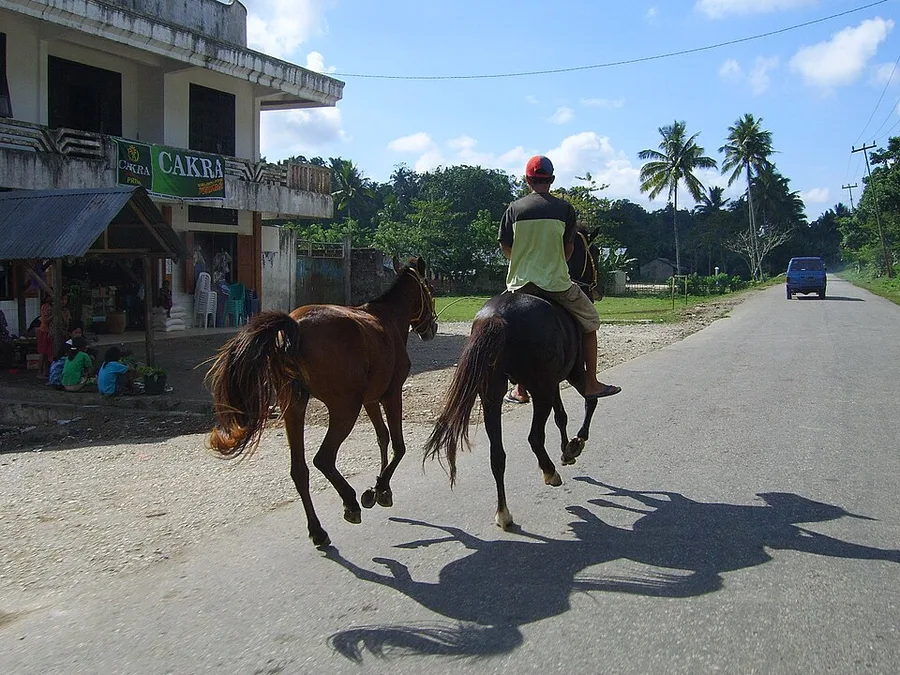
Photo: Wybe · CC BY-SA 3.0 · Wikimedia Commons
Horse breed
Indonesian Racing Horse
The Indonesian Racing Horse is a breed associated with Indonesia, where horses have long been used for transport, farm work, and local sport. Its breeding has centred on speed and stamina for flat racing and the kind of short, competitive events common on the islands. Details of its exact foundation stock and studbook history are not widely documented outside the country, so owners should look to breeders in Indonesia for pedigree specifics.
Riders who know this type describe a willing, forward horse that tends to be quick off the leg and eager to go. Temperament can run hot, so it generally suits riders who are comfortable with a lively ride and a horse that wants to work. It is less of a natural match for a complete beginner who needs a very calm, plodding mount.
Day to day, this horse needs regular work to stay settled and fit, along with time out of the stall to move and graze. Company matters too; most horses of this kind do best with a pasture mate and a consistent routine.
Good for: Experienced riders, flat and short-distance racing enthusiasts
| Exercise | about 50 min a day |
| Shedding | moderate |
| Origin | Indonesia |
Expect a forward, energetic horse that needs consistent daily work, so choose it only with an experienced trainer or instructor nearby.
Living with a Indonesian Racing Horse
Exercise
A healthy adult in regular use typically needs around 45 to 60 minutes of ridden or in-hand work a day, plus turnout to move freely. Too little work often shows up as excess energy, nervousness, or pushing against the rider.
Grooming
The coat is short and fine, needing a regular brush to keep it clean and healthy. The mane and tail are typically kept tidy with light trimming rather than heavy thinning. There are no feathers. Hooves should be trimmed or shod on a regular schedule, roughly every six to eight weeks.
At home
Turnout is best for this type, with daily time out in a paddock or pasture to keep the horse sound and mentally settled. Stabling should be a supplement rather than the main arrangement. Hardiness is generally good in warm climates, but cold and wet conditions call for shelter and a dry place to lie down. Keep it with a companion where possible. Feed needs depend on work level; many of these horses are moderate keepers, but fit racing types may need extra calories and close attention to body condition.
Training
This horse tends to learn quickly and responds well to clear, consistent cues, though it can be sharp if pushed too hard too soon. It is best suited to flat work, short-distance racing, and trail riding with a steady rider. A green horse of this type should be expected to be forward and reactive at first, needing patient groundwork and gradual exposure to new situations before it settles into a dependable routine.
Health
Like many lighter, fast-moving horses, this type can be prone to conditions affecting the feet and digestive system, so attention to hoof care and diet is important. Breed-specific health records are limited, so ask a veterinarian who knows the horse to advise on screening and common risks.
- Laminitis
- Colic
- Hoof problems
Known tendencies, not a diagnosis: ask your vet about this breed.
The numbers for a Indonesian Racing Horse
Forage and water, adult
16–26 lb of hay a day
Forage at 1.5–2.5% of body weight at 882–1213 lb (typical for the type), and 9–17 gallons of water, more in heat and on hay alone. Grain only for the work being done.
What a year costs
$3,050–$5,200
Hay about $1,840, plus farrier every 6–8 weeks, routine vet, dental and dewormer. Board, lessons and showing on top; US averages.
Weather
Watch above 80°F, stop at 90°F
Blanket or shelter below 10°F. Horses mind heat more than cold: with shelter and water most are fine to about 10°F unclipped, and above a heat index of 150 (air °F + humidity %) ride early or not at all.
Where a Indonesian Racing Horse is comfortable
Easy most of the year: Alabama, Alaska, Arkansas, California, Colorado, Connecticut, Delaware, Florida, Georgia, Hawaii, Idaho, Illinois, Indiana, Iowa, Kansas, Kentucky, Louisiana, Maine, Maryland, Massachusetts, Michigan, Minnesota, Mississippi, Missouri, Montana, Nebraska, New Hampshire, New Jersey, New Mexico, New York, North Carolina, Ohio, Oregon, Pennsylvania, Rhode Island, South Carolina, South Dakota, Tennessee, Vermont, Virginia, Washington, Washington, DC, West Virginia, Wisconsin, Wyoming.
Summer needs care (early rides, shade, fans): Arizona, Nevada, Oklahoma, Texas, Utah.
Winter needs care (blanket, shelter, water that is not frozen): North Dakota.
From typical July highs and January lows by state and this breed's heat and cold limits. Shade, shelter and water change everything; this is about turnout and work.
Right now
Latest feed recalls
Multiple Brand Names: Chicken Feed, Swine Feed, Cattle Feed, Horse Feed
ADM Animal Nutrition · Apr 1 · Specific lots may contain elevated levels of calcium, phosphorus, magnesium, sodium and/or chloride and may harm chickens, swine, beef cattle and equine.
Rescue a Indonesian Racing Horse
Shelters and breed rescues list Indonesian Racing Horses and Indonesian Racing Horse mixes every week. Search adoptable Indonesian Racing Horses on Petfinder → New to the breed? The first-horse kit →
Is a Indonesian Racing Horse right for you?
- Yes if you want a quick, forward horse for racing or fast work
- Yes if you ride regularly and enjoy an energetic mount
- Think twice if you are a complete beginner wanting a very calm horse
- Think twice if you have limited time for daily exercise
- Yes if you have access to Indonesian breeding lines and want authentic stock
Questions owners ask
Is the Indonesian Racing Horse good for beginners?
Generally not ideal for complete beginners, as it tends to be quick and forward. A calmer, more experienced horse or a lesson program is usually a better start.
How much does an Indonesian Racing Horse cost?
Prices vary widely by bloodline, age, training, and seller. Contact reputable breeders or sellers in Indonesia for current figures and pedigree details.
How tall do Indonesian Racing Horses get?
Height is not well documented for this type, so ask the breeder or seller for measurements of the specific horse you are considering.
How long do Indonesian Racing Horses live?
Life span is not reliably documented for this breed. Good care, diet, and soundness management generally support a long working life.
What is the Indonesian Racing Horse used for?
It is mainly bred and used for racing and fast competitive work, and it can also be ridden on trails with a steady, experienced rider.
Written by Hoofdeck editors · updated Nov 13, 2026 · facts from Wikidata and Wikimedia Commons; health notes are general veterinary guidance, not a diagnosis.