
Horse breeds / Hanoverian horse
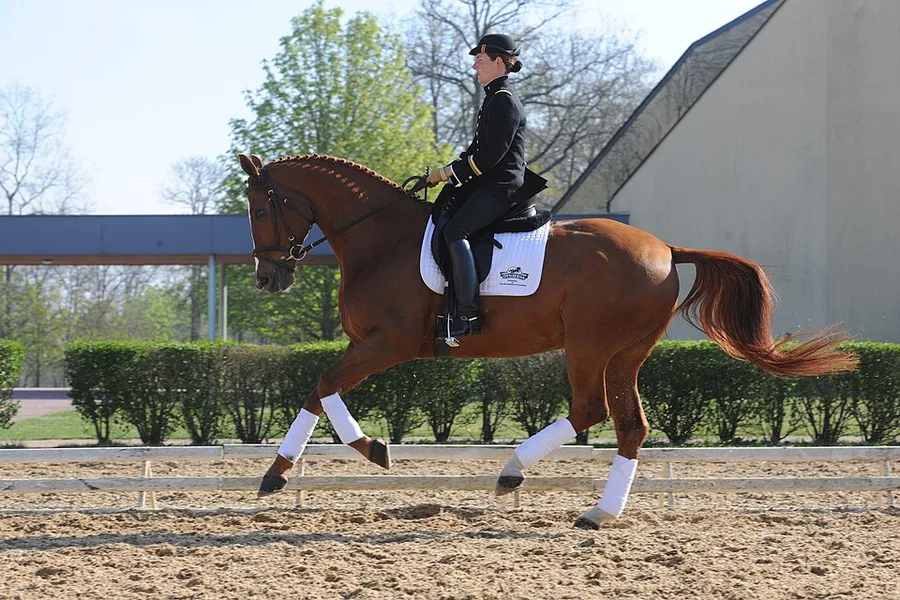
Photo: Alain Laurioux CDDENE · CC BY-SA 3.0 · Wikimedia Commons
Horse breed
Hanoverian horse
The Hanoverian comes from the Hanover region of Lower Saxony in northern Germany, where breeders began developing it in the 1700s from local mares crossed with imported Thoroughbred, Arabian, and other warmblood stallions. The aim was a versatile horse for cavalry, farm work, and carriage driving. Over time the breed was refined through a formal studbook and performance testing, and it became one of the most successful sport horse breeds in the world.
Hanoverians are known for an athletic, uphill build, a bold but workable temperament, and a natural, balanced way of moving. Many are well suited to dressage, eventing, and show jumping, and they often show a good eye and steady nerves in competition. Young horses can be forward and need consistent, calm handling, so they are generally better matched with riders who have some experience. Quality varies by bloodline, so buyers should look at the individual horse's training and conformation.
Day to day, a Hanoverian needs regular ridden or in-hand work and daily turnout with some company. Horses bred for sport are used to a steady schedule of training, and too much idle time can lead to excess energy and tension. Routine farrier care, dental checks, and a feeding plan matched to workload will keep them comfortable through a long working life.
Good for: Experienced riders, dressage and eventing
| Size | large |
| Weight | 1102–1433 lb |
| Height | 63–69 in |
| Life span | 25–30 years |
| Exercise | about 60 min a day |
| Shedding | moderate |
| Origin | Germany |
Hanoverians are athletic and forward, so first-time owners should choose one with a confirmed calm temperament and plan for regular professional support.
Living with a Hanoverian horse
Exercise
Most healthy adult Hanoverians need about 45 to 90 minutes of ridden or in-hand work most days, plus turnout. Too little work often leads to excess energy, tension, and harder rides.
Grooming
Hanoverians have a short, fine coat that is easy to keep tidy with regular brushing. Their manes and tails are usually fine and can be pulled or trimmed as needed. Hooves need farrier care every 6 to 8 weeks, and clipping is common for horses in regular work.
At home
Hanoverians do well with daily turnout, ideally in a group, and they adapt to most climates. They are generally hardy, though a clipped or sport-fit horse may need a rug in cold weather. Many are moderate to easy keepers on good forage, but hard work increases calorie needs considerably. Stabling works fine when turnout is consistent, but a horse kept in for long periods often becomes restless.
Training
Hanoverians learn quickly and respond best to clear, consistent cues and patient handling. They are especially well suited to dressage, eventing, show jumping, and hunter classes, and many also do well on trails. A green Hanoverian is usually forward and willing, but may need time to develop balance and focus, so expect steady progress rather than rapid results.
Health
Hanoverians are generally sound, but like many sport breeds they can be prone to joint and hoof issues linked to heavy work. Ask a veterinarian about pre-purchase exams, including X-rays where appropriate, and discuss any breeding-line concerns with the seller.
- Osteochondrosis
- Laminitis
- Navicular disease
Known tendencies, not a diagnosis: ask your vet about this breed.
The numbers for a Hanoverian horse
Forage and water, adult
19–32 lb of hay a day
Forage at 1.5–2.5% of body weight at 1102–1433 lb, and 11–20 gallons of water, more in heat and on hay alone. Grain only for the work being done.
What a year costs
$3,450–$5,750
Hay about $2,234, plus farrier every 6–8 weeks, routine vet, dental and dewormer. Board, lessons and showing on top; US averages.
Weather
Watch above 80°F, stop at 90°F
Blanket or shelter below 10°F. Horses mind heat more than cold: with shelter and water most are fine to about 10°F unclipped, and above a heat index of 150 (air °F + humidity %) ride early or not at all.
Where a Hanoverian horse is comfortable
Easy most of the year: Alabama, Alaska, Arkansas, California, Colorado, Connecticut, Delaware, Florida, Georgia, Hawaii, Idaho, Illinois, Indiana, Iowa, Kansas, Kentucky, Louisiana, Maine, Maryland, Massachusetts, Michigan, Minnesota, Mississippi, Missouri, Montana, Nebraska, New Hampshire, New Jersey, New Mexico, New York, North Carolina, Ohio, Oregon, Pennsylvania, Rhode Island, South Carolina, South Dakota, Tennessee, Vermont, Virginia, Washington, Washington, DC, West Virginia, Wisconsin, Wyoming.
Summer needs care (early rides, shade, fans): Arizona, Nevada, Oklahoma, Texas, Utah.
Winter needs care (blanket, shelter, water that is not frozen): North Dakota.
From typical July highs and January lows by state and this breed's heat and cold limits. Shade, shelter and water change everything; this is about turnout and work.
Right now
Latest feed recalls
Multiple Brand Names: Chicken Feed, Swine Feed, Cattle Feed, Horse Feed
ADM Animal Nutrition · Apr 1 · Specific lots may contain elevated levels of calcium, phosphorus, magnesium, sodium and/or chloride and may harm chickens, swine, beef cattle and equine.
Recent research
What is your diagnosis? Peritoneal fluid from a Hanoverian horse
Veterinary clinical pathology · 2024
Comparative population genomics unveils candidate genes for athletic performance in Hanoverians
Genome · 2019
Equine sinonasal anaplastic sarcoma infected with multi-drug resistant Escherichia coli
The Canadian veterinary journal = La revue veterinaire canadienne · 2019
Veterinary papers that mention the breed, from PubMed.
Rescue a Hanoverian horse
Shelters and breed rescues list Hanoverian horses and Hanoverian horse mixes every week. Search adoptable Hanoverian horses on Petfinder → New to the breed? The first-horse kit →
Is a Hanoverian horse right for you?
- Yes if you want a competitive dressage or jumping partner
- Yes if you ride regularly and can keep up with training
- Think twice if you want a calm horse for casual weekend trails
- Think twice if you have limited time for daily work
- Yes if you value a bold, athletic horse with a good work ethic
Questions owners ask
Are Hanoverians good for beginners?
Usually not as a first horse. They are athletic and forward, so beginners do better with a well-trained, quiet individual who has experience.
How much does a Hanoverian cost?
Prices vary widely with age, training, and bloodline. Young unbroke horses cost less than proven competition horses, so budget for the individual horse.
How tall is a Hanoverian?
Most stand roughly 160 to 175 centimetres at the withers, or about 16 to 17.2 hands, though size varies by bloodline.
How long do Hanoverians live?
Many live into their mid to late twenties or beyond with good care, regular veterinary checks, and appropriate work and nutrition.
Is a Hanoverian an easy keeper?
Many are moderate keepers on good forage, but their hard work increases calorie needs, so feed should be adjusted to workload and body condition.
Similar breeds
Written by Hoofdeck editors · updated Nov 13, 2026 · facts from Wikidata and Wikimedia Commons; health notes are general veterinary guidance, not a diagnosis.