
Horse breeds / Black Forest Horse
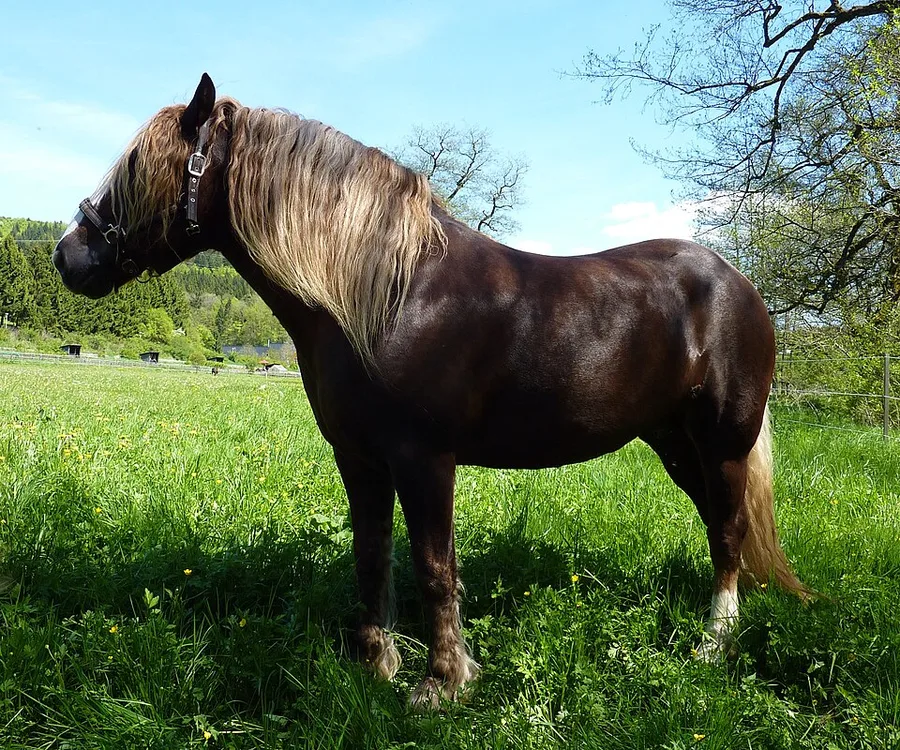
Photo: --Xocolatl (talk) 23:19, 24 May 2010 (UTC) · Public domain · Wikimedia Commons
Horse breed
Black Forest Horse
The Black Forest Horse, known in German as the Schwarzwälder Kaltblut, comes from the Black Forest region of southwestern Germany. It was developed as a versatile farm and draft horse, used for pulling timber, plowing fields, and hauling goods through the hills and forests of its home region.
These horses are known for a calm, willing temperament and a steady, sensible way of going. They are big and strong but generally tractable, which makes them a comfortable choice for owners who want a gentle, dependable partner for light riding and driving. Their solid build means they handle long days of work without fuss, though they are not built for speed.
Day to day, a Black Forest Horse needs regular turnout, consistent handling, and enough work to stay fit and content. They do best with a routine and with companionship from other horses. Their large size also means feed, space, and farrier care cost more than for a light breed.
Good for: Experienced owners, driving, light draft work
| Size | large |
| Weight | 1345 lb |
| Height | 61–65 in |
| Life span | 25–30 years |
| Exercise | about 60 min a day |
| Shedding | heavy |
| Origin | Germany |
Their size and feed needs are significant, so be sure you can afford ongoing care before committing.
Living with a Black Forest Horse
Exercise
Most Black Forest Horses need daily turnout and regular ridden or driven work several times a week. Too little exercise can lead to excess weight, stiffness, and boredom, which may show up as sluggish behavior or stable vices.
Grooming
Their dense coat sheds heavily in spring and needs regular brushing to stay clean. The mane and tail are usually left natural and brushed gently, and the feathers on the lower legs need regular cleaning to prevent skin problems. Regular farrier care is essential for their large hooves.
At home
Black Forest Horses are hardy and adapt well to outdoor living with a shelter from wind and rain. Turnout is preferred over full stabling, and they tend to do well in a herd. Because of their size and build, many are fairly easy keepers, so feed should be monitored closely to avoid weight gain.
Training
These horses learn steadily and respond well to patient, consistent handling. They excel at driving, light draft work, and relaxed trail riding, and they can be trained for dressage-style basics. Expect a green Black Forest Horse to be calm and willing but slow to mature, with physical development taking several years.
Health
Like many heavy horses, Black Forest Horses can be prone to conditions affecting the legs and feet, and some lines may have metabolic concerns. Ask a veterinarian about screening and a suitable care plan for any horse you are considering.
- Leg and hoof problems
- Metabolic issues
- Laminitis
Known tendencies, not a diagnosis: ask your vet about this breed.
The numbers for a Black Forest Horse
Forage and water, adult
20–34 lb of hay a day
Forage at 1.5–2.5% of body weight at 1345–1345 lb, and 12–22 gallons of water, more in heat and on hay alone. Grain only for the work being done.
What a year costs
$3,550–$5,900
Hay about $2,365, plus farrier every 6–8 weeks, routine vet, dental and dewormer. Board, lessons and showing on top; US averages.
Weather
Watch above 80°F, stop at 90°F
Blanket or shelter below 10°F. Horses mind heat more than cold: with shelter and water most are fine to about 10°F unclipped, and above a heat index of 150 (air °F + humidity %) ride early or not at all.
Where a Black Forest Horse is comfortable
Easy most of the year: Alabama, Alaska, Arkansas, California, Colorado, Connecticut, Delaware, Florida, Georgia, Hawaii, Idaho, Illinois, Indiana, Iowa, Kansas, Kentucky, Louisiana, Maine, Maryland, Massachusetts, Michigan, Minnesota, Mississippi, Missouri, Montana, Nebraska, New Hampshire, New Jersey, New Mexico, New York, North Carolina, Ohio, Oregon, Pennsylvania, Rhode Island, South Carolina, South Dakota, Tennessee, Vermont, Virginia, Washington, Washington, DC, West Virginia, Wisconsin, Wyoming.
Summer needs care (early rides, shade, fans): Arizona, Nevada, Oklahoma, Texas, Utah.
Winter needs care (blanket, shelter, water that is not frozen): North Dakota.
From typical July highs and January lows by state and this breed's heat and cold limits. Shade, shelter and water change everything; this is about turnout and work.
Right now
Latest feed recalls
Multiple Brand Names: Chicken Feed, Swine Feed, Cattle Feed, Horse Feed
ADM Animal Nutrition · Apr 1 · Specific lots may contain elevated levels of calcium, phosphorus, magnesium, sodium and/or chloride and may harm chickens, swine, beef cattle and equine.
Rescue a Black Forest Horse
Shelters and breed rescues list Black Forest Horses and Black Forest Horse mixes every week. Search adoptable Black Forest Horses on Petfinder → New to the breed? The first-horse kit →
Is a Black Forest Horse right for you?
- Yes if you want a calm, steady horse for driving or light trail work.
- Yes if you have space and budget for large feed and farrier bills.
- Yes if you enjoy a patient horse that matures slowly.
- Think twice if you want a fast or athletic performance horse.
- Think twice if you have limited space or a small yard.
Questions owners ask
Is the Black Forest Horse good for beginners?
They can suit confident beginners with an experienced trainer nearby. Their calm nature helps, but their large size means handling and riding still require skill and good guidance.
How much does a Black Forest Horse cost?
Prices vary widely by region, bloodline, and training. Expect costs to be higher than for many light breeds, especially once feed, farrier, and tack for a large horse are included.
How tall is a Black Forest Horse?
They typically stand about 155 to 165 centimeters at the withers, which is roughly 15 to 16 hands. They are a sturdy, heavier build rather than a tall one.
How long do Black Forest Horses live?
With good care, they commonly live into their mid to late twenties. Diet, hoof care, and regular veterinary checks all help support a long, healthy life.
Are Black Forest Horses easy keepers?
Many are fairly easy keepers, so they can gain weight on rich pasture. Monitor body condition and adjust feed and turnout to keep them at a healthy weight.
Similar breeds
Written by Hoofdeck editors · updated Nov 13, 2026 · facts from Wikidata and Wikimedia Commons; health notes are general veterinary guidance, not a diagnosis.