
Horse breeds / Australian Draught Horse
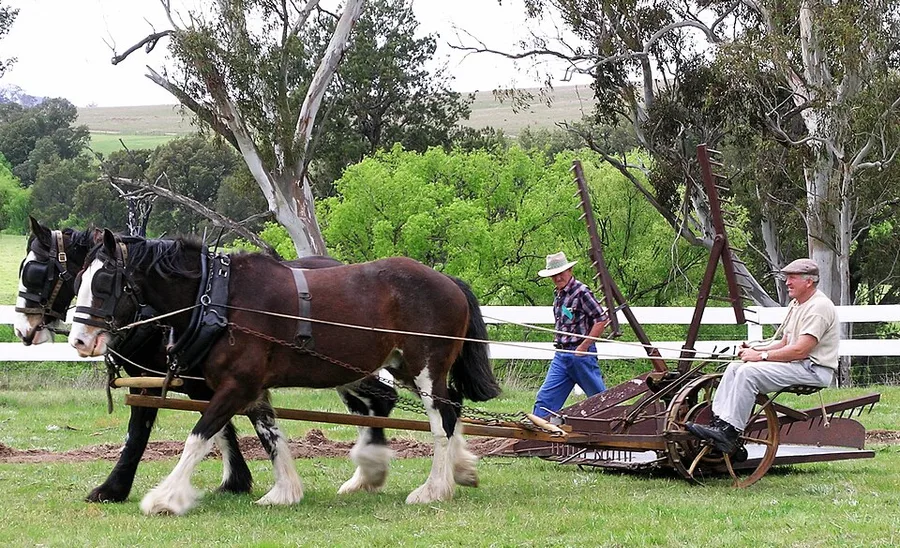
Photo: Cgoodwin · CC BY-SA 3.0 · Wikimedia Commons
Horse breed
Australian Draught Horse
The Australian Draught Horse was developed in Australia in the 19th and early 20th centuries from imported heavy horses such as the Clydesdale, Shire, and Percheron, crossed with lighter stock to suit local conditions. It was bred to work: hauling loads on farms, in the timber industry, and on the roads of a young and growing country.
These are big, powerful horses with a calm, steady nature. They are generally willing and patient, which makes them a reasonable choice for experienced handlers who want a dependable workhorse or a gentle ride. They move with a heavy, deliberate stride rather than speed, and they are not usually suited to beginners who need a quick, responsive mount.
Day to day, they need good forage, regular turnout with room to move, and steady work to stay fit and well mannered. They also do best with equine companionship, as they can become bored or stressed when kept alone for long periods.
Good for: Farm work, draft driving, calm trail riders
| Size | large |
| Weight | 1543–1984 lb |
| Height | 63–69 in |
| Life span | 25–30 years |
| Exercise | about 45 min a day |
| Shedding | heavy |
| Origin | Australia |
Their size and strength mean you need solid handling skills and proper equipment before you bring one home.
Living with a Australian Draught Horse
Exercise
A healthy adult generally benefits from regular daily turnout and a few sessions of work each week, depending on its purpose. Too little exercise can lead to weight gain, stiffness, and boredom, which may show up as restlessness or poor behavior.
Grooming
Their dense coat needs regular brushing to keep it clean and free of mud. Mane and tail benefit from routine detangling, and feathering on the lower legs should be kept clean and dry to prevent skin problems. Hooves need regular trimming or shoeing by a qualified farrier.
At home
Australian Draught Horses generally do well with good turnout and access to shelter from harsh weather, though they can also be stabled when needed. They are hardy and cope well with a range of climates. They are happiest in a herd, where they can socialize freely. Because of their size, they usually need a fair amount of feed, though many are fairly easy keepers when managed carefully.
Training
These horses learn by steady repetition and respond best to patient, consistent handling. They are well suited to draft work, pulling carts, and trail riding, and can be trained for light driving. Expect a green horse to take its time to mature, both physically and mentally, so early work should be gradual and measured.
Health
Like many heavy horse breeds, they can be prone to leg and joint issues as well as conditions associated with their weight and feed intake. Ask a veterinarian about breed-specific screening and an appropriate care plan for your horse.
- Leg and joint problems
- Laminitis
- Colic
Known tendencies, not a diagnosis: ask your vet about this breed.
The numbers for a Australian Draught Horse
Forage and water, adult
26–44 lb of hay a day
Forage at 1.5–2.5% of body weight at 1543–1984 lb, and 16–28 gallons of water, more in heat and on hay alone. Grain only for the work being done.
What a year costs
$4,250–$6,900
Hay about $3,066, plus farrier every 6–8 weeks, routine vet, dental and dewormer. Board, lessons and showing on top; US averages.
Weather
Watch above 75°F, stop at 85°F
Blanket or shelter below 0°F. A heavy coat and a big body hold heat: this type copes with real cold and struggles first in humid summer heat; clip and shade before you blanket.
Where a Australian Draught Horse is comfortable
Easy most of the year: Alaska, California, Connecticut, Delaware, Illinois, Indiana, Iowa, Kentucky, Maine, Massachusetts, Michigan, Minnesota, Montana, New Hampshire, New Jersey, New York, North Dakota, Ohio, Oregon, Pennsylvania, Rhode Island, South Dakota, Vermont, Washington, West Virginia, Wisconsin, Wyoming.
Summer needs care (early rides, shade, fans): Alabama, Arizona, Arkansas, Colorado, Florida, Georgia, Hawaii, Idaho, Kansas, Louisiana, Maryland, Mississippi, Missouri, Nebraska, Nevada, New Mexico, North Carolina, Oklahoma, South Carolina, Tennessee, Texas, Utah, Virginia, Washington, DC.
From typical July highs and January lows by state and this breed's heat and cold limits. Shade, shelter and water change everything; this is about turnout and work.
Right now
Latest feed recalls
Multiple Brand Names: Chicken Feed, Swine Feed, Cattle Feed, Horse Feed
ADM Animal Nutrition · Apr 1 · Specific lots may contain elevated levels of calcium, phosphorus, magnesium, sodium and/or chloride and may harm chickens, swine, beef cattle and equine.
Rescue a Australian Draught Horse
Shelters and breed rescues list Australian Draught Horses and Australian Draught Horse mixes every week. Search adoptable Australian Draught Horses on Petfinder → New to the breed? The first-horse kit →
Is a Australian Draught Horse right for you?
- Yes if you want a calm, steady horse for pulling or hauling work.
- Yes if you have space for turnout and enjoy a relaxed riding pace.
- Yes if you have experience handling large, powerful horses safely.
- Think twice if you want a quick, agile horse for competitive riding.
- Think twice if you have limited space or budget for big feed bills.
Questions owners ask
Are Australian Draught Horses good for beginners?
They can suit calm, experienced beginners with help from a knowledgeable trainer. Their size and strength mean they are not usually the best first horse for someone with no handling experience.
How much do Australian Draught Horses cost?
Prices vary widely by age, training, and bloodline. Budget for the purchase, feed, farrier, veterinary care, and tack, which can be significant for a horse this large.
How tall do Australian Draught Horses get?
Adults typically stand about 160 to 175 centimetres at the withers, roughly 16 to 17 hands, though individuals can vary.
How long do Australian Draught Horses live?
With good care, they often live into their mid-to-late twenties or beyond. Regular veterinary and farrier care helps support a long, healthy life.
Are Australian Draught Horses easy keepers?
They are often moderate keepers, but feed needs depend on size, workload, and forage quality. Watch body condition closely and adjust feed as needed with your vet or nutritionist.
Similar breeds
Written by Hoofdeck editors · updated Nov 13, 2026 · facts from Wikidata and Wikimedia Commons; health notes are general veterinary guidance, not a diagnosis.