
Horse breeds / Andalusian horse
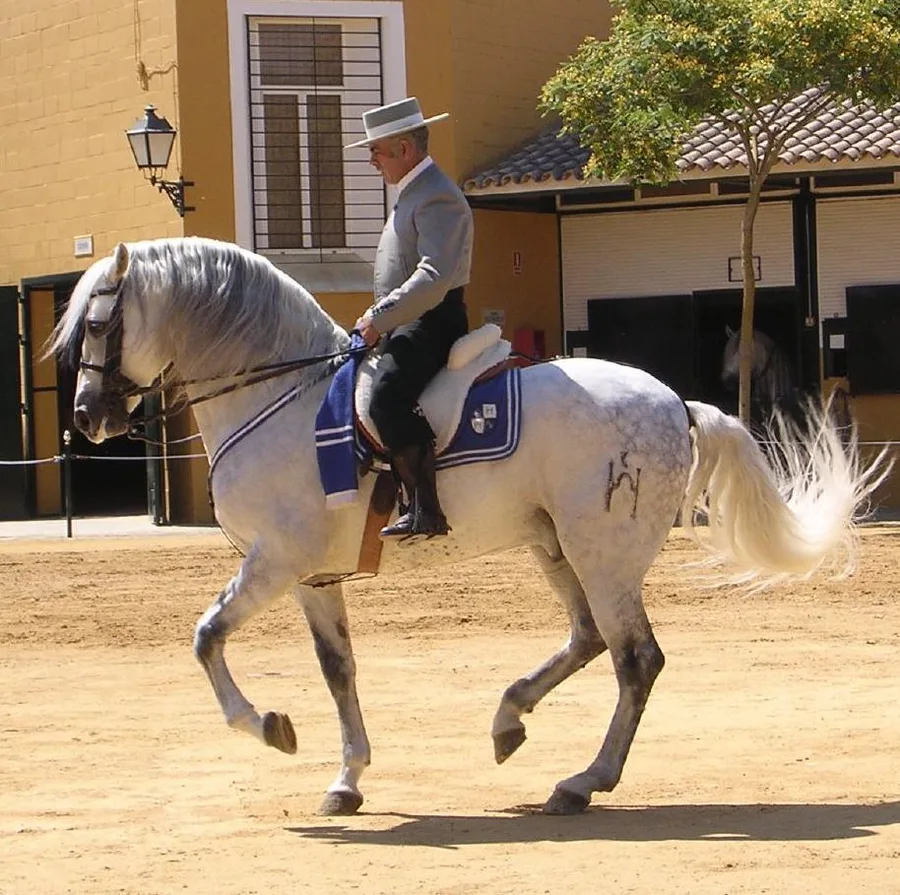
Photo: Kartäuser-Pferd_Andalucia,_Spain_Private_Tour_-_June_2007.jp… · CC BY 2.0 · Wikimedia Commons
Horse breed
Andalusian horse
The Andalusian comes from the Iberian Peninsula, principally southern Spain and Portugal, where it was developed over centuries for riding, bullfighting, and the cavalry. Its lineage is closely tied to the royal and aristocratic stables of Spain and Portugal, and it is one of the oldest riding breeds still recognized today. It was bred to be athletic, collected, and capable of fine, balanced movement under a rider.
Andalusians are known for a proud, expressive presence, a high-set neck, and a naturally elevated carriage. They are intelligent and sensitive, responding best to soft, consistent handling and reward-based training. Many are willing and eager to please, though they are not always suited to a true beginner, since they can be quick to react and need a steady hand. They are often a fine choice for owners who want a partner for dressage or pleasure riding.
Day to day, Andalusians do best with regular work and daily turnout, along with plenty of human contact. They are sociable animals and do not thrive when isolated for long periods. Their coats need regular grooming to keep them looking their best, and their mane and tail deserve attention to stay healthy and full.
Good for: Experienced riders, dressage enthusiasts, and pleasure riders
| Size | large |
| Weight | 992–1102 lb |
| Height | 60–64 in |
| Life span | 25–30 years |
| Exercise | about 45 min a day |
| Shedding | moderate |
| Origin | Portugal, Spain |
Andalusians are sensitive and proud, so a first-time owner should expect a steady learning curve and plan for experienced guidance.
Living with a Andalusian horse
Exercise
Andalusians need regular ridden or in-hand work several days a week, plus daily turnout when possible. Without enough exercise they can become bored, fizzy, or prone to unwanted behavior. Consistent routine keeps them balanced and focused.
Grooming
Andalusians have a fine, glossy coat that benefits from daily brushing and regular bathing. Their long, thick manes and tails should be detangled gently and kept clean. Many keep their hooves trimmed or shod every four to eight weeks, depending on work and terrain.
At home
Andalusians do well with a balance of turnout and stabling and generally handle most climates with proper shelter and blanketing when needed. They are sociable and do best in a herd or with a companion horse rather than alone. Many are moderate to easy keepers, but good-quality forage and a balanced diet are important to maintain condition without overfeeding.
Training
Andalusians learn quickly and respond well to gentle, patient, consistent training. They excel in dressage and classical work, and they are also capable in pleasure riding and some driving. A green Andalusian often needs time to build confidence and understand the rider's aids, and they tend to mature slowly, so expect steady progress rather than rapid results.
Health
Andalusians are generally sound and long-lived, but some lines may be prone to certain inherited conditions. Owners should ask a veterinarian about breed-specific screening and any health concerns in a prospective horse's pedigree.
- Osteochondrosis
- Equine metabolic syndrome
- Cushing's disease
Known tendencies, not a diagnosis: ask your vet about this breed.
The numbers for a Andalusian horse
Forage and water, adult
16–26 lb of hay a day
Forage at 1.5–2.5% of body weight at 992–1102 lb, and 9–17 gallons of water, more in heat and on hay alone. Grain only for the work being done.
What a year costs
$3,050–$5,200
Hay about $1,840, plus farrier every 6–8 weeks, routine vet, dental and dewormer. Board, lessons and showing on top; US averages.
Weather
Watch above 85°F, stop at 95°F
Blanket or shelter below 20°F. Bred for heat: fine working in warm weather with water and salt, but a thin coat and skin want a blanket and shelter below about 20°F.
Where a Andalusian horse is comfortable
Easy most of the year: Alabama, Arkansas, California, Colorado, Connecticut, Delaware, Florida, Georgia, Hawaii, Idaho, Illinois, Indiana, Iowa, Kansas, Kentucky, Louisiana, Maine, Maryland, Massachusetts, Michigan, Mississippi, Missouri, Montana, Nebraska, New Hampshire, New Jersey, New Mexico, New York, North Carolina, Ohio, Oklahoma, Oregon, Pennsylvania, Rhode Island, South Carolina, Tennessee, Texas, Utah, Virginia, Washington, Washington, DC, West Virginia, Wyoming.
Summer needs care (early rides, shade, fans): Arizona, Nevada.
Winter needs care (blanket, shelter, water that is not frozen): Alaska, Minnesota, North Dakota, South Dakota, Vermont, Wisconsin.
From typical July highs and January lows by state and this breed's heat and cold limits. Shade, shelter and water change everything; this is about turnout and work.
Right now
Latest feed recalls
Multiple Brand Names: Chicken Feed, Swine Feed, Cattle Feed, Horse Feed
ADM Animal Nutrition · Apr 1 · Specific lots may contain elevated levels of calcium, phosphorus, magnesium, sodium and/or chloride and may harm chickens, swine, beef cattle and equine.
Rescue a Andalusian horse
Shelters and breed rescues list Andalusian horses and Andalusian horse mixes every week. Search adoptable Andalusian horses on Petfinder → New to the breed? The first-horse kit →
Is a Andalusian horse right for you?
- Yes if you want a partner for dressage or classical work.
- Yes if you enjoy an expressive, eye-catching horse with a proud carriage.
- Think twice if you are a complete beginner seeking an easygoing ride.
- Think twice if you cannot commit to regular, consistent training.
- Yes if you want an intelligent horse that bonds closely with its handler.
Questions owners ask
Are Andalusians good for beginners?
Andalusians are sensitive and can be reactive, so they are usually better suited to intermediate or experienced riders. A calm, patient beginner with good instruction may do well with a steady individual.
How much do Andalusians cost?
Prices vary widely based on bloodline, training, age, and show record. Well-bred, trained individuals often cost considerably more than average riding horses, so research carefully.
How tall do Andalusians get?
Andalusians typically stand about 15 to 16 hands, or roughly 153 to 163 centimeters, at the withers. Individual height depends on genetics and nutrition.
How long do Andalusians live?
Andalusians commonly live into their mid-twenties to around thirty years with good care. Regular veterinary attention and a balanced diet support a long, healthy life.
Are Andalusians easy keepers?
Andalusians are generally moderate keepers and can gain weight on rich pasture. Monitoring body condition and adjusting forage and feed helps keep them in good shape.
Similar breeds
Written by Hoofdeck editors · updated Nov 13, 2026 · facts from Wikidata and Wikimedia Commons; health notes are general veterinary guidance, not a diagnosis.