
Horse breeds / American Warmblood
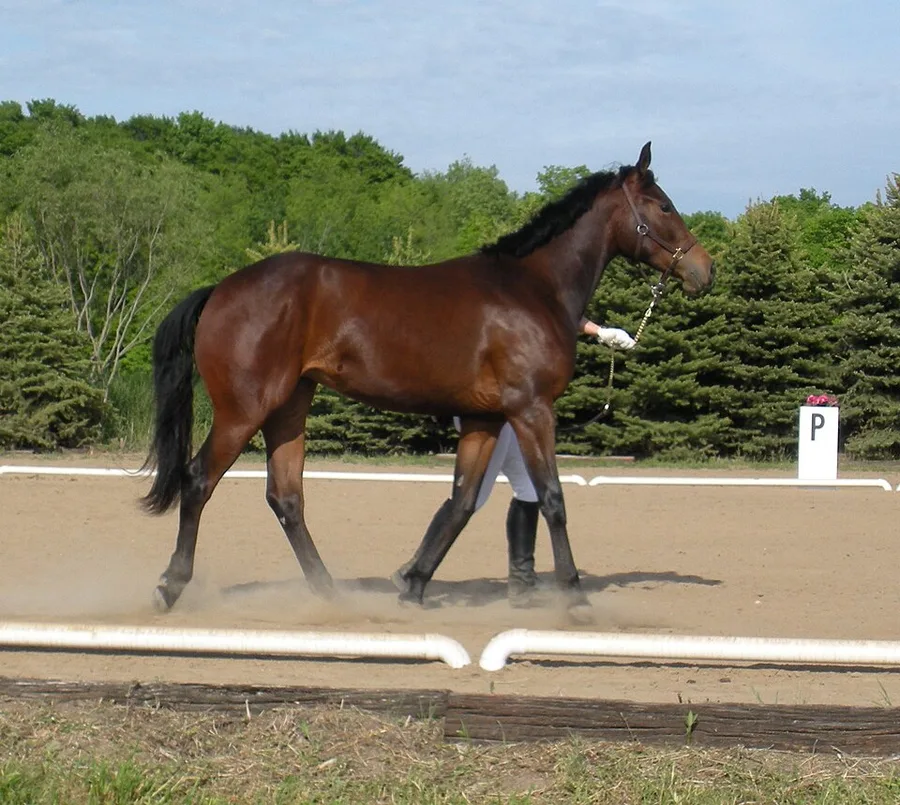
Photo: Josette · CC BY-SA 4.0 · Wikimedia Commons
Horse breed
American Warmblood
The American Warmblood was developed in the United States from crosses of European warmblood stallions and mares with American stock, with the aim of producing a sport horse that combines athleticism, scope and a sensible temperament. Breeders drew on Hanoverian, Holsteiner, Trakehner and other warmblood lines, and the registry has focused on performance in dressage, eventing and show jumping rather than on a single fixed type. Because the breed is a registry of blended stock, individuals vary in size, build and movement.
As a riding horse, the American Warmblood is typically willing and athletic, with a balanced, forward way of going that suits many disciplines. Most are calm enough for capable amateurs but still have the power and scope that more experienced riders enjoy. Beginners can do well with a well-started, quiet individual, though a green horse of any warmblood type needs a knowledgeable trainer and a clear program.
Day to day, these horses need regular, purposeful work, both to keep them fit and to keep their minds occupied. They do best with consistent turnout and social contact with other horses. Good hoof care, dental attention and a feeding plan matched to their workload keep them comfortable and performing well.
Good for: Experienced riders, sport and dressage
| Size | large |
| Weight | 1102–1323 lb |
| Height | 62–67 in |
| Life span | 25–30 years |
| Exercise | about 60 min a day |
| Shedding | moderate |
| Origin | United States |
Choose a well-trained, quiet individual with a professional pre-purchase exam, since athletic horses need experienced handling.
Living with a American Warmblood
Exercise
Most healthy adults need about five to six days a week of ridden or in-hand work, plus daily turnout for movement. Too little work can lead to excess energy, stiffness and behavior problems under saddle. Keeping the horse in a stall for long periods without exercise tends to make them less comfortab
Grooming
The coat is typically short and manageable, with a seasonal change in winter. Mane and tail are usually kept neat with regular brushing, and feathers, if present, need gentle cleaning to prevent irritation. Hooves need trimming or shoeing every four to eight weeks depending on the horse, and clippin
At home
American Warmblooms are generally hardy and adapt well to a variety of climates when given adequate shelter, turnout and access to forage. Most do well with daily turnout and can be kept in pasture or in a stall with a run, depending on the setup and the individual horse. They are sociable and usually do better in a herd or with a pasture companion. Many are moderate keepers, but athletic horses in heavy work often need more calories, so feed should be adjusted to body condition and workload.
Training
American Warmbloods tend to learn quickly and respond well to clear, consistent training that rewards good effort. They are often good at dressage, eventing, show jumping and hunter work, and many also do well on the trail. A green horse of this breed usually needs patient groundwork and gradual introduction to new tasks, and progress varies by individual. Expect steady development rather than instant results.
Health
Warmblood-type sport horses are generally sound, though orthopedic issues such as those affecting the joints, feet and back can occur with athletic use. Dental issues and digestive problems are also common across the breed. Ask a veterinarian about the specific health history of any horse you consider, including a pre-
- Orthopedic joint issues
- Dental problems
- Colic
Known tendencies, not a diagnosis: ask your vet about this breed.
The numbers for a American Warmblood
Forage and water, adult
18–30 lb of hay a day
Forage at 1.5–2.5% of body weight at 1102–1323 lb, and 11–19 gallons of water, more in heat and on hay alone. Grain only for the work being done.
What a year costs
$3,300–$5,550
Hay about $2,102, plus farrier every 6–8 weeks, routine vet, dental and dewormer. Board, lessons and showing on top; US averages.
Weather
Watch above 80°F, stop at 90°F
Blanket or shelter below 10°F. Horses mind heat more than cold: with shelter and water most are fine to about 10°F unclipped, and above a heat index of 150 (air °F + humidity %) ride early or not at all.
Where a American Warmblood is comfortable
Easy most of the year: Alabama, Alaska, Arkansas, California, Colorado, Connecticut, Delaware, Florida, Georgia, Hawaii, Idaho, Illinois, Indiana, Iowa, Kansas, Kentucky, Louisiana, Maine, Maryland, Massachusetts, Michigan, Minnesota, Mississippi, Missouri, Montana, Nebraska, New Hampshire, New Jersey, New Mexico, New York, North Carolina, Ohio, Oregon, Pennsylvania, Rhode Island, South Carolina, South Dakota, Tennessee, Vermont, Virginia, Washington, Washington, DC, West Virginia, Wisconsin, Wyoming.
Summer needs care (early rides, shade, fans): Arizona, Nevada, Oklahoma, Texas, Utah.
Winter needs care (blanket, shelter, water that is not frozen): North Dakota.
From typical July highs and January lows by state and this breed's heat and cold limits. Shade, shelter and water change everything; this is about turnout and work.
Right now
Latest feed recalls
Multiple Brand Names: Chicken Feed, Swine Feed, Cattle Feed, Horse Feed
ADM Animal Nutrition · Apr 1 · Specific lots may contain elevated levels of calcium, phosphorus, magnesium, sodium and/or chloride and may harm chickens, swine, beef cattle and equine.
Rescue a American Warmblood
Shelters and breed rescues list American Warmbloods and American Warmblood mixes every week. Search adoptable American Warmbloods on Petfinder → New to the breed? The first-horse kit →
Is a American Warmblood right for you?
- Yes if you want a athletic, sport-minded horse
- Yes if you plan regular training in dressage, eventing or jumping
- Yes if you can provide consistent turnout and work
- Think twice if you want an unstarted horse with no training
- Think twice if you only ride occasionally and want a low-maintenance horse
Questions owners ask
Are American Warmbloods good for beginners?
Some are, especially well-trained, calm individuals. Green or hot horses are better suited to experienced riders with knowledgeable trainers.
How much do American Warmbloods cost?
Prices vary widely with training, pedigree and age. Expect a broad range, and get a pre-purchase exam before buying any horse.
How tall do American Warmbloods get?
Adults typically stand around 157 to 170 centimetres at the withers, though individuals vary with their blood lines.
How long do American Warmbloods live?
With good care, they commonly live into their mid to late twenties or beyond. Individual life spans depend on health and management.
Are American Warmbloods easy keepers?
Many are moderate keepers, but athletic horses in heavy work often need more feed, so adjust rations to body condition.
Similar breeds
Written by Hoofdeck editors · updated Nov 13, 2026 · facts from Wikidata and Wikimedia Commons; health notes are general veterinary guidance, not a diagnosis.