
Horse breeds / American Quarter Horse
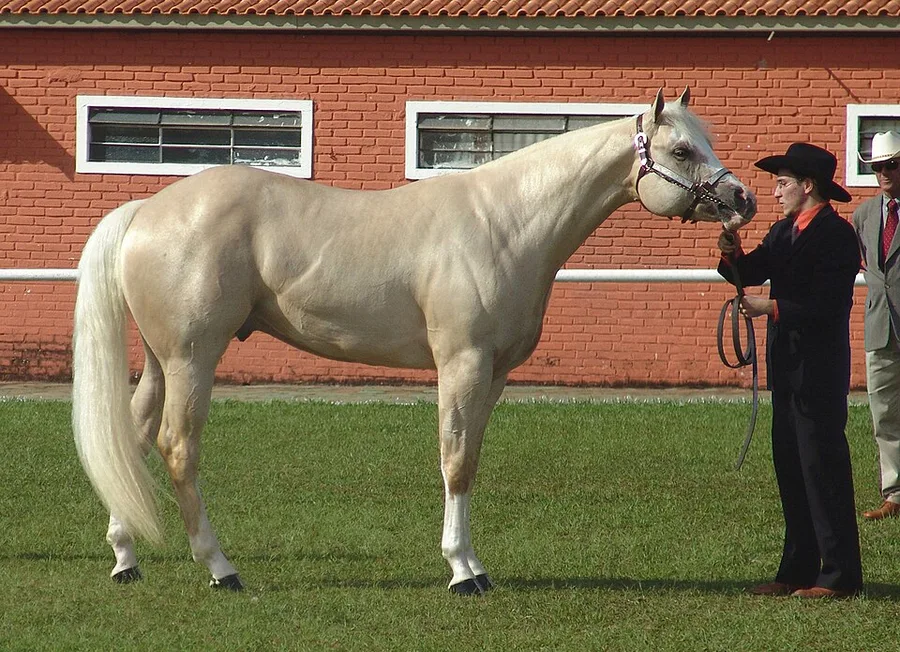
Photo: Quarter_Horse(REFON).jpg: José Reynaldo da Fonseca… · CC BY 2.5 · Wikimedia Commons
Horse breed
American Quarter Horse
The American Quarter Horse developed in the American colonies and early United States from crosses of imported Spanish and English stock, and it earned its name from its supremacy at quarter-mile sprints. It was bred for short, fast races on straight tracks, and for ranch work where a horse needed to turn, stop, and start quickly while working cattle.
Most Quarter Horses are calm, people-oriented, and willing, which makes them a strong choice for many riders, including those who are newer to horses. They have a compact, muscular build and a quick, athletic way of going. Their stop, turn, and cow sense are well known, and many are steady enough for trail riding as well as arena work.
Day to day, a Quarter Horse needs regular handling, good hoof care, and consistent work to stay fit and content. They do best with turnout and the company of other horses, and they need a clear, fair routine rather than long periods of idleness.
Good for: First-time owners, trail riders, and western performance enthusiasts
| Size | large |
| Weight | 1190 lb |
| Height | 57–65 in |
| Life span | 25–30 years |
| Exercise | about 45 min a day |
| Shedding | heavy |
| Origin | United States |
Quarter Horses are forgiving, but they can be quick off the leg, so arrange lessons or an experienced helper early.
Living with a American Quarter Horse
Exercise
Most Quarter Horses need daily work of about 30 to 60 minutes, plus turnout to move freely. Too little exercise can lead to excess energy, stiffness, and weight gain, while overwork without rest can strain the body.
Grooming
Their short coat is easy to maintain with regular brushing and occasional bathing. Manes and tails are typically left natural or trimmed lightly, with no feathering. Hooves need regular trimming or shoeing every four to eight weeks, and many owners clip in winter if the horse works hard.
At home
Quarter Horses are hardy and adapt well to most climates when given adequate shelter, turnout, and fresh water. Many do well on pasture with a companion horse and can be kept in herds. Their feed needs vary; many are easy keepers on good forage, while performance horses may need more calories and a balanced ration.
Training
Quarter Horses are quick learners and respond well to clear, consistent cues. They excel at western events such as reining, cutting, and barrel racing, and they also perform well in trail, ranch work, and hunter-jumper disciplines. A green Quarter Horse is usually willing and forgiving, though they can be quick off the leg and need calm, steady handling early on.
Health
Quarter Horses are generally sturdy, but some lines are known for conditions such as HYPP, which is linked to a genetic muscle disorder, and for issues common to stocky, performance-bred horses. Ask your vet about genetic testing and a suitable health plan for your horse.
- HYPP
- Laminitis
- Navicular disease
Known tendencies, not a diagnosis: ask your vet about this breed.
The numbers for a American Quarter Horse
Forage and water, adult
18–30 lb of hay a day
Forage at 1.5–2.5% of body weight at 1190–1190 lb, and 11–19 gallons of water, more in heat and on hay alone. Grain only for the work being done.
What a year costs
$3,300–$5,550
Hay about $2,102, plus farrier every 6–8 weeks, routine vet, dental and dewormer. Board, lessons and showing on top; US averages.
Weather
Watch above 80°F, stop at 90°F
Blanket or shelter below 10°F. Horses mind heat more than cold: with shelter and water most are fine to about 10°F unclipped, and above a heat index of 150 (air °F + humidity %) ride early or not at all.
Where a American Quarter Horse is comfortable
Easy most of the year: Alabama, Alaska, Arkansas, California, Colorado, Connecticut, Delaware, Florida, Georgia, Hawaii, Idaho, Illinois, Indiana, Iowa, Kansas, Kentucky, Louisiana, Maine, Maryland, Massachusetts, Michigan, Minnesota, Mississippi, Missouri, Montana, Nebraska, New Hampshire, New Jersey, New Mexico, New York, North Carolina, Ohio, Oregon, Pennsylvania, Rhode Island, South Carolina, South Dakota, Tennessee, Vermont, Virginia, Washington, Washington, DC, West Virginia, Wisconsin, Wyoming.
Summer needs care (early rides, shade, fans): Arizona, Nevada, Oklahoma, Texas, Utah.
Winter needs care (blanket, shelter, water that is not frozen): North Dakota.
From typical July highs and January lows by state and this breed's heat and cold limits. Shade, shelter and water change everything; this is about turnout and work.
Right now
Latest feed recalls
Multiple Brand Names: Chicken Feed, Swine Feed, Cattle Feed, Horse Feed
ADM Animal Nutrition · Apr 1 · Specific lots may contain elevated levels of calcium, phosphorus, magnesium, sodium and/or chloride and may harm chickens, swine, beef cattle and equine.
Rescue a American Quarter Horse
Shelters and breed rescues list American Quarter Horses and American Quarter Horse mixes every week. Search adoptable American Quarter Horses on Petfinder → New to the breed? The first-horse kit →
Is a American Quarter Horse right for you?
- Yes if you want a versatile, calm all-around horse
- Yes if you enjoy western events like cutting or barrel racing
- Yes if you plan to ride trails with a steady partner
- Think twice if you want a horse that stays quiet with no regular work
- Think twice if you prefer a very sensitive, high-strung ride
Questions owners ask
Are Quarter Horses good for beginners?
Many are, especially calm, well-trained individuals. A quiet, experienced horse with good manners is a safer first choice than a young or green one.
How much does a Quarter Horse cost?
Prices vary widely by training, bloodlines, and age. Pasture pets may be modest, while show-bred or proven performance horses can cost much more.
How tall do Quarter Horses get?
Most stand roughly 14.2 to 16 hands, or about 145 to 165 centimeters at the withers, though heights vary by line.
How long do Quarter Horses live?
With good care, many live into their mid-twenties to around thirty years. Dental care, hoof care, and parasite control all help.
Are Quarter Horses easy keepers?
Many are, but it depends on the individual and their workload. Monitor body condition and adjust forage and feed to avoid weight gain.
Similar breeds
Written by Hoofdeck editors · updated Nov 13, 2026 · facts from Wikidata and Wikimedia Commons; health notes are general veterinary guidance, not a diagnosis.